

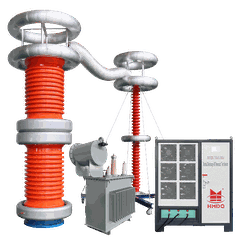



Advantages of Goldhome HMCJ-400kV/20kJ Lightning Impulse Voltage Generator

I. Core Advantages
- Strong Waveform Adaptability: Capable of outputting ±1.2/30μs standard lightning full-wave, 2-6μs truncated wave, with steep wave reaching 1000-2500kV/μs. Complies with testing standards and features convenient waveform adjustment.
- Superior Load Handling & Energy Efficiency: Voltage utilization factor ≥1.2 at total load capacitance 300-1000 pF; ≥1.3 during GIS testing (2000-20000 pF). Low loop inductance ensures stable operation under load.
- High Voltage Rating: Nominal voltage: 400kV. Meets lightning impulse (full-wave/truncated-wave) withstand test requirements for power equipment rated 220kV and below, covering routine testing needs for most high-voltage switches, instrument transformers, insulators, and other test specimens.
- Excellent operation and stability: Features constant-current charging with automatic control, ±100kV voltage regulation, and automatic tracking of charging voltage to setpoint. Capable of continuous operation with one charge/discharge cycle every 120 seconds at 2/3 rated voltage or above.
- Rational structure: Epoxy pillar tower design offers compact aesthetics and compliant grounding (single-point grounding), suitable for testing various equipment including insulators, transformers, and GIS.
II. Commonly Overlooked Issues
- Environmental Restrictions : Strictly prohibited for use in environments below -25°C or covered in ice, snow, or fog. Indoor models must not be stored outdoors, as this may cause damage to insulating components.
- Waveform Adjustment Resistors: Avoid dropping or stepping on these resistors. Damage causes waveform distortion, with rise/fall time deviations exceeding ±0.5μs.
- Grounding and Discharge: Failure to implement single-point grounding or incomplete discharge after testing (residual voltage must ≤50V) may trigger safety incidents.
- Continuous operation limits: Continuous charge/discharge cycles exceeding 2/3 of rated voltage with intervals <120 seconds cause equipment overheating, triggering protective shutdowns.
- Component protection: Impact damage or scratches to insulating cylinders and capacitors, or operation with insufficient oil, reduces insulation strength and increases failure probability.


