

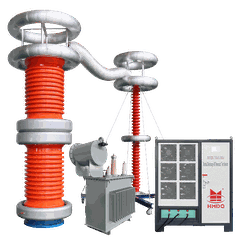



The characteristics of substation debugging tools mainly include the following aspects:
Characteristics of intelligent substation debugging tools: Intelligent substation debugging tools have the characteristics of digitization, informatization, and networking. The networking structure of an intelligent substation is "three layers and two networks", namely the station control layer, the interval layer, and the process layer. The network between the station control layer and the interval layer is called the station control layer network, and the network between the interval layer and the process layer is called the process layer network. Debugging tools need to test equipment such as switches, merging units, intelligent terminals, digital protection devices, and fiber optics. The testing content includes vlan partitioning, network throughput, network frame loss, transmission delay, transmission dispersion, and maintenance mechanism checks.
The specific types and functions of debugging tools include switches, merging units, intelligent terminals, digital protection devices, and fiber optics. Switches are used to test network performance, merging units are used to test the combined transmission of current or voltage data, intelligent terminals are used to connect with primary equipment and interval level equipment, digital protection devices are used to test protection functions, and optical fibers are used to test transmission performance.
Application scenarios of debugging tools: These debugging tools are widely used in various levels of intelligent substations to ensure the normal operation of substation equipment and the accuracy of data transmission. Through the debugging of these tools, it is possible to ensure the normal operation of various functions of the intelligent substation and improve the stability and reliability of the power system.


