
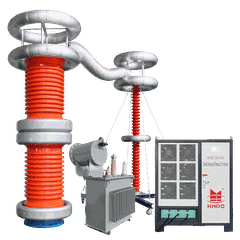


The reactor in the ultra-high voltage test device mainly plays the following roles:
Improving the stability of the power system: Ultra high voltage reactors can be used to regulate voltage and current, thereby maintaining the stable operation of the power system. It can regulate the voltage in the power grid, so that the power system can maintain a stable operating state when subjected to external disturbances.
Overvoltage protection: In the power system, sudden voltage increases May occur due to lightning strikes, operational errors, or other reasons. Ultra high voltage reactors can absorb some of the overvoltage and protect power equipment from damage.
Power transmission efficiency: Ultra high voltage reactors can be used to improve the efficiency of power transmission. In transmission lines, reactors can be used to compensate for inductance and capacitance, thereby reducing reactive power losses and improving the efficiency of power transmission.
Filtering regulation: Ultra high voltage reactors can also filter out harmonics and clutter in the power system, ensuring the normal operation of the power system. As a part of the filter, it can filter out harmonics and clutter in the power system, improving the quality of the power system.
Compensating for capacitive reactive power loss: In long-distance transmission lines of ultra-high voltage and ultra high voltage, due to high voltage and long line length, there is capacitive reactive power between the line and the ground. Installing reactors is to compensate for the capacitive reactive power losses of transmission lines.


