

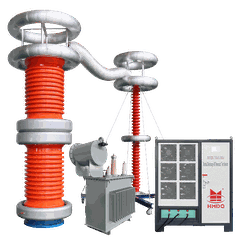




Selecting equipment for high-voltage (HV) switch temperature rise testing is a critical process that requires careful evaluation of technical specifications, standards, and operational requirements. It is a significant investment, which necessitates a thorough decision-making process.
Below is a comprehensive step-by-step guide to help you select the right test equipment.
The main selection will be based on four key factors:
Maximum test current (kA): the highest current value that needs to be simulated.
Maximum system voltage (kV): the rated voltage level of the switch being tested.
Current duration: the ability to maintain a constant current for the specified duration of the test (e.g., 4 hours for the main circuit).
Flexibility and compliance with standards: ability to comply with international standards (IEC, IEEE, etc.) for various types of automatic circuit breakers (SF6, vacuum, air).
This is the most important step. Before selecting a test method, you must determine exactly what needs to be tested.
A. Power switch type:
Rated voltage: Are you testing power switches for 72.5 kV, 145 kV, 245 kV, 420 kV, or 800 kV systems? The rated voltage of the test equipment must be suitable for the breakdown test, which is often performed in conjunction with the temperature rise test.
Technical type:
SF6, vacuum, or air-cooled? The test principles are similar, but the device configuration and monitoring methods may differ.
Rated current (Iᵣ):
What is the maximum continuous current capacity of the power switch to be tested? (e.g., 2000 A, 3150 A, 4000 A, 6300 A)
Rated short-circuit current (Iₛₖ): The test current for the main circuit is the rated current (Iᵣ). However, for testing connection points and terminals, standards require the use of a current that produces the same power loss as the rated short-circuit current. This is the determining factor for evaluating the performance of the test device.
Calculation formula: I_test_connection = I_sk * √ (duty_cycle)
The duty cycle is usually a short-term power (e.g., 1 second or 3 seconds). The test device must be able to generate this extremely high current for a very short time.
B. Applicable standards:
Your test kits and procedures must comply with the standards for which your laboratory is certified. The main standard is:
IEC 62271-1 / IEEE C37.09: High-voltage switches and control mechanisms – Part 1: Common requirements.
These standards specify the exact procedures, duration, and pass/fail criteria for temperature rise tests.
Basic requirement: The test current must be stable within ±5% during the test (typically 2–4 hours for the main circuit).
C.Test Parameters:
- Test Current Rating: Determine the maximum required current value.
- Main Circuit: The rated current (I_ᵣ) of the circuit breaker.
- Test Connection: Value calculated based on the rated short-circuit current (Iₛₖ).
The test equipment rating must exceed the greater of the two values above.
- Test Duration: Can the system maintain a stable current without excessive drift for over 4 hours?
- Number of Phases: Will the test be single-phase or three-phase?
System and component configuration
A typical test configuration does not comprise a single device, but rather an integrated system consisting of:
Main transformer: Single-phase or three-phase transformer equipped with multi-tap connectors for efficient generation of high currents.
Voltage regulator transformer (variable voltage regulator): Typically employs an electrical autotransformer, allows smooth and continuous adjustment of output voltage/current, and serves as the central component of the control system.
Control and measurement cabinet: Incorporates a PLC controller, measurement equipment (current transformers, shunts, data acquisition cards), and safety relays.
Water- or air-cooled cables: Flexible high-current cables that connect the test setup to the circuit breaker. Water-cooled cables are often used for maximum rated current applications to reduce volume and weight.
Calibration unit: Traceable calibration of current and temperature measurement is essential for accredited laboratories.
Supplier evaluation and additional considerations
Reputation and experience: Choose a manufacturer with a proven track record in manufacturing high-current test systems for the electrical industry. Request customer references and case studies.
Technical support and service: This type of equipment is complex. Ensure that the supplier offers support for installation, training, and long-term service, including guaranteed supply of spare parts.
Safety features: The system must be equipped with comprehensive safety measures: emergency stop device, overcurrent protection, interlock circuits, and ground fault detection function.
Scalability: Does the system support future upgrades (e.g., increase in current rating, increase in number of temperature channels)?
Budget: Equipment prices range from several hundred thousand to several million pounds, depending on the ratings. Obtain a detailed quote that includes installation and commissioning costs.
When contacting suppliers, please provide the following information:
[ ] Maximum test current for the main circuit: ____ kA
[ ] Maximum test current for connection points/terminals: ____ kA (lasting ____ seconds)
[ ] Maximum system voltage of the device under test: ____ kV
[ ] Required number of phases: single-phase / three-phase
[ ] Current stability requirements: e.g. ±2%
[ ] Number of temperature measurement channels: ____
[ ] Applicable standards: IEC 62271-1 / IEEE C37.09
[ ] AC power available on site: ____ V, ____ A
[ ] Required software functionality (e.g., automatic report generation)
By carefully following the steps above, you can precisely configure the high-voltage circuit breaker temperature rise test apparatus for your laboratory, ensuring accuracy, compliance and reliability for years to come.


