

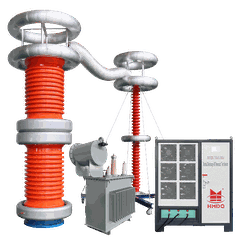



Lightning Surge: A Brief Explanation
Lightning surge, simply put, refers to the instantaneous impact on electrical equipment caused by the intense voltage and current generated during a lightning discharge. Its core characteristic is an 'instantaneous burst of energy' – akin to the sudden rupture of a high-pressure water pipe, where the impact force damages the pipework. Similarly, lightning surge threatens the safety of high-voltage electrical equipment, standing as one of the most common natural hazards in the high-voltage electrical field.
Lightning fundamentally represents the neutralisation of electrical charges between clouds or between clouds and the ground. Friction within cloud layers accumulates substantial positive and negative charges. When the charge differential reaches a critical threshold, it breaks through the air to form a discharge channel, instantaneously releasing immense energy and generating the lightning surge. Its core characteristics are twofold: first, extremely high voltage (reaching millions or even tens of millions of volts); second, an extremely short duration (the surge process lasts only a few microseconds to tens of microseconds, equivalent to one ten-thousandth of a second). This 'short duration, high energy' surge is the key factor causing equipment damage. Lightning surge = instantaneous high voltage + instantaneous high current. It invades electrical equipment through pathways such as conductors and equipment casings, compromising insulation structures and potentially rendering equipment unusable or triggering accidents.

II. Primary Application Scenarios
The impact of lightning surges is predominantly concentrated in outdoor and high-voltage electrical environments. Considering potential contact with equipment such as GIS and transformers, these scenarios are categorised into four distinct types:
1. Outdoor High-Voltage Transmission Lines: This is the most common scenario for lightning strikes. When lightning strikes a line, the surge voltage propagates rapidly along the conductor, directly invading substations and threatening core equipment such as GIS, transformers, and circuit breakers. Minor incidents may cause equipment tripping, while severe cases can lead to insulation breakdown.
2. Outdoor substation areas: Busbars, surge arresters and other equipment installed outdoors within substations, if inadequately protected, may sustain direct lightning strikes or induced surge voltages. This can damage internal components, disrupting the entire substation's operation and potentially causing regional power outages.
3. Distribution rooms and low-voltage circuits: Lightning surges can infiltrate low-voltage circuits via 'induction'. For instance, when outdoor lines are struck, surge voltages may be induced through cables into distribution rooms, damaging switchgear, circuit breakers, and even affecting indoor electrical equipment. This scenario is often overlooked yet carries significant risk.
4. Factory Testing of High-Voltage Equipment: This represents a proactive approach to lightning surge mitigation. Industry standards mandate that transformers, GIS (Gas Insulated Switchgear), and other high-voltage equipment undergo 'lightning impulse tests' prior to leaving the factory. These tests simulate real lightning surge conditions to verify whether the equipment's insulation performance meets specifications, thereby preventing non-compliant equipment from entering service.
III.Key practical points
1. Detailed Lightning Surge Protection for GIS Equipment: Although GIS equipment features a sealed structure with excellent insulation properties, lightning surges may still penetrate through incoming line ports or the enclosure. Core protection centres on 'enclosed shielding combined with precise current diversion'. Firstly, zinc oxide surge arresters (most suitable for high-voltage applications) must be installed at GIS feed-in bushings. Their grounding conductors must be reliably connected to both the GIS enclosure and the substation's main earthing grid, ensuring lightning surge currents are rapidly diverted underground to prevent bushing insulation breakdown. Secondly, the GIS enclosure requires comprehensive equipotential bonding, integrating all bay enclosures and supports into the grounding network. This prevents potential differentials between enclosures during lightning strikes, which could trigger counterstrike damage to internal components. Finally, during periodic inspections, focus on verifying the conductive performance of surge arresters and the pressure of internal insulating gas (SF6) within GIS. Simultaneously, examine grounding connections for loosening or corrosion to prevent failure of discharge pathways. Prior to dispatch, dedicated lightning impulse tests must validate the insulating protection capability of the enclosed structure.
2. Transformer Lightning Impulse Protection Details: Transformers constitute core equipment within power systems, featuring vulnerable insulation structures. Lightning impulses readily cause winding insulation breakdown and core damage. Protection emphasises a 'tiered defence + coordinated grounding' approach. Firstly, valve-type surge arresters must be installed at the high-voltage input terminals, with an electrical clearance of no more than 5 metres from the transformer to shorten the propagation path of the lightning impulse wave and maximise energy attenuation. Surge arresters must also be fitted on the low-voltage side to prevent reverse intrusion of lightning waves through the low-voltage circuit. Secondly, the transformer casing, core, and low-voltage neutral point must be uniformly earthed to form a complete grounding circuit. Grounding resistance should be maintained below 4Ω (lower values required for large substations) to ensure rapid discharge of surge currents and prevent equipment damage from elevated grounding potential. Thirdly, during periodic inspections, in addition to checking the condition of surge arresters, the insulation resistance and dielectric loss factor of the transformer windings must be tested. Inspection frequency should be increased prior to the thunderstorm season. Concurrently, external lightning protection measures such as lightning rods should be employed to prevent direct strikes to the transformer body, thereby fortifying external defences.


