

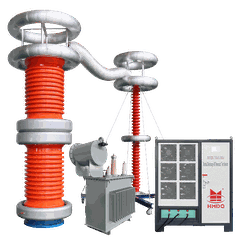




High-Potential (hipot) testing is the last line of defense against catastrophic cable failures. By stressing insulation beyond operational voltage (typically 1.5–3× rated voltage), it exposes:
Micro-cracks from aging or bending
Contaminants like moisture or dirt
Poor splices/terminations in field joints
Without this test, latent defects can cause unplanned outages, fires, or electrocution.
Critical Safety Protocols
1. Stress Relief
Always ground cables for 4× test time after DC hipot tests to dissipate trapped charge.
2. Barriers & Signage
Establish a 3-meter exclusion zone during testing.
3. PPE Requirements
Use Class 2 gloves, face shields, and voltage-rated tools.
Neglecting these caused arc-flash injuries at a mining site last year.
IEEE/ISO Standards Comparison
| Standard | Test Voltage | Duration | Purpose |
|---|---|---|---|
| IEEE 400.2 | 80–150 kV (DC) | 15–30 min | Field testing of MV cables |
| IEC 60502 | 3.5 U₀ (AC) | 5 min | Factory acceptance |
| ANSI/NETA | 1.7× U₀ | 1 min | Maintenance verification |
AC vs DC Testing: When to Use Which
AC Hipot Advantages:
Simulates real-world stress
Detects partial discharge in wet conditions
Required for PILC and EPR cables
DC Hipot Preferred For:
Long underground runs (>1 km)
XLPE cables in dry conditions
Lower-risk maintenance checks
Tip: Never use DC on aged paper-insulated cables – accelerated degradation risk.
Selecting Test Equipment: 5 Key Factors
Voltage Range
Must exceed 200% of cable rating
Output Current
10 mA for reliable leakage detection
Safety Features
Auto-discharge circuits > Ground continuity monitors
Portability
Weight <15 kg for field crews
Compliance Logging
Automated IEEE report generation
Top Global Suppliers
Leading brands offer:
Indian Market: Compact DC testers with monsoon-proof cases
EU/US Brands: AC/DC combos with cloud-based data tracking
China OEMs: Budget units with VR safety training modules
Look for IEC 61010-1 certification and 3-year calibration warranties.
Real-World Impact:
A wind farm in Texas avoided $2M turbine damage by finding a 2mm insulation puncture in 35kV array cables via phased DC hipot testing.


