

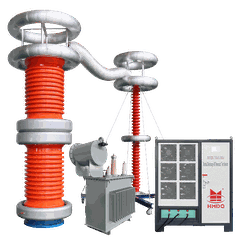


The principle of power testing instruments mainly includes the working principle of dielectric strength tester and voltage breakdown tester.
Dielectric strength tester
The working principle of the dielectric strength tester is based on the phenomenon of dielectric breakdown under high voltage electric field. During the testing process, the testing machine generates the required high-voltage electric field through a high-voltage generator and applies it to the test sample. As the voltage gradually increases, the electric field strength inside the sample gradually increases. When the electric field strength reaches a certain critical value, the sample will undergo breakdown phenomenon, that is, the current suddenly increases and the voltage rapidly decreases. At this point, the testing machine will record the breakdown voltage value and calculate its breakdown strength based on the size and shape of the sample.
Voltage breakdown tester
The working principle of the voltage breakdown tester is to apply gradually increasing voltage to the insulation material through a high-voltage generator and monitor the current changes passing through the material in real time. When the current suddenly increases, the material breaks down, and the equipment records the voltage value at this time, which is the breakdown voltage. Then, based on the breakdown voltage and material thickness, calculate the breakdown strength of the material (unit: Kv/mm).
Working principle of electric indicator instrument
The basic working principle of an electrical indicator is to convert the measured electricity or non electricity into the deflection angle displacement of the active part of the indicator. The main function of the measuring mechanism is to generate rotational torque that causes the instrument indicator to deflect, as well as reactive torque and damping torque that keeps the indicator balanced and rapidly stabilized. When the rotational torque equals the reactive torque, the movable part stops and the pointer indicates the measured size.


