

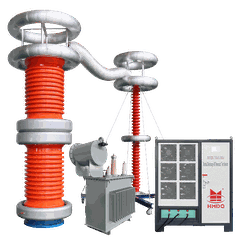



When evaluating the investment in an AC series resonant test system, understanding the factors that influence pricing is essential for making informed decisions. These systems are widely used in high voltage testing applications across the power industry, providing efficient and reliable performance for various electrical equipment tests.The pricing of AC series resonant test systems can vary based on several considerations. Key factors include system capacity, customization options, and technological features. Higher capacity systems designed for more demanding applications may involve different pricing structures compared to standard models. Additionally, advancements in safety features and user-friendly interfaces can contribute to the overall value of these testing solutions.
Adapting to market trends: smart high-voltage solutions for emerging industries
The product launch comes at a time when the global energy sector is undergoing rapid change, driven by the construction of smart grids, the integration of new energy sources, and growing demand for high-voltage infrastructure. According to a recent industry report, the market for AC resonance test equipment in China alone is expected to grow from $1.87 billion in 2025 to $2.84 billion in 2030, with annual growth exceeding the global average . Key drivers of growth include the expansion of 800 kV and higher ultra-high voltage projects, offshore wind farms, and urban rail transit – sectors that require accurate and reliable insulation testing for critical equipment such as GIS, conductors, and transformers.
Goldhome's new AC resonance systems are designed with these changing needs in mind. For example, the flagship 750 kV frequency-convertible resonance testing package combines partial discharge (PD) technology and a modular design to meet the stringent testing requirements of ultra-high-voltage substations and large renewable energy projects.
Competitive pricing: advanced technology made accessible
One of the strengths of the 2025 series is its competitive pricing strategy, which bridges the gap between high performance and affordability. Unlike international brands that often charge high prices for high-voltage testing systems, Goldhome products are priced between and $2000 to $20,000 for all models, from compact 225 kW cable testers to high-capacity 750 kW GIS testing systems. This pricing structure is designed to cater to both budget-conscious regional power companies and large EPC contractors working on national infrastructure projects.
'Our goal is to make advanced AC resonance testing technology accessible,' said Mr Lee, director of Goldhome's R&D department. "By optimising our supply chain and leveraging our in-house expertise in digital control systems, we have eliminated unnecessary costs without compromising quality. For example, our 270 kVA/270 kV system, which is in high demand for substations, offers the same 0.1% voltage regulation accuracy as imported alternatives, but at prices 30% lower."
Smart features to increase testing efficiency
In addition to competitive pricing, the new Goldhome systems respond to industry trends toward digitization and intelligence. All models are equipped with FPGA-based digital control modules that enable automatic resonance point search and real-time data recording, reducing testing time by up to 40% compared to traditional manual systems. For remote monitoring needs, optional IoT integration allows test data to be synchronized with cloud platforms, supporting predictive maintenance workflows, which is a fundamental requirement for offshore wind farms and remote power grids.
For more information about Goldhome's AC resonant test systems and pricing, visit www.gdhmdq.com or contact sales@gdhmdq.com.


