

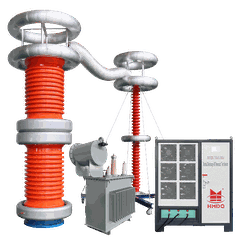


Hey there! As a supplier of Multi - Frequency Voltage Test Sets, I often get asked this question: "Can a Multi - Frequency Voltage Test Set be used for testing circuit breakers?" Well, let's dig into this topic and find out.
First off, let's understand what a Multi - Frequency Voltage Test Set is. It's a piece of equipment that can generate voltages at different frequencies. This flexibility in frequency is super useful in various electrical testing scenarios. Different electrical components may respond differently to voltages of different frequencies, and having a test set that can vary the frequency gives us a better understanding of how these components behave under different conditions.
Now, onto circuit breakers. Circuit breakers are crucial in electrical systems. They're like the guardians that protect the system from over - currents and short - circuits. When there's an abnormal current flow, the circuit breaker trips and cuts off the electrical connection, preventing damage to the equipment and ensuring safety.
So, can a Multi - Frequency Voltage Test Set be used for testing circuit breakers? The answer is yes, and here's why.

1. Insulation Testing
One of the key aspects of testing circuit breakers is checking their insulation. A faulty insulation can lead to leakage currents, which in turn can cause overheating and even electrical fires. A Multi - Frequency Voltage Test Set can be used to apply different frequencies of voltage to the circuit breaker's insulation. By doing this, we can detect any hidden insulation defects that might not be apparent when using a single - frequency test.
For example, some insulation weaknesses may only show up at higher frequencies. At low frequencies, the insulation might seem fine, but when a higher - frequency voltage is applied, the current leakage might increase significantly, indicating a problem. This kind of in - depth testing can't be achieved with a standard single - frequency test set.
2. Dielectric Loss Measurement
Dielectric loss is another important parameter to measure when testing circuit breakers. It refers to the energy that is dissipated as heat in the insulation material when an alternating voltage is applied. A Multi - Frequency Voltage Test Set can measure the dielectric loss at different frequencies.
The dielectric loss of an insulation material can vary with frequency. By measuring it at multiple frequencies, we can get a more comprehensive picture of the insulation's condition. If the dielectric loss increases abnormally at certain frequencies, it could be a sign of insulation aging, moisture ingress, or other issues.
3. Partial Discharge Detection
Partial discharges are small electrical discharges that occur within the insulation of a circuit breaker. They can gradually damage the insulation over time and eventually lead to a complete insulation breakdown. A Multi - Frequency Voltage Test Set can be used to detect partial discharges at different frequencies.
Different types of partial discharges may have different frequency characteristics. By analyzing the partial discharge signals at multiple frequencies, we can better identify the type and location of the partial discharges. This helps in taking appropriate measures to prevent further damage to the circuit breaker.
However, it's important to note that while a Multi - Frequency Voltage Test Set can be very useful for testing circuit breakers, it's not the only tool in the toolbox. There are other specialized test equipment that can also be used for circuit breaker testing.
For example, the [60kV/2mA DC Hipot Tester](/high - voltage - testing - equipment/ac - dc - hipot - tester/60kv - 2ma - dc - hipot - tester.html) is great for performing high - voltage DC tests on circuit breakers. It can be used to check the insulation resistance and detect any leakage currents under a high - voltage DC condition.

The [Cascade Test Transformer](/high - voltage - testing - equipment/ac - dc - hipot - tester/cascade - test - transformer.html) is another option. It can be used to generate high - voltage AC for testing the circuit breaker's performance under normal operating conditions.
And the [AC Test Transformer - Oil Immersed Type](/high - voltage - testing - equipment/ac - dc - hipot - tester/ac - test - transformer - oil - immersed type.html) is also a popular choice for AC testing. It provides a stable and reliable source of high - voltage AC for circuit breaker testing.
In some cases, a combination of different test equipment may be needed to get a complete understanding of the circuit breaker's condition. For instance, we might use a Multi - Frequency Voltage Test Set for initial insulation testing and partial discharge detection, and then follow up with a DC Hipot Tester for more in - depth insulation resistance testing.
When using a Multi - Frequency Voltage Test Set for circuit breaker testing, there are a few things to keep in mind. First, make sure to follow the manufacturer's instructions carefully. Different test sets may have different operating procedures and safety requirements.
Second, proper calibration is essential. A calibrated test set ensures accurate and reliable test results. Regularly calibrate the Multi - Frequency Voltage Test Set according to the recommended schedule.
Third, always take safety precautions. High - voltage testing can be dangerous, so make sure to wear appropriate personal protective equipment (PPE) and follow all safety protocols.
In conclusion, a Multi - Frequency Voltage Test Set can definitely be used for testing circuit breakers. It offers unique advantages in terms of insulation testing, dielectric loss measurement, and partial discharge detection. However, it should be used in conjunction with other appropriate test equipment for a comprehensive assessment of the circuit breaker's condition.
If you're in the market for a Multi - Frequency Voltage Test Set or any other high - voltage testing equipment, I'd love to have a chat with you. Whether you're an electrical utility company, a manufacturer, or an independent testing laboratory, we can provide you with the right equipment and support for your testing needs. Contact us to start the procurement discussion and find the best solution for your specific requirements.
References
- Electrical Testing Handbook: A comprehensive guide to electrical testing methods and equipment.
- IEEE Standards on High - Voltage Testing: These standards provide guidelines and best practices for high - voltage testing of electrical equipment, including circuit breakers.


