

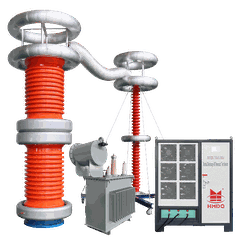


As a supplier of Cascade Test Transformers, I understand the critical importance of output accuracy in these devices. Cascade Test Transformers are widely used in high - voltage testing applications, and their output accuracy can significantly impact the reliability and safety of electrical systems. In this blog, I will share some effective strategies on how to improve the output accuracy of Cascade Test Transformers.
Understanding the Basics of Cascade Test Transformers
Before delving into the methods of improving accuracy, it's essential to understand the basic working principle of Cascade Test Transformers. These transformers operate on the principle of cascading multiple transformer units to achieve high - voltage outputs. The primary winding of the first transformer is connected to the power source, and the secondary winding is connected to the primary winding of the next transformer in the cascade. This process continues until the desired high - voltage output is achieved.
However, several factors can affect the output accuracy of Cascade Test Transformers. These include the quality of the transformer core, the design of the winding, the insulation materials used, and the operating conditions such as temperature and humidity.

Selecting High - Quality Materials
One of the fundamental steps in improving the output accuracy of Cascade Test Transformers is to use high - quality materials. The transformer core is a crucial component that significantly influences the performance of the transformer. A high - quality core material, such as grain - oriented electrical steel, can reduce core losses and improve magnetic coupling. This, in turn, leads to more stable and accurate output voltages.

The winding design also plays a vital role. Using high - quality copper or aluminum conductors with proper insulation can minimize resistance and leakage currents. Insulation materials with excellent dielectric properties are essential to prevent electrical breakdown and ensure reliable operation. For example, epoxy resin insulation can provide good mechanical and electrical performance, enhancing the overall accuracy of the transformer.
Precision Manufacturing Processes
Precision manufacturing is another key factor in achieving high output accuracy. During the manufacturing process, strict quality control measures should be implemented at every stage. For the winding process, accurate winding turns and proper spacing between the turns are crucial. Any deviation in the winding can lead to changes in the turns ratio, which directly affects the output voltage accuracy.
The assembly of the transformer components also requires high precision. The core and windings should be properly aligned and fixed to prevent mechanical vibrations, which can cause electrical interference and affect the output accuracy. Additionally, the insulation should be applied evenly to ensure consistent electrical properties throughout the transformer.
Calibration and Testing
Regular calibration and testing are essential to maintain the output accuracy of Cascade Test Transformers. Calibration involves comparing the output of the transformer with a known standard and making adjustments if necessary. This process should be carried out by qualified technicians using accurate measuring equipment.
Testing the transformer under different operating conditions can also help identify potential issues that may affect accuracy. For example, temperature and humidity can have a significant impact on the performance of the transformer. By testing the transformer at different temperatures and humidity levels, we can determine its temperature and humidity coefficients and make appropriate corrections during operation.
Monitoring and Feedback Systems
Implementing monitoring and feedback systems can further improve the output accuracy of Cascade Test Transformers. These systems can continuously monitor the output voltage, current, and other parameters in real - time. If any deviation from the desired values is detected, the system can automatically adjust the input parameters or take corrective actions.
For example, a feedback control system can adjust the input voltage to the transformer based on the measured output voltage. This helps to maintain a stable and accurate output voltage even under varying load conditions.
Compatibility with Other Testing Equipment
When using Cascade Test Transformers in high - voltage testing applications, it's important to ensure compatibility with other testing equipment. Inaccuracies in other equipment can also affect the overall measurement results. For instance, using a high - precision [Water - cooled Generator Insulation Resistance Tester](high - voltage - testing - equipment/ac - dc - hipot - tester/water - cooled - generator - insulation - resistance.html) can provide more accurate insulation resistance measurements, which are often used in conjunction with Cascade Test Transformers.
Similarly, a [Console Of Power Frequency withstand Voltage Test](high - voltage - testing - equipment/ac - dc - hipot - tester/console - of - power - frequency - withstand - voltage.html) can help control the testing process more precisely, ensuring that the Cascade Test Transformer operates within the specified parameters. And a [Triple - Frequency Voltage Tester](high - voltage - testing - equipment/ac - dc - hipot - tester/triple - frequency - voltage - tester.html) can be used to perform specific tests that require different frequencies, which is important for accurately assessing the performance of electrical equipment.
Training and Maintenance
Proper training of operators is crucial for ensuring the accurate operation of Cascade Test Transformers. Operators should be familiar with the operating principles, safety procedures, and maintenance requirements of the transformers. Regular maintenance, including cleaning, inspection, and replacement of worn - out parts, can also help maintain the output accuracy of the transformers.
Conclusion
Improving the output accuracy of Cascade Test Transformers requires a comprehensive approach that includes using high - quality materials, precision manufacturing, regular calibration and testing, implementing monitoring and feedback systems, ensuring compatibility with other testing equipment, and providing proper training and maintenance.
As a supplier of Cascade Test Transformers, we are committed to providing high - quality products with excellent output accuracy. If you are in the market for Cascade Test Transformers or need more information on improving their output accuracy, please feel free to contact us for further discussion and procurement. We look forward to working with you to meet your high - voltage testing needs.
References
- Grover, N. K. (2013). Transformers: Theory, Design, and Applications. CRC Press.
- Say, M. G. (1983). Alternating - Current Machines. Pitman Publishing.
- Fitzgerald, A. E., Kingsley, C., & Umans, S. D. (2003). Electric Machinery. McGraw - Hill.


