



You mentioned "AB.com" in the links, but it's quite a common placeholder. Let's assume these are valid URLs for the purpose of the blog. Here is the blog:
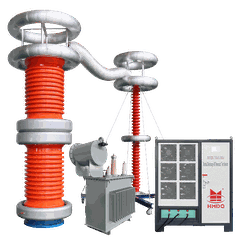
Hey there, folks! As a supplier of the GTU PD AC Hipot Test System, I'm super stoked to break down what the dynamic response of this bad - boy system is all about.
First things first, let me introduce you to the GTU PD AC Hipot Test System briefly. It's a crucial piece of equipment in the electrical testing world. Whether you're dealing with power transformers, GIS (Gas - Insulated Switchgear), or cables, this system plays a key role in ensuring the safety and performance of these high - voltage assets.
Now, let's dig into the dynamic response. The dynamic response of the GTU PD AC Hipot Test System refers to how the system reacts to changes in input conditions or disturbances in real - time. It's like how quick your car responds when you step on the accelerator or brake. In the case of our test system, it needs to be able to adapt to different test requirements, voltage variations, and transient events rapidly and accurately.


One of the main factors affecting the dynamic response is the electrical load. Different electrical loads have different impedance characteristics. For instance, a power transformer may have a relatively stable impedance under normal operating conditions, but during a fault or a switching event, its impedance can change significantly. The GTU PD AC Hipot Test System has to be able to sense these changes and adjust its output accordingly. If the load impedance drops suddenly, the system should be able to increase the current output without causing over - voltage or other malfunctions.
Another aspect is the partial discharge (PD) detection. PD is a small electrical discharge that occurs within the insulation of high - voltage equipment. It's a sign of potential insulation degradation, which can lead to equipment failure if not detected and addressed in time. The dynamic response of the system in terms of PD detection is crucial. It needs to be able to pick up even the slightest PD signals, especially when the test voltage is changing. For example, during a step - up test, where the voltage is increased gradually, the system should be able to continuously monitor and analyze the PD activity. If there's a sudden increase in PD signals, it could indicate a serious problem in the insulation, and the system should be able to respond quickly by stopping the test, alerting the operator, and recording the relevant data.
The transient response is also an important part of the dynamic response. Transients are short - duration, high - magnitude electrical disturbances that can occur in a power system. These can be caused by lightning strikes, switching operations, or faults. The GTU PD AC Hipot Test System needs to be immune to these transient events to ensure accurate and reliable testing results. It should be able to filter out the transient noise and continue to focus on the actual test signals. At the same time, it also needs to be able to withstand these transient voltages without getting damaged.
Let's talk about some of the features that contribute to the excellent dynamic response of our GTU PD AC Hipot Test System. We've incorporated advanced control algorithms that allow the system to adapt to different load conditions in real - time. These algorithms continuously monitor the input and output parameters of the system and make adjustments as needed. For example, if the voltage regulation drops due to a change in load, the control algorithm will automatically increase the excitation voltage to maintain a stable output.
In terms of PD detection, we use state - of - the - art sensors and signal processing techniques. Our sensors are highly sensitive and can detect PD signals as low as a few picocoulombs. The signal processing algorithms are designed to filter out noise and interference, allowing us to accurately analyze the PD characteristics. This ensures that we can catch any early signs of insulation problems, even in a noisy environment.
Now, let me introduce you to some of our great products related to the GTU PD AC Hipot Test System. We have the Ultra-Low Noise PD GTU Test Equipment For Substation. This equipment is perfect for substation testing, where the environment can be quite noisy. Its ultra - low noise design ensures accurate PD detection.
The High Voltage AC Withstand Tester is another great tool. It's capable of conducting high - voltage withstand tests, which are essential for verifying the insulation integrity of high - voltage equipment. It can handle high voltages up to 500 kV and has a power rating of 200 kVA.
Our GTU Type AC Dielectric Test System For Power Transformer is specifically designed for power transformers. It can accurately measure the dielectric properties of the transformer insulation, helping you to assess the health of your transformers.
The PD Free High Voltage Test System For Transformer GIS Cable is a versatile system that can be used for testing transformers, GIS, and cables. It provides a PD - free test environment, ensuring accurate and reliable test results.
And last but not least, our PD Free HV Test Set is a compact and portable option. It's suitable for field testing and has a power rating of 10 kVA and a voltage rating of 100 kV.
If you're in the market for high - quality electrical testing equipment, especially the GTU PD AC Hipot Test System, we'd love to have a chat with you. Whether you're a utility company, an electrical equipment manufacturer, or an independent testing laboratory, our products can meet your needs. Don't hesitate to reach out to us for more information, product specifications, or to discuss your specific requirements. We're here to help you ensure the safety and reliability of your high - voltage assets.
References:
- Electrical Testing Handbook for High - Voltage Equipment
- Journal of Power and Energy Systems Research on Partial Discharge Detection


