

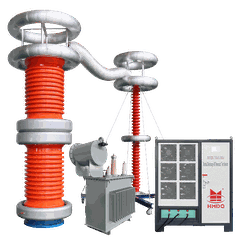


Can an HV Cable AC Resonant Tester Be Used in Explosive Environments?
As a supplier of HV Cable AC Resonant Testers, I often encounter inquiries regarding the suitability of our equipment in various environments, especially explosive ones. This blog aims to delve into this crucial question, exploring the technical aspects, safety considerations, and potential limitations of using an HV Cable AC Resonant Tester in such high - risk settings.
Understanding HV Cable AC Resonant Testers
HV Cable AC Resonant Testers are essential tools in the electrical industry. They are used to test the integrity and performance of high - voltage cables. These testers work on the principle of resonance, where the inductive reactance of an inductor cancels out the capacitive reactance of the cable under test. This results in a high - voltage output at the resonant frequency, allowing for accurate testing of the cable's insulation and other electrical properties.
Our company offers a range of HV Cable AC Resonant Testers, including the Vehicle - Mounted AC Resonant Tester. This mobile solution is ideal for on - site cable testing, providing flexibility and convenience. The AC Resonant Test System with PD is another advanced product that can detect partial discharges in cables, which is crucial for early detection of insulation defects. And the 270kVA Variable Frequency Resonant Test Device offers a high - power solution for testing larger cables or multiple cables in series.
Challenges in Explosive Environments
Explosive environments, such as those found in oil refineries, chemical plants, and mines, pose significant challenges when it comes to using electrical equipment. These areas contain flammable gases, vapors, or dusts that can ignite if exposed to an ignition source. An HV Cable AC Resonant Tester, being an electrical device, generates electrical arcs, sparks, and heat during its operation, which can potentially act as ignition sources.
One of the main concerns is the generation of electrical arcs. When the tester is operating at high voltages, there is a risk of arcing between electrical components or between the tester and the cable under test. These arcs can reach high temperatures and have enough energy to ignite explosive mixtures in the surrounding environment. Additionally, the heat generated by the tester's components, such as transformers and power supplies, can also raise the temperature of the nearby air, increasing the risk of ignition if the temperature exceeds the auto - ignition temperature of the flammable substances.
Safety Considerations
To determine whether an HV Cable AC Resonant Tester can be used in explosive environments, strict safety standards and regulations must be followed. In most countries, the use of electrical equipment in explosive atmospheres is governed by standards such as IEC 60079 and ATEX in Europe, and NEC (National Electrical Code) in the United States.
These standards classify explosive environments into different zones based on the likelihood of the presence of explosive mixtures. For example, Zone 0 is an area where an explosive gas atmosphere is present continuously or for long periods, while Zone 1 is an area where an explosive gas atmosphere is likely to occur in normal operation. The equipment used in these zones must be designed and certified to meet the specific requirements of each zone.
When it comes to HV Cable AC Resonant Testers, manufacturers need to ensure that the equipment is designed to prevent the ignition of explosive mixtures. This can be achieved through various means, such as enclosing the electrical components in explosion - proof housings. These housings are designed to contain any internal explosion and prevent the transmission of flames or hot gases to the surrounding environment. Additionally, the equipment should have proper grounding and insulation to minimize the risk of electrical arcing.
Technical Modifications for Explosive Environments
In some cases, it may be possible to modify an HV Cable AC Resonant Tester to make it suitable for use in explosive environments. However, these modifications must be carried out by experienced engineers and should comply with the relevant safety standards.
One possible modification is the use of hermetically sealed electrical components. By sealing the components in airtight containers, the risk of sparks or arcs coming into contact with the explosive atmosphere is reduced. Another approach is to use intrinsically safe circuits. Intrinsically safe circuits are designed in such a way that they cannot generate enough energy to ignite an explosive mixture.
However, it's important to note that these modifications can be complex and costly. They may also affect the performance of the tester, so careful consideration and testing are required to ensure that the modified tester still meets the required testing accuracy and reliability.
Case Studies
There have been situations where HV Cable AC Resonant Testers have been used in explosive environments after proper modifications. For example, in a large oil refinery, a modified Vehicle - Mounted AC Resonant Tester was used to test the high - voltage cables in a Zone 1 area. The modification included an explosion - proof housing and additional grounding measures. The tests were carried out successfully, and the cables' integrity was verified without any safety incidents.
On the other hand, there have also been cases where using non - compliant equipment in explosive environments has led to serious accidents. In a chemical plant, an uncertified HV Cable AC Resonant Tester was used in a potentially explosive area. The tester generated an electrical arc, which ignited the flammable vapors in the air, resulting in a small explosion and causing damage to the equipment and the surrounding area.
Conclusion
In conclusion, while it is technically possible to use an HV Cable AC Resonant Tester in explosive environments, it requires careful consideration, strict adherence to safety standards, and in many cases, significant technical modifications. The safety of personnel and the protection of the surrounding environment must always be the top priority.
As a supplier of HV Cable AC Resonant Testers, we are committed to providing our customers with safe and reliable testing solutions. If you are considering using our equipment in an explosive environment, we recommend consulting with our technical experts. They can provide you with detailed information on the feasibility of using our testers in your specific situation, as well as the necessary modifications and safety measures.
If you have any questions or are interested in purchasing our HV Cable AC Resonant Testers, please feel free to contact us for further discussions and procurement negotiations. We look forward to working with you to meet your high - voltage cable testing needs.


References
- IEC 60079 series of standards on electrical equipment for explosive atmospheres.
- ATEX Directive 2014/34/EU for equipment and protective systems intended for use in potentially explosive atmospheres.
- National Electrical Code (NEC) in the United States for safety requirements of electrical installations.


