

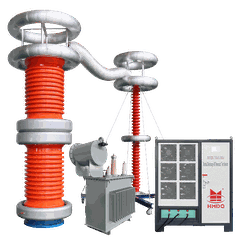



Verifying the calibration of an AC Resonant Test System With PD (Partial Discharge) is a crucial process to ensure the accuracy and reliability of high - voltage testing. As a supplier of AC Resonant Test Systems With PD, I understand the significance of this calibration verification and am here to share some insights on how to carry it out effectively.
Understanding the AC Resonant Test System With PD
Before delving into the calibration verification process, it's essential to have a clear understanding of what an AC Resonant Test System With PD is. This system is designed to perform high - voltage tests on electrical equipment, such as cables, transformers, and switchgear. The partial discharge (PD) measurement is an important aspect as it helps in detecting insulation defects in the equipment under test.
The AC Resonant Test System with PD operates based on the principle of resonance, where the inductance and capacitance in the circuit are adjusted to achieve a resonant condition. This allows for the application of high - voltage with relatively low input power.
Importance of Calibration Verification
Calibration verification is necessary to ensure that the test system provides accurate and consistent results. Over time, factors such as component aging, environmental conditions, and mechanical stress can affect the performance of the test system. If the system is not properly calibrated, it may lead to inaccurate test results, which can have serious consequences, including false positives or negatives in detecting insulation defects.
Steps to Verify the Calibration of an AC Resonant Test System With PD
1. Visual Inspection
The first step in the calibration verification process is a visual inspection of the test system. Check for any physical damage to the components, such as cracks in the insulation, loose connections, or signs of overheating. Ensure that all the cables are properly connected and that there are no signs of wear or tear.
2. Check the Power Supply
Verify that the power supply to the test system is stable and within the specified range. Fluctuations in the power supply can affect the performance of the system and lead to inaccurate test results. Use a voltmeter to measure the input voltage and ensure that it is within the acceptable limits.
3. Calibrate the Measuring Instruments
The measuring instruments in the AC Resonant Test System With PD, such as voltage meters, current meters, and PD detectors, need to be calibrated regularly. Use a calibrated reference standard to compare the readings of the measuring instruments. For example, if you are calibrating a voltage meter, connect it to a known voltage source and compare the reading with the actual voltage.
4. Resonance Frequency Verification
The resonance frequency of the test system is a critical parameter. Use a frequency meter to measure the resonance frequency of the system and compare it with the specified value. If the measured frequency deviates from the specified value, it may indicate a problem with the inductance or capacitance in the circuit. Adjust the inductance or capacitance as necessary to bring the resonance frequency back to the correct value.
5. PD Measurement Calibration
Partial discharge measurement is a key function of the AC Resonant Test System With PD. To calibrate the PD measurement, use a PD calibrator. The PD calibrator generates a known amount of partial discharge, and the test system should be able to accurately measure this value. Compare the measured PD value with the known value from the calibrator. If there is a significant difference, adjust the PD measurement settings of the test system.
6. System Performance Testing
After calibrating the individual components, perform a system performance test. Apply a known high - voltage to the test system and measure the response. Check the voltage and current waveforms, as well as the PD measurement. Compare the results with the expected values. If there are any discrepancies, further investigate the cause and make the necessary adjustments.
Using Our AC Resonant Test Systems
We offer a range of high - quality AC Resonant Test Systems, including the Integrated Container AC Resonant Test System and the High Voltage AC Resonant Test System. These systems are designed to provide accurate and reliable high - voltage testing with PD measurement capabilities.
Our systems are equipped with advanced features such as automatic resonance tuning, digital control, and high - precision PD measurement. They are also designed to be easy to operate and maintain, making them suitable for a wide range of applications.


Contact Us for Purchase and Consultation
If you are in the market for an AC Resonant Test System With PD, we are here to help. Our team of experts can provide you with detailed information about our products, including their features, specifications, and pricing. We can also assist you with the installation, calibration, and maintenance of the test system.
Whether you are a power utility, an electrical equipment manufacturer, or a testing laboratory, our AC Resonant Test Systems With PD can meet your high - voltage testing needs. Contact us today to start the conversation about how our products can benefit your operations.
References
- IEEE Standard for High - Voltage Testing Techniques - Definitions and Requirements for Measuring Systems, IEEE Std 4 - 2013.
- IEC 60270:2000, Partial Discharge Measurements.


