

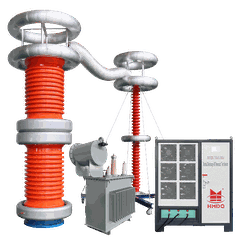


Hey there! As a supplier of Vehicle - Mounted AC Resonant Testers, I often get asked a bunch of questions about these nifty devices. One question that pops up quite a bit is, "Is a Vehicle - Mounted AC Resonant Tester affected by vehicle speed?" Let's dig into this topic and find out what's what.
First off, let's talk a bit about what a Vehicle - Mounted AC Resonant Tester is. It's a high - voltage testing device that's installed on a vehicle. This setup allows it to be mobile, which is super handy for on - site testing of electrical equipment like cables, transformers, and circuit breakers. These testers work by creating an alternating current (AC) resonant circuit. The basic idea is to achieve resonance between the inductance and capacitance in the test circuit, which helps in generating high - voltage for testing purposes.


Now, the big question: does vehicle speed mess with the performance of these testers? Well, to answer that, we need to look at how the tester functions and what factors within the vehicle environment could potentially have an impact.
1. Mechanical Vibration
One of the most obvious effects of vehicle speed is the increase in mechanical vibration. As the vehicle moves faster, the vibrations become more intense. These vibrations can have a couple of implications for the Vehicle - Mounted AC Resonant Tester.
Inside the tester, there are delicate electronic components and mechanical parts. Excessive vibration can cause loose connections. For example, the wires that connect different modules within the tester might start to come loose over time. This can lead to intermittent electrical connections, which can disrupt the normal operation of the tester. The resonance circuit, which is the heart of the tester, relies on stable electrical connections to function properly. If these connections are affected, the resonance frequency might shift, and the tester may not be able to generate the required high - voltage accurately.
Moreover, the mechanical parts like transformers and capacitors are also at risk. Vibration can cause physical damage to these components. A cracked capacitor or a bent transformer coil can significantly degrade the performance of the tester. In some extreme cases, it might even render the tester completely inoperable.
2. Power Supply Stability
Another aspect to consider is the power supply. Most Vehicle - Mounted AC Resonant Testers are powered by the vehicle's electrical system. As the vehicle speed changes, the load on the vehicle's alternator also changes. At higher speeds, the alternator has to work harder to power not only the tester but also other electrical components in the vehicle like lights, air - conditioning, and the radio.
If the alternator can't keep up with the increased demand, the voltage supplied to the tester might fluctuate. The AC Resonant Tester requires a stable power supply to maintain the resonance circuit. Voltage fluctuations can cause the resonance frequency to change, and this can affect the accuracy of the high - voltage output. For instance, if the voltage drops suddenly, the tester might not be able to reach the desired testing voltage, leading to inaccurate test results.
3. Environmental Factors
Vehicle speed can also influence the environmental conditions around the tester. At higher speeds, the airflow around the vehicle is much stronger. This can affect the cooling of the tester. The tester generates heat during operation, especially when it's generating high - voltage. Adequate cooling is essential to prevent overheating of the components.
If the airflow is too strong, it might disrupt the normal cooling process. On the other hand, if there are any blockages in the airflow path due to the high - speed movement (for example, debris getting stuck in the cooling vents), the cooling efficiency can be severely reduced. Overheating can cause the electrical components to degrade faster and can also lead to thermal expansion, which can further affect the mechanical and electrical properties of the components.
Real - World Considerations
In real - world scenarios, most manufacturers of Vehicle - Mounted AC Resonant Testers take these factors into account. They design the testers to be as rugged as possible to withstand the vibrations and environmental changes associated with vehicle movement. For example, they use shock - absorbing mounts to reduce the impact of vibrations on the tester. These mounts are made of materials that can absorb and dampen the vibrations, protecting the internal components.
Also, modern testers are equipped with advanced power management systems. These systems can regulate the input voltage and ensure a stable power supply to the tester, even when the vehicle's electrical system is under stress. They can detect voltage fluctuations and adjust the power input to the tester accordingly, maintaining the stability of the resonance circuit.
However, despite these design features, there are still limits. If the vehicle is driven at extremely high speeds on rough terrain, the tester might still face issues. For example, if you're driving off - road at high speeds, the vibrations can be so intense that even the shock - absorbing mounts might not be able to fully protect the tester.
Mitigating the Effects
So, what can be done to minimize the impact of vehicle speed on the Vehicle - Mounted AC Resonant Tester?
- Proper Installation: Ensuring that the tester is installed correctly is crucial. It should be mounted securely using the recommended mounting brackets and hardware. This helps in reducing the transmission of vibrations from the vehicle to the tester.
- Regular Maintenance: Regular maintenance checks are essential. This includes inspecting the electrical connections, checking for any signs of physical damage to the components, and cleaning the cooling vents. By doing so, you can catch any potential issues early and prevent them from becoming major problems.
- Speed Limitations: It's a good idea to set some speed limits when transporting the tester. Avoid driving at extremely high speeds, especially on rough roads. This can significantly reduce the mechanical stress on the tester and help maintain its performance.
Our Product Range
We offer a wide range of Vehicle - Mounted AC Resonant Testers that are designed to handle the challenges associated with vehicle movement. In addition to our standard testers, we also have specialized systems like the AC Resonant Test System for CVT, the Inductive Resonant Test System, and the AC Resonant Test System with PD. These systems are built with the latest technology and are engineered to provide accurate and reliable high - voltage testing in a mobile environment.
If you're in the market for a Vehicle - Mounted AC Resonant Tester, we'd love to have a chat with you. Our team of experts can help you choose the right tester for your specific needs. Whether you're testing cables in a power grid or transformers in a remote location, we've got the solution for you. Contact us to start a procurement discussion and let's find the perfect tester for your requirements.
References
- Electrical Testing Handbook, 3rd Edition
- Vehicle Electronics and Power Systems, 2nd Edition
- AC Resonant Testing Technology Research Papers


