

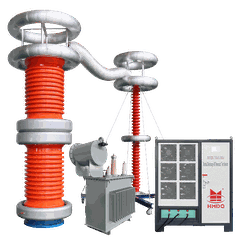


Hey there! As a supplier of Container AC Resonant Test Systems, I've seen firsthand how crucial these systems are in various industries. They're used to test the insulation of high - voltage equipment, ensuring everything runs smoothly and safely. But what exactly affects the performance of these systems? Let's dive in and find out.
1. Frequency and Resonance
One of the most important factors is frequency. The Container AC Resonant Test System works based on the principle of resonance. When the frequency of the applied voltage matches the natural frequency of the test circuit, resonance occurs. At resonance, the impedance of the circuit is minimized, and the current in the circuit reaches its maximum value.
If the frequency is off, the system won't operate at its peak efficiency. For example, if the frequency is too high or too low compared to the resonant frequency, the current and voltage distribution in the test object may not be accurate. This can lead to false test results, where a potentially faulty insulation might seem okay, or a good insulation might be flagged as bad.
We offer different types of resonant test systems to deal with frequency issues. Check out our AC Resonant Test System with PD, which is designed to accurately control the frequency and detect partial discharges during the test.
2. Component Quality
The quality of the components used in the Container AC Resonant Test System plays a huge role in its performance. Components like capacitors, inductors, and transformers are the building blocks of the system.
High - quality capacitors have low dielectric losses. Low dielectric losses mean less energy is wasted as heat during the test. This not only improves the efficiency of the system but also ensures more accurate test results. Similarly, good - quality inductors have stable inductance values over a wide range of frequencies and currents.


If you're using a system with sub - standard components, you might face issues like overheating, inaccurate voltage regulation, and premature component failure. That's why we always use top - notch components in our systems. Our Inductive Resonant Test System is built with high - quality inductors and other components to ensure reliable performance.
3. Environmental Conditions
The environment in which the Container AC Resonant Test System operates can have a significant impact on its performance. Temperature, humidity, and altitude are some of the key environmental factors.
High temperatures can cause the components in the system to overheat. This can lead to changes in the electrical properties of the components, such as increased resistance in conductors and decreased capacitance in capacitors. As a result, the system may not operate at the desired frequency or voltage levels.
Humidity can also be a problem. Moisture in the air can cause corrosion on the metal parts of the system and increase the risk of electrical leakage. This can affect the accuracy of the test results and even damage the system over time.
Altitude is another factor. At higher altitudes, the air density is lower, which can affect the insulation performance of the system. The breakdown voltage of the air decreases with increasing altitude, so the system needs to be designed to handle these conditions.
We understand the importance of environmental factors, and our systems are designed to work in a wide range of conditions. Our Inductance Adjustable AC Resonant Test System can be adjusted to compensate for environmental changes, ensuring consistent performance.
4. Test Object Characteristics
The characteristics of the test object itself can affect the performance of the Container AC Resonant Test System. The capacitance, inductance, and insulation resistance of the test object are important parameters.
If the test object has a high capacitance, it will draw more current from the test system. This can put a strain on the power supply of the system and may require a higher - power system to perform the test accurately. On the other hand, if the test object has a low capacitance, the system may not be able to reach the desired resonant frequency easily.
The insulation resistance of the test object also matters. A low insulation resistance can cause excessive current leakage during the test, which can lead to inaccurate test results and even damage to the test system.
Before conducting a test, it's important to understand the characteristics of the test object and choose the right test system accordingly. Our team of experts can help you select the most suitable system for your specific test object.
5. Operator Skill and Training
Last but not least, the skill and training of the operator can have a big impact on the performance of the Container AC Resonant Test System. An experienced operator knows how to set up the system correctly, adjust the parameters, and interpret the test results.
For example, an operator needs to know how to connect the test leads properly to avoid any electrical interference. They also need to be able to recognize abnormal test results and troubleshoot any issues that may arise during the test.
We provide comprehensive training to our customers to ensure they can operate our systems effectively. Our training includes theoretical knowledge about the working principle of the system and practical hands - on experience.
Conclusion
As you can see, there are several factors that can affect the performance of the Container AC Resonant Test System. From frequency and component quality to environmental conditions, test object characteristics, and operator skill, each factor plays a crucial role.
If you're in the market for a high - quality Container AC Resonant Test System, we're here to help. Our systems are designed to overcome these challenges and provide accurate and reliable test results. Whether you need a system for a small - scale test or a large - scale industrial application, we have the right solution for you.
Don't hesitate to get in touch with us to discuss your requirements and start the procurement process. We're always ready to have a chat and find the best system for your needs.
References
- Electrical Testing Handbook: High - Voltage Testing of Electrical Equipment
- Journal of Electrical Insulation and Dielectric Phenomena


