

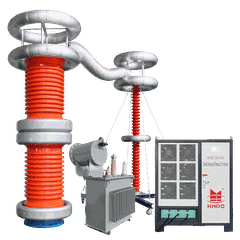


If you’re working in high-voltage testing, you already know lightning impulse voltage generators aren’t just generic lab gear—they’re the workhorses that keep power grids, electrical components, and even EV parts from failing when sudden surges hit. Over the last decade, I’ve watched these generators evolve from clunky, one-size-fits-all setups to smarter, more flexible tools, and lately, the pace of change has been picking up hard. As someone who’s been in the game supplying these systems (we’ve got a whole line for different needs, like the [Lightning Impulse Voltage Generator] for big substation tests or the more compact [Hipot Tester Impulse Voltage Generator] for smaller components), I want to break down what’s actually coming next for this tech—not just the hype, but the stuff that’ll matter for your team in 3 to 10 years.


First off, let’s ground this in what these machines do: they produce the high-voltage, short-duration surges that mimic real lightning strikes or switching surges in power systems. Right now, most are capacitor-based, use spark gaps to switch the charge, and are tailored for specific test setups—like a [Standard Pulse Current Generator] for basic component testing, or a high-capacity [Impulse Current Generator] for surge arrester validation. But the future’s not just about cranking up voltage; it’s about solving the pain points every test engineer complains about: heavy setup time, limited flexibility for mixed tests, and safety risks from manual operations.
One of the biggest trends I’m seeing, and one we’re already testing in our R&D, is modular, reconfigurable generator systems. For years, if you needed to test a 500kV substation insulator and a 10kV transformer winding, you had to rent or buy two separate generators—something like a [High Voltage Impulse Generator] for the big substation job and a smaller unit for the transformer. But modular setups let you stack, swap, and adjust components on the fly. Think of it like Lego: add more capacitor modules to hit higher voltage, switch a pulse-shaping resistor to tweak the wave front (that’s the steepness of the surge, super important for accurate testing), or even flip between voltage and current impulse modes without hauling in a whole new machine. Last year, we had a customer who switched between 200kV and 800kV tests for a month-long project, and they saved 3 days of setup time compared to using two fixed generators. That’s the kind of flexibility no one’s really offering at scale right now, but it’s going to be table stakes in 5 years.
Another big shift is moving away from the old spark gap switching tech. Right now, most generators use mechanical spark gaps to discharge the capacitors, which means you have to calibrate them every test, wait for them to cool down, and deal with inconsistent trigger timing—bad news when you’re testing precision components. Solid-state switching is starting to trickle into impulse generators, and it’s a game-changer. Solid-state switches (like IGBTs or thyristors) are faster, more reliable, and let you adjust the surge wave shape way more accurately. I get that some engineers are skeptical because solid-state tech used to be too expensive for high-power units, but prices have dropped 40% in the last 5 years, and now you can get a solid-state [Impulse Current Generator] that’s just as powerful as a spark-gap one, with way less maintenance. We’re already building a prototype that uses solid-state switching for our mid-range units, and our beta testers are saying their test consistency went up 25% almost overnight.
Then there’s digitalization and smart testing, which is bleeding over from other industrial tech into high-voltage testing. Right now, most impulse generators run on basic analog controls—you set the voltage, press a button, and hope the surge is right. But future units will have built-in sensors that monitor every part of the surge in real time, paired with AI that adjusts parameters mid-test if something’s off. For example, if you’re testing a high-voltage cable and the measured wave front is slightly too slow, the system doesn’t just give you a bad test result—it tweaks the pulse-shaping circuit automatically so you get the exact surge you need. We’re also working on integrating cloud connectivity, so you can pull test data from your generator in real time, log it for compliance (super important for utility companies that have to meet IEC or IEEE standards), and even troubleshoot remotely. No more having a service tech come out just to reset a calibration setting—your team can do it from their laptop. That’s not just convenience; it’s a huge cost saver for remote sites or companies with multiple test labs.
Wait, I should also talk about sustainability, because that’s a trend everywhere, and high-voltage gear is no exception. Old impulse generators waste a ton of energy—they dump unused capacitor charge into resistor banks, which generates tons of heat and uses more power. Right now, large [Lightning Impulse Voltage Generator] units have efficiencies around 30-40%, which means most of the power you plug in just gets turned into heat. Newer designs are adding energy recovery systems—they capture the unused charge from the capacitors and feed it back into the grid instead of wasting it. Our R&D team ran a test last quarter on a 500kV unit with this tech, and efficiency jumped to 65%—that’s less electricity use, lower operating costs, and a smaller carbon footprint. For utility companies that test gear year-round, that adds up to big numbers. Plus, we’re already seeing demand from European and North American utilities that have strict sustainability targets, so this isn’t just a nice-to-have—it’s what customers are asking for now.
Of course, there are still hurdles to work through. Solid-state generators for super high voltages (like 10MV units for grid-scale testing) are still in early stages, because you need a lot of switches in series, and syncing them perfectly is tricky. Modular systems also mean more components that need to be reliable, so we’re investing in better quality control for the modules. And smart digital systems bring cybersecurity risks—if a generator connected to the cloud gets hacked, that could mess up critical tests for power infrastructure, so we’re building end-to-end encryption and offline backup modes into all our new designs, not just an afterthought.
Now, what does this mean for you, whether you’re a test engineer, a procurement manager, or part of a utility company upgrading your testing lab? If you’re buying a new generator in the next 2 years, skip the basic fixed unit. Look for something modular that can grow with your testing needs—you might start with a 300kV [Hipot Tester Impulse Voltage Generator] for component testing, then add a module a few years later to hit 600kV for substation tests. If you’re updating an older spark-gap generator, start asking about solid-state upgrades—they’re worth the upfront cost for the less maintenance and better test consistency. And don’t sleep on the smart features; being able to automate test logging and adjust surges in real time will cut down on human error, which is huge when you’re testing gear that keeps the lights on.
At the end of the day, the future of lightning impulse voltage generators isn’t about making bigger, scarier voltages—it’s about making them more useful, reliable, and sustainable. We’re not just selling machines; we’re helping our customers test components that make power grids safer, EVs more durable, and industrial systems less prone to outages. If you’re looking to upgrade your testing setup, or just want to chat about what’s best for your specific projects, reach out—we’ve got a range of solutions, from compact [Standard Pulse Current Generator] units to high-capacity [High Voltage Impulse Generator] systems, and we can help you pick what fits your needs, not just the latest hype.
References
- IEEE Guide for the Generation and Control of Lightning Impulse Voltages and Currents, IEEE Standard 4-2018
- IEC 60060-1: High-voltage test techniques – Part 1: General definitions and test requirements
- Global Market Trends for High-Voltage Testing Equipment, MarketsandMarkets, 2023
- Solid-State Switching Technologies for Impulse Voltage Generators, IEEE Transactions on Power Delivery, Vol. 37, No. 2, 2022
- Energy Recovery Systems for High-Pulse Power Applications, Journal of Electrostatics, Vol. 118, 2022


