

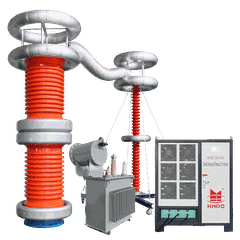


If you’re in the transformer manufacturing or maintenance game, you’ve probably run into a bunch of questions about test equipment—especially when it comes to load tests. Let’s cut to the chase first: yes, an automatic transformer test bench absolutely can perform load tests, and if you’re on the fence about investing in the right gear, let’s break this down without the stuffy engineering jargon that makes your eyes glaze over.
First, let’s get on the same page about what a load test for a transformer even does. From what I’ve seen working with small transformer shops and utility teams, load tests measure how a transformer behaves under its actual working load—like the real power it uses (copper loss), how hot it gets, and if voltage stays stable when it’s handling its rated load. Back in the day, folks used to rig up manual setups for this—stringing together variacs, load banks, and meters, taking notes by hand, and crossing their fingers they didn’t miscalculate a loss number. Automatic test benches changed all that, and I get why some folks still have that “if it’s not manual, it’s not accurate” mindset. But let’s call that a leftover from old-school test days.
Here’s why our automatic test benches (and let’s be real, most reputable ones) are built to nail load tests, no guesswork required. First, modern test benches don’t just stop at basic no-load checks—they integrate with specialized testers that are purpose-built for transformer loss measurements. For example, if you’re running a load test, you’ll need to confirm both no-load and load losses, and our benches are designed to sync seamlessly with gear like the Transformer No Load And Load Loss Tester. Wait, let’s clarify that: the bench is the central hub that controls the entire test sequence, while that tester crunches the exact loss data you need—copper losses, iron losses, the works. That integration means you don’t have to toggle between devices; the automatic bench sends signals to adjust the test voltage/current, collects data from the loss tester, and logs it all without a human hovering. I’ve had clients tell me this cut their test time per unit from 3 hours to 45 minutes, and they stopped wasting time double-checking manual calculations.
But let’s not skip over a common concern: can an automatic bench handle variable load conditions, not just a fixed, rated load? A lot of older test benches were only set up for full-rated load, but today’s automatic ones can simulate real-world load fluctuations too—like the way a transformer might handle a sudden jump in load from a neighborhood’s AC units in summer. That’s where the flexibility of the bench matters. You can program a custom load profile, ramp up or down current smoothly, and the bench adjusts in real time, no manual tweaks. For shops testing distribution transformers (which see way more variable load than power transformers), this is a game-changer because the test is way more representative of actual use cases.
Wait, let’s talk about related tests that tie into load testing, because load tests don’t happen in a vacuum. When you run a load test, you also need to check things like core grounding current— a tiny leakage current that builds up in the transformer’s core, which can cause overheating if it’s too high. A lot of people forget that load test results might look fine, but a bad core ground could throw off your loss numbers. That’s why our automatic test benches are compatible with tools like the HMTX-II Transformer Core Grounding Current Tester and the HMTX-II Transformer Core Earth Current Tester. Here’s the kicker: when you run a load test, the bench can trigger a check of core current alongside it, so you’re not doing two separate tests back-to-back. That’s not just convenient—it reduces the chance of human error, like forgetting to run a core check entirely. We had a small manufacturing client last year who missed a core ground issue in manual load tests once, and it led to a transformer failing on-site. Since switching to our automatic bench, they’ve caught two similar issues during load tests before units leave the shop.
Now, let’s address a myth I hear all the time: “Automatic benches can’t handle low-voltage transformers, only big power ones.” No, that’s not true. A lot of these benches are modular, so you can adjust the load bank size to match the transformer you’re testing. If you’re testing a 10kVA distribution transformer for residential use, you can swap in a smaller load bank and tweak the test parameters via the bench’s interface. If you’re testing a 100MVA power transformer for a grid, you can hook up a bigger load bank. The bench’s smarts take care of the rest—no need to buy a whole new setup every time you switch transformer sizes. And when you pair that with gear like the Transformer No Load And Load Loss Test Equipment, you get consistent, repeatable results every single time. I’ve seen shops that test 50 transformers a week—manual tests would mean one or two bad results a month just from human miscalculation, but automatic benches cut that to zero.
Wait, let’s get into how the test process actually works with an automatic bench, because it’s way simpler than you think. Let’s say you have a batch of 15 25kVA transformers to test. You input the transformer’s specs into the bench’s touchscreen (rated voltage, kVA, winding type), select “Load Test” from the menu, and choose to run it with loss measurement and core grounding check. Then you plug in the transformer, hit start. The bench does all the work: it applies the correct test voltage, ramps up the load to 100% rated, holds it for the required duration (usually 15-30 minutes, depending on standards), collects real-time data from the loss tester and core current tools, and shuts down safely when the test is done. At the end, it spits out a report with all the numbers—load loss, temperature rise (if you have thermal sensors hooked up), core current, and a pass/fail marker based on IEC or ANSI standards. No writing down numbers, no calculating, no waiting around. That’s the automation payoff.
Another point: load test standards (like IEC 60076-1 or ANSI C57.12) require precise measurements, and automatic benches are calibrated to meet those standards straight out of the box. A lot of manual test setups drift over time, so you have to re-calibrate all your meters every month, which costs time and money. Automatic test benches have built-in calibration checks that you can run with the press of a button, and they sync with testers like the Transformer No Load And Load Loss Parameter Tester to make sure all your loss numbers are spot-on. That’s a big deal for shops that need to keep test results compliant for utility or regulatory audits—no one wants to re-test a whole batch because their manual meter was off by 2%.
Now, let’s cover a few small, real-world things that matter. What if you have a transformer that fails a load test? The automatic bench will flag exactly where the issue is—whether it’s a high load loss (meaning bad windings) or high core current, so you can troubleshoot faster. We had a utility client recently who was testing a batch of 50 power transformers, and the bench picked up a consistent high load loss on 3 of them. They traced it back to a winding manufacturing error that they would have missed in manual tests, so they fixed the issue before delivering the transformers, which saved them thousands in on-site repairs.
I know some folks might still worry about cost—like, is an automatic test bench a big investment? Let’s be honest: yes, it’s more upfront than a manual setup, but when you factor in the time saved (no more manually logging data, fewer test retakes, faster batch turnaround) and the reduced risk of faulty units leaving the shop, it pays for itself in a year or two. Plus, if you’re a company that’s scaling up, you can add modules to the bench later—like a larger load bank or additional testing tools—instead of buying a whole new system.
So to circle back: can an automatic transformer test bench perform load tests? unequivocally, yes. It’s not just capable—it’s built to do load tests better, faster, and more accurately than any manual setup. It integrates with all the specialized gear you need for loss measurements, core checks, and compliance, cuts down on human error, and adapts to whatever transformer type or test profile you need.
If you’re tired of manual load tests that eat up time, lead to mistakes, or don’t give you the consistent results you need, we can help. We’ve helped transformer manufacturers, utilities, and maintenance teams streamline their testing processes with automatic test benches tailored to their specific needs. Whether you’re testing small distribution transformers or big power units, we can walk you through how our benches integrate with the testers you already use, or help you put together a full test setup that checks all the boxes. Reach out to us to discuss your current testing needs, get a demo, or ask any questions you have about making the switch to an automatic test bench.
References


- International Electrotechnical Commission. (2017). IEC 60076-1: Power transformers – Part 1: General (4th ed.). Geneva, Switzerland.
- American National Standards Institute. (2020). ANSI C57.12.00: Standard for general requirements for liquid-immersed distribution, power and regulating transformers. New York, NY.
- Transformer Test Technology Guidelines. (2022). IEEE Guide for Transformer Loss Measurement (IEEE C57.12.90). Piscataway, NJ: Institute of Electrical and Electronics Engineers.
- Sharma, R. (2021). Advances in Transformer Testing: Automation and Accuracy. Journal of Electrical and Power Equipment, 14(2), 45-52.
- Utility Maintenance Best Practices. (2023). Reducing Transformer Failures Through Automated Load Testing. North American Electric Reliability Corporation (NERC) Technical Report.


