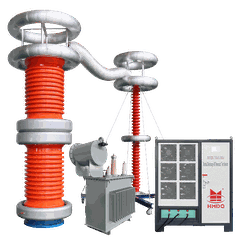



Insulation resistance is a crucial parameter in electrical equipment, and when it comes to a AC Test Transformer, understanding its insulation resistance is of utmost importance. As a supplier of AC Test Transformers, I am well - versed in the significance of this property and its implications for the performance and safety of the equipment.


What is Insulation Resistance?
Insulation resistance is a measure of the opposition that an insulating material offers to the flow of electric current. In the context of a AC Test Transformer, the insulation is designed to prevent the leakage of current from the high - voltage windings to the transformer's core, enclosure, or other parts. It is typically measured in ohms and is a key indicator of the quality and integrity of the insulation system.
A high insulation resistance value indicates that the insulation is in good condition and can effectively prevent current leakage. On the other hand, a low insulation resistance value may suggest that there are issues such as moisture ingress, insulation degradation, or mechanical damage to the insulation.
Factors Affecting the Insulation Resistance of a AC Test Transformer
1. Temperature
Temperature has a significant impact on insulation resistance. As the temperature increases, the insulation resistance decreases. This is because the mobility of ions in the insulating material increases with temperature, leading to a higher conductivity and thus a lower resistance. For a AC Test Transformer, it is important to measure the insulation resistance at a specific temperature and make appropriate corrections if the measurement is taken at a different temperature.
2. Humidity
Moisture is one of the main enemies of insulation. High humidity can cause moisture to be absorbed by the insulating material, reducing its insulation resistance. In a AC Test Transformer, if the insulation is exposed to a humid environment for an extended period, the moisture can penetrate the insulation and create conductive paths, leading to a decrease in insulation resistance.
3. Age and Usage
Over time, the insulation in a AC Test Transformer can degrade due to factors such as electrical stress, thermal stress, and mechanical vibration. The aging process can cause the insulation material to become brittle, crack, or lose its insulating properties. Regular maintenance and insulation resistance testing can help detect early signs of insulation degradation.
4. Contamination
Contamination on the surface of the insulation can also affect its resistance. Dust, dirt, and other foreign particles can accumulate on the insulation, creating conductive paths and reducing the insulation resistance. In addition, chemical contaminants such as oil or solvents can also damage the insulation material and lower its resistance.
Measuring the Insulation Resistance of a AC Test Transformer
Measuring the insulation resistance of a AC Test Transformer is a relatively straightforward process, but it requires the use of a specialized instrument called an insulation resistance tester. The tester applies a DC voltage to the insulation and measures the resulting current. The insulation resistance is then calculated using Ohm's law (R = V/I).
Before measuring the insulation resistance, it is important to ensure that the transformer is de - energized and all capacitors are discharged. The test leads should be properly connected to the appropriate terminals of the transformer, and the test voltage should be selected according to the rated voltage of the transformer.
Importance of Insulation Resistance in a AC Test Transformer
1. Safety
A high insulation resistance is essential for the safety of the operators and the equipment. If the insulation resistance is low, there is a risk of electric shock and short - circuits, which can cause serious damage to the transformer and other connected equipment.
2. Performance
Good insulation resistance ensures that the transformer operates efficiently. A low insulation resistance can lead to increased power losses, reduced efficiency, and overheating of the transformer.
3. Reliability
By regularly monitoring the insulation resistance, potential problems can be detected early, allowing for timely maintenance and repair. This helps to improve the reliability of the AC Test Transformer and reduce the risk of unexpected failures.
Related High - Voltage Testing Equipment
In addition to AC Test Transformers, there are other high - voltage testing equipment that are often used in conjunction with them. For example, an AC/DC High Voltage Divider is used to measure high voltages accurately. It can be used to measure the voltage output of the test transformer and ensure that it is within the specified range.
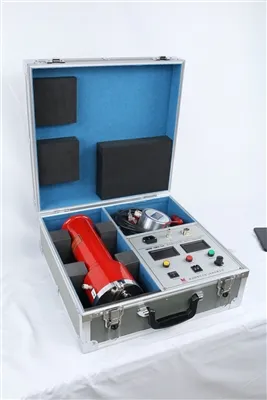
A DC Hipot Tester is another important piece of equipment. It is used to perform dielectric withstand tests on electrical equipment, including AC Test Transformers. The DC Hipot Tester applies a high DC voltage to the equipment under test to check its insulation integrity.
The 200 KV High Voltage Divider is specifically designed for high - voltage applications. It can measure high voltages up to 200 KV and is often used in high - voltage testing laboratories.
Contact for Purchase and Consultation
If you are interested in purchasing a AC Test Transformer or any of the related high - voltage testing equipment, or if you have any questions about insulation resistance or other technical aspects, please feel free to contact us. Our team of experts is ready to provide you with professional advice and support. We are committed to providing high - quality products and excellent customer service.
References
- Electrical Insulation Handbook, Third Edition, by Mark J. Kelley
- High - Voltage Engineering: Theory and Practice, by M. S. Naidu and V. Kamaraju