

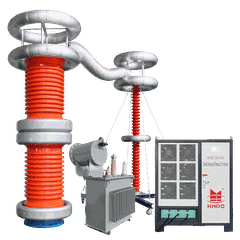


1200kV 45kJ Lightning Impulse Voltage Generator for Composite Insulator Testing
Introduction
Composite insulators are widely used in overhead transmission lines and high-voltage electrical systems. Their insulation performance is essential for reliable operation under normal operating voltage and transient overvoltage conditions.
Lightning impulse voltage testing is an important electrical test used to evaluate the external insulation withstand performance of composite insulators. The test applies a specified high-voltage impulse waveform to the specimen to assess its electrical behavior under lightning-related transient stress.
For high-voltage laboratories and composite insulator manufacturers, a reliable impulse voltage generator must provide sufficient output voltage, stored energy, waveform control, and measurement capability.
The 1200kV 45kJ Lightning Impulse Voltage Generator is designed for high-voltage insulation testing applications, including composite insulator testing where the required test voltage and test configuration are within the system's capability.
This article explains the working principle, system configuration, technical parameters, testing procedures, applications, and selection considerations of a 1200kV 45kJ impulse voltage generator.
1. What Is a Lightning Impulse Voltage Generator?
A lightning impulse voltage generator is high-voltage test equipment designed to produce short-duration impulse voltages with defined waveform characteristics.
Unlike power-frequency AC test equipment, an impulse generator produces a transient voltage with a rapid rise and a controlled decay. It is used to evaluate the insulation withstand capability of electrical equipment and components under simulated lightning overvoltage conditions.
Typical applications include:
Composite insulators
Power transformers
High-voltage bushings
GIS and electrical insulation components
Transmission-line insulation
High-voltage laboratory research
Electrical equipment type testing
The generated impulse voltage is measured using a suitable high-voltage divider and digital measuring system. The recorded waveform is evaluated according to the applicable testing standard and test specification.
2. Why Lightning Impulse Testing Is Important for Composite Insulators
Composite insulators are generally composed of a fiberglass-reinforced polymer core, a polymer housing with sheds, and metal end fittings.
Their electrical performance depends on several factors, including:
Insulator length and arcing distance
Creepage distance
Shed geometry
Electric field distribution
End-fitting design
Housing material and surface condition
Test mounting arrangement
During lightning impulse testing, a transient high voltage is applied to the insulator to evaluate its external insulation performance.
The test helps manufacturers verify whether the insulator design meets the required electrical withstand level and whether the specimen exhibits disruptive discharge under the specified test conditions.
For transmission-line composite insulators, the test procedure should follow the applicable product standard, including the specified test voltage, polarity, mounting arrangement, impulse waveform, and acceptance criteria.
3. Working Principle of a 1200kV Impulse Voltage Generator
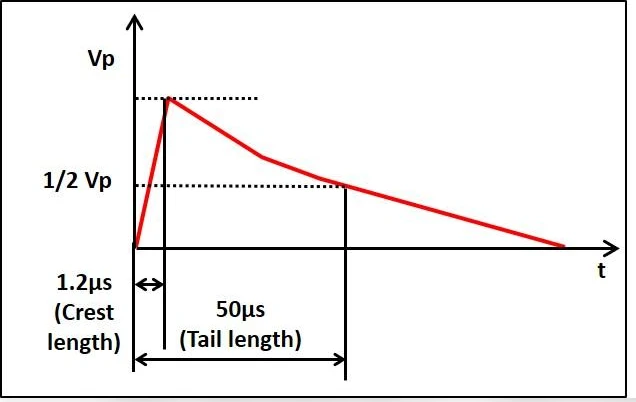
The impulse voltage generator works by storing electrical energy in capacitors and releasing it through a controlled discharge circuit.
The basic operating process includes four stages:
3.1 DC Charging
A DC charging system charges the impulse generator capacitor bank to a predetermined voltage.
The charging voltage is controlled according to the required impulse output and the generator's circuit configuration.
3.2 Energy Storage
The capacitor bank stores electrical energy before the impulse is generated.
For a generator rated at 45kJ, the specified stored-energy capacity is an important parameter for evaluating its energy capability. The actual available energy and delivered energy depend on the circuit design and operating conditions.
3.3 Impulse Generation
When the triggering system operates, the stored energy is discharged through the impulse circuit.
The generator circuit is designed to produce a high-voltage transient waveform suitable for the intended test.
3.4 Waveform Formation
The wave-shaping circuit controls the rising and falling characteristics of the impulse voltage.
For standard lightning impulse testing, the commonly used waveform is 1.2/50 μs, subject to the applicable test requirements.
The waveform parameters must be verified using the impulse measuring system under the specified test conditions.
4. Main Components of the Impulse Voltage Test System
A complete 1200kV 45kJ lightning impulse voltage test system typically includes the following functional sections. The exact equipment configuration should be confirmed from the manufacturer's technical documentation.
| Component | Function |
|---|---|
| DC charging system | Charges the generator capacitor bank |
| Impulse capacitor bank | Stores electrical energy |
| Impulse generator circuit | Produces the high-voltage transient |
| Wave-shaping components | Adjust the impulse waveform |
| Triggering system | Initiates the discharge |
| High-voltage output system | Connects the generator to the test object |
| Impulse voltage divider | Reduces high voltage to a measurable signal |
| Digital measuring instrument | Records and analyzes the impulse waveform |
| Control system | Manages charging, triggering, operation, and monitoring |
| Grounding and safety system | Supports safe high-voltage test operation |
The generator configuration depends on the rated voltage, stored energy, test object, required waveform, and laboratory installation conditions.
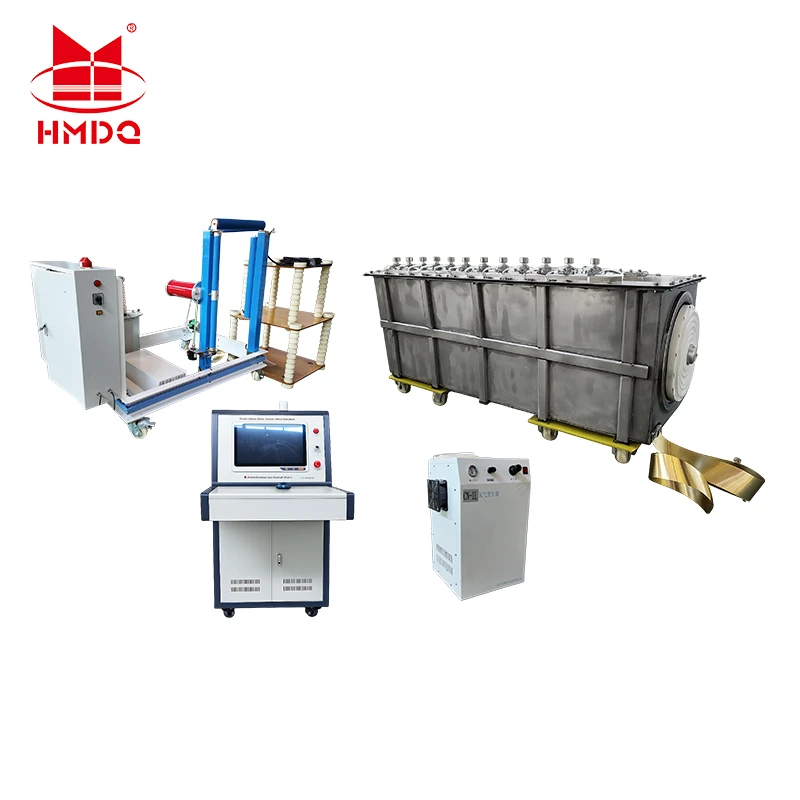
5. Technical Specifications of the 1200kV 45kJ Impulse Generator
The two confirmed parameters for this system are its rated impulse voltage and stored energy.
| Parameter | Specification |
|---|---|
| Equipment type | Lightning Impulse Voltage Generator |
| Rated impulse voltage | 1200 kV |
| Stored energy | 45 kJ |
| Application | High-voltage insulation impulse testing |
| Main test object | Composite insulators |
| Waveform | To be confirmed according to system configuration |
| Output polarity | To be confirmed |
| Measuring system | Configuration to be confirmed |
| Control system | Configuration to be confirmed |
Important: The 1200kV rating should be understood as the specified maximum impulse output capability only if confirmed by the manufacturer's rating documentation. It should not be confused with DC charging voltage or the actual test voltage applied to a composite insulator.
The 45kJ rating refers to the generator's stated stored energy. It does not necessarily represent the energy delivered to the test object during an individual impulse.
Additional specifications such as impulse waveform, generator capacitance, charging voltage, polarity, voltage measurement accuracy, and load capacitance should be confirmed before publication of a detailed product specification sheet.
6. Standard Lightning Impulse Waveform
The standard lightning impulse waveform commonly used in high-voltage testing is expressed as 1.2/50 μs.
The waveform contains two main time parameters:
Front time: Describes the rapid rising portion of the impulse.
Time to half-value: Describes the decay of the waveform to half of its peak value.
The waveform is used to provide a standardized transient electrical stress for insulation testing.
In composite insulator testing, the impulse waveform should meet the requirements specified in the applicable test standard. Waveform parameters should be recorded and verified using a suitable impulse voltage measurement system.
The actual waveform may be influenced by the generator configuration, test object capacitance, connecting leads, grounding arrangement, and other circuit characteristics.
7. Composite Insulator Lightning Impulse Test Procedure
The lightning impulse withstand test is performed according to the applicable test standard and approved laboratory procedure.
Step 1: Specimen Preparation
Inspect the composite insulator and confirm its identification, dimensions, end fittings, and test configuration.
Check the specimen for visible defects and prepare the mounting arrangement according to the test requirements.
Step 2: Test Circuit Connection
Install the composite insulator in the high-voltage test area.
Connect the impulse generator output and measurement system according to the approved test circuit. Check the grounding connections, electrical clearances, and measuring signal connections.
Step 3: Test Voltage Configuration
Determine the required impulse voltage from the applicable standard and test specification.
Configure the charging voltage, impulse polarity, and test parameters according to the generator calibration and operating instructions.
Step 4: Waveform Verification
Verify the impulse waveform using the voltage divider and digital measuring instrument.
Confirm that the recorded waveform meets the applicable requirements before proceeding with the formal test sequence.
Step 5: Impulse Application
Apply the specified impulse voltage sequence to the composite insulator.
Monitor the specimen and record the voltage waveform and any observed disruptive discharge or abnormal event.
Step 6: Test Result Evaluation
Evaluate the test results according to the relevant standard.
The test report should include the specimen identification, applied voltage, impulse polarity, waveform records, test conditions, observed events, and final conclusion.
The exact impulse count and acceptance criteria should be determined from the applicable test procedure rather than assumed.
8. Applications of the 1200kV 45kJ Impulse Generator
Composite Insulator Manufacturers
The generator can be used in high-voltage laboratories for evaluating the lightning impulse withstand performance of composite suspension and tension insulators, subject to the required test voltage and system configuration.
High-Voltage Testing Laboratories
Laboratories performing insulation type tests, research, and electrical performance verification may use a high-voltage impulse generator for standardized transient voltage testing.
Transmission-Line Insulation Testing
Impulse voltage testing supports insulation evaluation for components used in transmission-line systems. The test voltage should be selected according to the equipment's insulation level and applicable requirements.
Research and Development
The system may support research into insulation design, electrical field distribution, transient insulation behavior, and high-voltage testing techniques.
Electrical Equipment Manufacturers
Manufacturers of high-voltage insulation components may use impulse testing as part of their product development, quality verification, and type-testing programs.
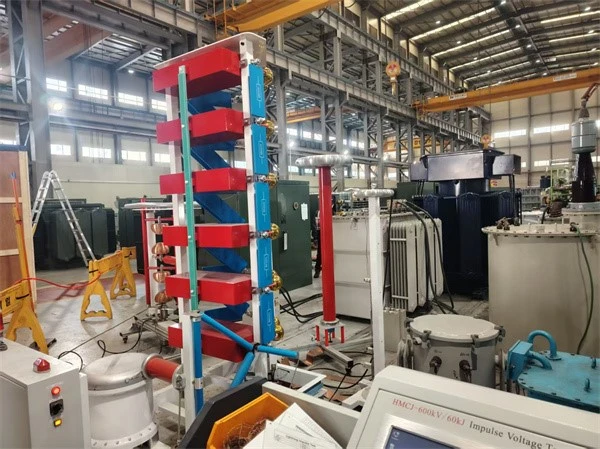
9. Advantages of a 1200kV 45kJ Impulse Test System
The key value of a high-voltage impulse generator is its ability to provide a controlled test voltage and a repeatable testing environment.
Potential advantages of an appropriately configured system include:
High-voltage output capability for insulation testing
Stored-energy capacity suitable for the designed test circuit
Configurable impulse waveform
Compatibility with high-voltage measurement systems
Support for laboratory type testing and research
Adaptability to different insulation test applications, subject to system configuration
Actual performance, waveform accuracy, automation functions, and measurement capabilities must be verified against the equipment specification.
10. How to Select a Lightning Impulse Voltage Generator
Before selecting an impulse generator for composite insulator testing, engineers should consider the following factors.
Rated Output Voltage
Determine the maximum required impulse test voltage. The generator rating should provide sufficient capability for the intended test program.
Stored Energy
Evaluate the stored energy required for the test circuit and connected load. The generator's energy rating should be assessed together with its capacitance and operating configuration.
Waveform Requirements
Confirm the required impulse waveform and tolerances. The generator should be capable of producing and verifying the required waveform under the intended test conditions.
Test Object Dimensions
Composite insulators can be long and may require specific mounting arrangements. Laboratory space, ground clearance, and electrical clearances should be considered.
Measurement System
Check the voltage divider, measuring instrument, waveform recording software, calibration, and measurement bandwidth.
Safety and Control
Review the charging system, trigger controls, protection functions, interlocks, grounding, and discharge arrangements.
Standards Compliance
Confirm the applicable product standard, general high-voltage test standard, and customer-specific test requirements before finalizing the system configuration.
11. Standards for Composite Insulator Testing
The following standards are relevant references for composite insulator and high-voltage impulse testing. The exact edition and clauses should be confirmed for the project.
| Standard | Scope |
|---|---|
| IEC 61109 | Composite suspension and tension insulators for overhead lines; design, type, sample, and routine tests |
| IEC 60060-1 | General definitions and requirements for high-voltage testing, including impulse testing |
| IEC 60060-2 | High-voltage measuring systems and measurement-related requirements |
IEC 61109 includes electrical type tests for composite suspension and tension insulators, including dry lightning impulse withstand voltage testing.
IEC 60060-1 provides general requirements for high-voltage testing and standard impulse voltage terminology.
The test procedure should be selected according to the insulator type, rated voltage, customer specification, and the applicable standard.
12. Goldhome 1200kV 45kJ Lightning Impulse Voltage Generator
Wuhan Goldhome Hipot Electrical Equipment Co., Ltd. (Goldhome Hipot) provides high-voltage testing equipment and customized solutions for electrical equipment manufacturers, power utilities, engineering companies, and high-voltage laboratories.
The 1200kV 45kJ lightning impulse voltage generator is intended for high-voltage insulation testing applications, including composite insulator testing according to the required test voltage and configuration.
The complete system configuration can be evaluated according to:
Maximum impulse output voltage
Stored energy
Required waveform
Test object dimensions
Test circuit characteristics
Voltage measurement requirements
Laboratory safety and installation conditions
Goldhome provides high-voltage testing equipment solutions for insulation testing, impulse voltage testing, and electrical performance evaluation.
For more information, visit:
Website: https://www.goldhomehipot.com
WhatsApp:+8618971538425
Frequently Asked Questions
1. What is a 1200kV 45kJ lightning impulse voltage generator used for?
It is designed for high-voltage impulse testing applications. Potential applications include composite insulator lightning impulse withstand testing and other insulation testing tasks that require a suitable high-voltage impulse system.
2. What does 1200kV mean?
It refers to the generator's rated maximum impulse voltage capability, subject to the manufacturer's rating definition and operating conditions. The actual test voltage depends on the test requirements.
3. What does 45kJ stored energy mean?
It represents the stated stored-energy capacity of the generator. It is not necessarily the energy delivered to the test object during each impulse.
4. Can the generator test composite insulators?
Yes, it may be suitable for composite insulator lightning impulse testing if the required test voltage, waveform, specimen arrangement, and measurement requirements are within the system's capabilities.
5. Which waveform is commonly used for lightning impulse testing?
The standard lightning impulse waveform commonly used in high-voltage testing is 1.2/50 μs. The required waveform tolerances should be confirmed from the applicable standard.
6. What measurement equipment is needed?
A suitable high-voltage impulse divider, digital measuring instrument, waveform recording system, and properly configured measurement connections are generally required.
7. Which standard is used for composite insulator testing?
IEC 61109 is a relevant product standard for composite suspension and tension insulators for overhead lines. IEC 60060-1 provides general requirements for high-voltage testing.
8. Is lightning impulse testing the only electrical test for composite insulators?
No. Composite insulator qualification may include other electrical, mechanical, material, and interface-related tests. The applicable testing program depends on the product standard and insulator design.


