

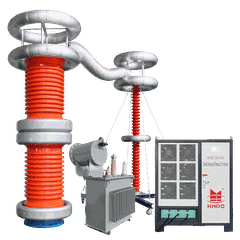


Mobile High-Voltage Test Set for AC Insulation Dielectric Strength Testing up to 10 kV
Electrical insulation must withstand the voltage stress encountered during normal operation and specified testing conditions. For electrical equipment manufacturers, maintenance teams and field testing engineers, high-voltage AC withstand testing is an important method for verifying insulation performance.
A mobile high-voltage test set with AC output up to 10 kV provides a portable solution for dielectric strength testing in laboratories, production facilities, workshops and field environments.
Unlike fixed high-voltage test installations, a mobile test set can be transported between different test locations, allowing engineers to perform insulation withstand tests without requiring a permanent testing station.
1. What Is a Mobile High-Voltage Test Set?
A mobile high-voltage test set is a portable electrical testing system designed to generate high-voltage AC output for insulation dielectric strength verification.
The equipment applies a specified AC voltage to the insulation under test and monitors the test process according to the selected procedure.
The mobile configuration is intended to support testing in different working environments, including:
Electrical equipment manufacturing workshops
Power distribution maintenance facilities
Electrical installation commissioning sites
Equipment repair workshops
Industrial testing laboratories
Field inspection and maintenance locations
For equipment requiring testing voltages up to 10 kV AC, the test set can be configured according to the required output voltage, test procedure and load characteristics.
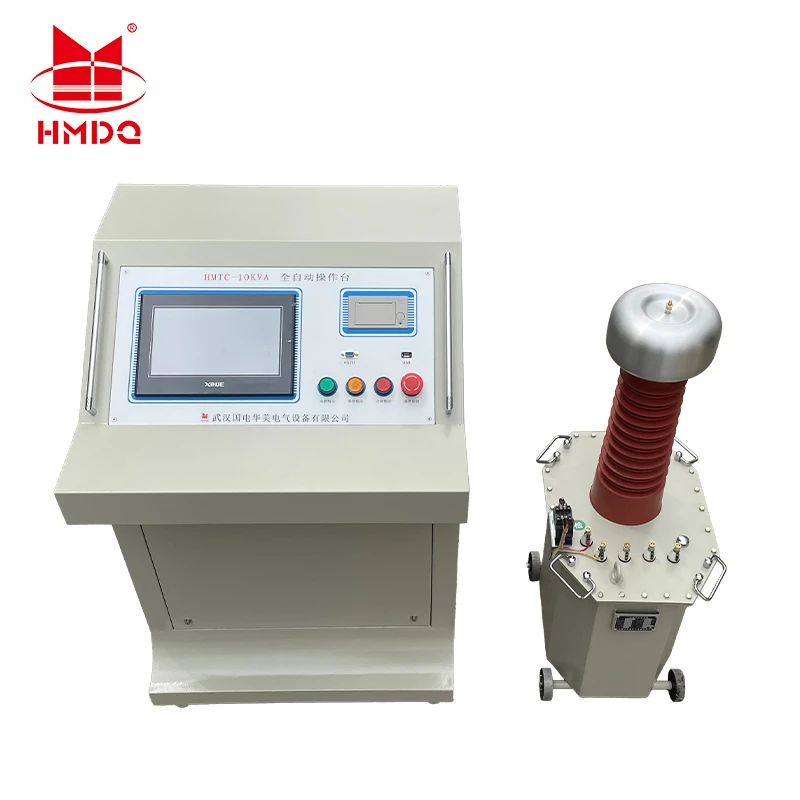
2. AC Voltage Output up to 10 kV
The system is designed for AC high-voltage insulation testing with an output capability of up to 10 kV.
The required test voltage is selected according to the insulation rating, applicable standard, product specification and testing purpose.
The maximum equipment output should not be interpreted as the mandatory test voltage for every test object.
Typical testing parameters
| Parameter | Description |
|---|---|
| Output Type | AC High Voltage |
| Maximum Output Voltage | Up to 10 kV |
| Test Purpose | Insulation Dielectric Strength / AC Withstand Testing |
| Equipment Type | Mobile High-Voltage Test Set |
| Application | Electrical insulation verification |
| Test Environment | Workshop, laboratory or field testing |
Other technical parameters, including output current, rated capacity, voltage regulation, measurement accuracy, duty cycle and protection functions, should be verified according to the specific equipment model.
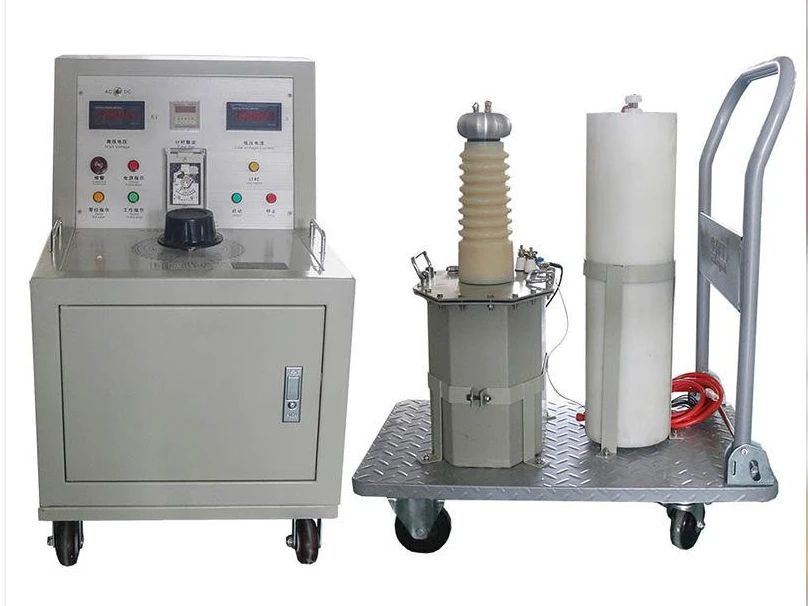
3. AC Dielectric Strength Testing Explained
Dielectric strength testing evaluates the ability of an insulation system to withstand a specified electrical voltage without breakdown.
During an AC withstand test, a high voltage is applied between the designated electrical points, such as:
Conductor and ground
Primary circuit and secondary circuit
Live parts and enclosure
Insulated components and earth
Electrical terminals and supporting structures
The test voltage is applied for a specified duration under controlled conditions.
The test outcome is generally evaluated based on whether insulation breakdown or other unacceptable behavior occurs during the test.
AC withstand testing vs insulation resistance testing
These two tests serve different purposes.
| Test | Main Function | Test Method |
|---|---|---|
| AC Dielectric Strength Test | Verifies insulation withstand capability | Applies specified high-voltage AC stress |
| Insulation Resistance Test | Measures resistance of insulation | Uses DC test voltage and measures resistance |
| Leakage Current Test | Evaluates current through insulation under test conditions | Measures current during applied voltage |
| Partial Discharge Test | Detects localized discharge activity | Detects and analyzes PD signals |
A mobile AC high-voltage test set is primarily designed for dielectric strength and withstand testing, rather than replacing an insulation resistance tester or partial discharge measurement system.
4. Why a Mobile Configuration Is Useful
The mobile design is particularly valuable when electrical equipment cannot easily be transported to a fixed testing laboratory.
Testing at Multiple Locations
Engineers can move the testing equipment between production lines, workshops, substations or maintenance locations.
Reduced Equipment Handling
A mobile system may simplify transport and setup compared with separate high-voltage components that require extensive assembly.
Field Testing Flexibility
The test set can support insulation testing during maintenance, installation verification and repair activities, subject to site safety and test requirements.
Workshop Testing
Manufacturers and repair facilities may use mobile high-voltage equipment to conduct routine insulation withstand tests on electrical products or components.
Centralized Test Control
A dedicated control system can provide the operator with a controlled interface for voltage adjustment, test monitoring and test operation, depending on the equipment configuration.
5. Typical System Configuration
A mobile AC high-voltage test set generally consists of several functional components.
AC High-Voltage Transformer
Generates the high-voltage output required for insulation testing.
Voltage Regulation System
Controls the input or output voltage during the test process, allowing the operator to increase or decrease the applied voltage according to the test procedure.
Control Unit
Provides the operating interface for test voltage control, monitoring and test operation.
High-Voltage Measurement System
Measures or monitors the applied high voltage for test control and result recording.
Protection System
Provides safety-related functions according to the equipment design, which may include overcurrent protection, overvoltage protection, emergency shutdown and interlocking.
Mobile Structure
A trolley, frame or mobile enclosure facilitates transport between testing locations.
The actual configuration varies by model. A mobile high-voltage test set may use an integrated design or separate high-voltage and control components mounted on a transportable structure.
6. Typical AC High-Voltage Insulation Testing Procedure
A controlled test procedure helps ensure that test results are repeatable and that personnel and equipment are protected.
Step 1: Identify the Test Object
Confirm the equipment nameplate, rated voltage, insulation arrangement and test requirements.
Determine the designated test points and grounding arrangement.
Step 2: Isolate the Test Object
Disconnect the equipment from the power supply and other connected circuits.
Verify that the test object is de-energized and isolated.
Step 3: Establish the Test Area
Set up the test area with suitable barriers, warning signs and safety controls.
Ensure that unauthorized personnel cannot enter the high-voltage testing area.
Step 4: Connect the Test Equipment
Connect the high-voltage output to the designated test point.
Establish the required grounding connections and verify the test circuit before applying voltage.
Step 5: Set the Test Parameters
Select the required AC test voltage and duration according to the test procedure.
The test voltage must be based on the relevant product standard, equipment rating or approved test specification.
Step 6: Apply the Test Voltage
Increase the voltage in a controlled manner according to the prescribed procedure.
Monitor the voltage, current and equipment operating status.
Step 7: Complete the Test
After the required test duration, reduce the voltage to zero and switch off the test equipment.
Discharge the test object and establish grounding before disconnecting any high-voltage connections.
Step 8: Record the Results
Document the test voltage, test duration, test object identification, test configuration, observations and result.
7. Applications of a Mobile 10 kV AC High-Voltage Test Set
Electrical Equipment Manufacturing
Testing insulation withstand capability during manufacturing and production quality control.
Electrical Maintenance and Repair
Verifying insulation condition after equipment repair, component replacement or maintenance work.
Switchgear and Distribution Equipment
Testing designated insulation sections of electrical distribution equipment according to the applicable test procedure.
Industrial Electrical Systems
Supporting insulation testing of electrical components used in manufacturing plants, industrial facilities and power distribution networks.
Electrical Installation and Commissioning
Performing specified AC withstand tests during electrical installation verification and commissioning.
Testing Laboratories
Supporting electrical insulation testing where a portable high-voltage source is required for multiple test objects.
The suitability of the equipment for each application depends on the test voltage, required output capacity, test object capacitance and applicable testing standard.
8. How to Select a Mobile High-Voltage Test Set
Selecting a mobile high-voltage test set requires consideration of both electrical parameters and operating conditions.
Maximum Output Voltage
Confirm that the equipment can deliver the required test voltage. For applications requiring up to 10 kV AC, verify the maximum rated output and operating range.
Rated Output Capacity
The required output capacity depends on the test object and its electrical characteristics.
Capacitive loads may require higher output current during AC testing.
Voltage Regulation
Evaluate the voltage adjustment method, regulation performance and stability according to the testing requirements.
Measurement Capability
Confirm the availability of voltage monitoring, current measurement, digital display, test data recording and other required functions.
Safety Protection
Review grounding, interlocking, emergency stop, overcurrent protection, overvoltage protection and discharge arrangements.
Mobility
Consider the mobile structure, transport dimensions, weight, wheels, lifting points and working environment.
Operating Interface
A clear control interface helps operators configure test parameters, monitor test conditions and manage test procedures.
9. Mobile High-Voltage Test Set vs Fixed Test System
| Comparison | Mobile Test Set | Fixed Test System |
|---|---|---|
| Installation | Transportable | Permanent installation |
| Test Location | Multiple locations | Dedicated test area |
| Mobility | Designed for movement | Generally stationary |
| Applications | Field and workshop testing | Production lines and laboratories |
| Setup | Depends on integrated design | May have dedicated test infrastructure |
| Equipment Configuration | Portable or trolley-mounted | Often larger or customized |
A mobile high-voltage test set is useful where testing requirements change between locations.
A fixed testing system may be more suitable for high-volume production testing or testing environments with permanent shielding, automation and specialized infrastructure.
10. Safety Considerations for AC High-Voltage Testing
AC dielectric strength testing involves hazardous high voltage. The test must be performed by qualified personnel using approved procedures.
Important precautions include:
Verify isolation of the test object.
Establish reliable grounding.
Use appropriate barriers and warning signs.
Confirm test connections before energizing.
Prevent personnel from entering the test area.
Use suitable interlocking and emergency shutdown arrangements.
Monitor the test throughout the voltage application period.
Discharge and ground the test object after the test.
Follow the equipment manufacturer's operating instructions.
High-voltage testing must not be performed without appropriate safety controls and qualified personnel.
11. Goldhome Mobile High-Voltage Testing Solutions
Wuhan Goldhome Hipot Electrical Co., Ltd. provides high-voltage testing equipment for electrical manufacturers, power utilities, industrial users and electrical testing laboratories.
Goldhome mobile high-voltage test solutions can be configured for AC insulation dielectric strength testing, equipment maintenance, workshop testing and field testing applications.
For applications requiring AC high-voltage testing up to 10 kV, system selection should consider the test object, required voltage, output capacity, testing procedure, safety requirements and working environment.
Explore Goldhome high-voltage testing equipment:
https://www.goldhomehipot.com
Frequently Asked Questions
What is a mobile high-voltage test set used for?
It is used to apply high-voltage AC to electrical insulation for dielectric strength or withstand testing in laboratories, workshops and field environments.
What is the maximum voltage of this test set?
The specified maximum output is up to 10 kV AC. The actual test voltage must be selected according to the test object and applicable procedure.
What is dielectric strength testing?
Dielectric strength testing evaluates the ability of insulation to withstand a specified electrical voltage without breakdown under defined test conditions.
Is AC withstand testing the same as insulation resistance testing?
No. AC withstand testing applies high-voltage AC to evaluate insulation strength, while insulation resistance testing measures resistance using DC test voltage.
Why choose a mobile high-voltage test set?
A mobile system can be transported between testing locations and is suitable for maintenance, workshop testing, commissioning and applications where a fixed test installation is not practical.
Can a 10 kV AC test set be used for all electrical equipment?
No. The required test voltage, output capacity, connection method and testing procedure depend on the specific equipment, insulation system and applicable standard.
Conclusion
A mobile high-voltage test set with AC output up to 10 kV provides a practical solution for insulation dielectric strength testing across workshops, laboratories and field environments.
Its mobile configuration supports flexible testing operations, while the high-voltage output enables specified AC withstand testing of electrical equipment and insulation components.
The appropriate equipment configuration should be selected according to the required test voltage, output capacity, test object characteristics, safety requirements and applicable standards.


