


Introduction
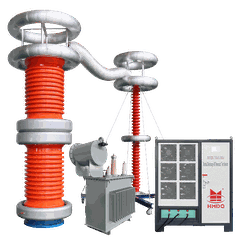
High-voltage (HV) cables are the backbone of modern power transmission networks, and their reliability directly affects the stability of the energy system. Traditional methods for testing the AC withstand strength of long cables often encounter problems due to high capacitive loads that require powerful power sources. AC resonance testing systems overcome these limitations using intelligent frequency adaptive technology, providing an efficient and accurate solution for dielectric strength testing.
Core Technology: Automatic Resonance Tracking
The standout feature of advanced AC resonant test systems is their ability to automatically track and lock onto the resonant frequency of the test circuit. This capability transforms the testing process:
•Adaptive Frequency Adjustment: Modern systems continuously monitor circuit parameters and adjust output frequency to maintain optimal resonance conditions, even with varying cable lengths or environmental factors
•Power Efficiency: By operating at resonance, the system requires only 1-5% of the power needed for conventional test methods, significantly reducing energy consumption and equipment size
•Voltage Stability: Automatic compensation ensures stable test voltage throughout the duration of the test, critical for accurate assessment of cable insulation integrity
Advantages of field use
The implementation of resonant technology offers several advantages in field test scenarios:
•Portability: Lower power requirements enable more compact system designs, facilitating transport to remote substations or underground cable installations.
•Improved safety: Precise voltage control and built-in protection mechanisms prevent overvoltage that could damage valuable cable equipment.
•Compliance with standards: These systems facilitate testing in accordance with IEEE, IEC, and other international standards for commissioning and maintenance of high-voltage cables.
•Diagnostic capabilities: The pure sine wave generated by resonant systems allows for better partial discharge detection and insulation quality assessment.
Industrial applications
Resonance testing systems have become indispensable in many industries:
•Energy supply companies: For routine maintenance of underground and underwater cable networks.
•Industrial plants: Testing medium-voltage distribution cables in production facilities.
•Renewable energies: Commissioning export cables in offshore wind farms and solar parks.
•Infrastructure projects: Quality testing in the field of transport electrification and the modernization of urban power grids.
Technical considerations
Several factors must be taken into account when performing resonance tests:
•System configuration: correct selection of variable reactors and matching transformers according to cable capacity.
•Environmental factors: temperature and humidity variations that may affect cable parameters during testing.
•Safety rules: comprehensive earthing measures and safety distances for field testing.
•Data recording: integrated measurement systems to document test parameters and results.
Conclusion
AC resonance testing systems represent a significant technological advancement in high-voltage cable testing methodology. With intelligent frequency adaptation and precise control capabilities, these systems offer utility engineers and testing professionals an effective, safe, and reliable method for verifying cable insulation integrity. As electrical grids continue to expand and evolve, the role of resonance testing technology in ensuring system reliability will only become more important. The combination of technical sophistication and practical field applicability makes these systems an essential element of modern electrical asset management strategies.