

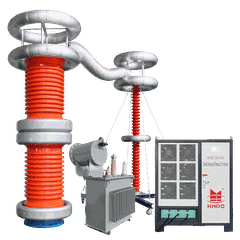


Goldhome Hipot HM2670 5 kV AC Withstanding Voltage Tester Manufacturer in China
Introduction
Electrical insulation testing is an essential part of quality control for electrical equipment and electronic product manufacturing. Before products are delivered or installed, manufacturers need to verify that their insulation systems can withstand specified electrical stress without breakdown or excessive leakage current.
The Goldhome Hipot HM2670 5 kV AC Withstanding Voltage Tester is designed for dielectric withstand testing of electrical and electronic products. With an adjustable AC test voltage from 0.5 kV to 5 kV, adjustable leakage current settings and a 50 Hz sine-wave output, it can be used in production inspection, electrical safety testing and laboratory applications.
As a China-based high-voltage testing equipment manufacturer, Wuhan Goldhome Hipot Electrical Co., Ltd. supplies electrical testing instruments for manufacturers, laboratories and power industry customers.
This article introduces the HM2670's working principle, technical specifications, applications and key considerations when selecting an AC hipot tester.
1. What Is a 5 kV AC Withstanding Voltage Tester?
An AC withstanding voltage tester, also known as an AC hipot tester or dielectric withstand tester, is an electrical safety testing instrument used to evaluate the insulation strength of an electrical product.
During testing, the instrument applies a specified AC voltage between selected electrical points. It monitors the leakage current and identifies abnormal conditions such as insulation breakdown or excessive current.
Typical test applications include:
Electrical components and assemblies
Transformers and motors
Power cables and electrical wires
Switches, plugs and sockets
Household electrical appliances
Electronic instruments and equipment
Insulating materials and electrical accessories
The test voltage and duration depend on the product design, applicable safety standard and manufacturer's test procedure.

2. Goldhome HM2670 5 kV AC Hipot Tester
The HM2670 is an AC withstand voltage tester developed for electrical insulation testing.
It applies an adjustable AC test voltage and monitors leakage current during the test. Operators can set the required test voltage, leakage current threshold and test duration according to the inspection requirements.
Main Features
Adjustable AC test voltage from 0.5 kV to 5 kV
Adjustable leakage current setting
50 Hz sine-wave output
Adjustable test duration
Digital test operation
Compact structure for laboratory and production environments
Suitable for various electrical and electronic product testing applications
The instrument is designed to help manufacturers perform routine dielectric withstand inspections and identify potential insulation defects.
3. HM2670 Main Technical Specifications
The following parameters are based on the published HM2670 product information.
| Parameter | Specification |
|---|---|
| Model | HM2670 |
| Test voltage | AC 0.5–5 kV |
| Voltage accuracy | ±5% (published specification) |
| Leakage current setting range | AC 0.2–20 mA, adjustable |
| Leakage current setting accuracy | ±5% |
| Output power | 100 VA |
| Output waveform | 50 Hz sine wave |
| Test duration | 1–99 seconds, adjustable; manual/infinite mode also specified |
| Power supply | AC 220 V ±10%, 50 Hz ±2 Hz |
| Operating temperature | 0°C to +40°C |
| Relative humidity | ≤75% RH |
| Quiescent power consumption | Less than 30 VA |
Technical note: The published HM2670 specification above describes AC output. DC output voltage and DC testing performance have not been confirmed in the available model-specific specifications. If DC withstand testing is required, the output configuration should be confirmed with Goldhome before ordering.
4. Working Principle of the HM2670 AC Withstanding Voltage Tester
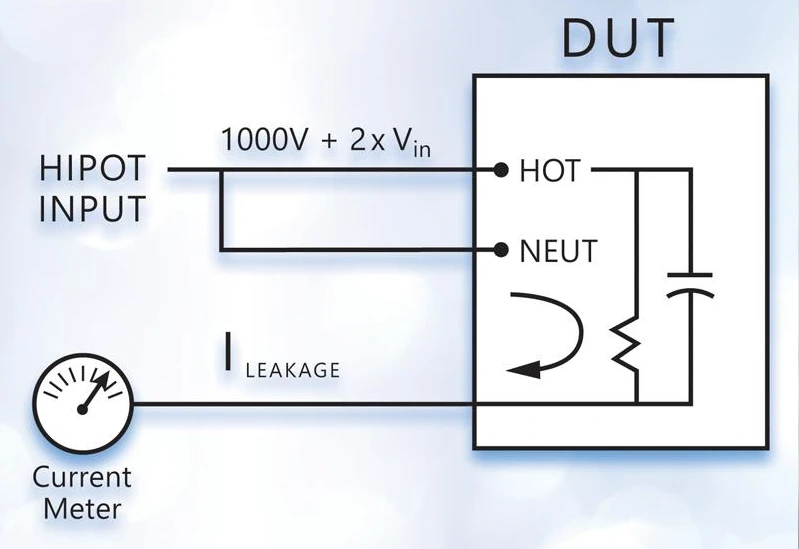
The HM2670 performs dielectric withstand testing by applying an AC high voltage to the insulation under test and monitoring the resulting leakage current.
The process can be divided into four main stages.
4.1 Test Voltage Generation
The instrument generates an AC test voltage within its specified output range.
The operator selects the required test voltage according to the product's insulation requirements and approved test procedure.
4.2 Voltage Application
The high-voltage output is connected to the specified test points of the product.
For example, a test may be performed between live electrical circuits and accessible conductive parts, depending on the product design.
4.3 Leakage Current Monitoring
During the test, the instrument monitors the current flowing through the insulation and associated capacitive paths.
If the measured current exceeds the preset limit or an unacceptable breakdown condition occurs, the tester can identify the abnormal test condition according to its protection design.
4.4 Test Result Evaluation
The test result is evaluated using the selected test voltage, leakage current threshold and test duration.
A product passes only when it meets the specified test criteria throughout the test.
5. AC Dielectric Withstand Testing Applications
5.1 Transformer Insulation Testing
Transformers contain insulation systems between windings, between windings and the core, and between electrical circuits and grounded structures.
An appropriate AC hipot tester can be used for specified insulation withstand tests on suitable transformer components or assemblies. The required test voltage must match the transformer design and applicable procedure.
5.2 Motor and Generator Testing
Motor and generator insulation systems must withstand electrical stress during operation.
AC dielectric withstand testing can be used in manufacturing inspection and maintenance procedures to evaluate insulation integrity.
5.3 Cable and Wire Testing
Electrical wires and cables require suitable insulation performance for safe operation.
A 5 kV AC withstand voltage tester can support testing of suitable cable and wire products, provided that the required test voltage, leakage current and load are within the instrument's ratings.
5.4 Electrical Components
The HM2670 can be applied to dielectric withstand inspection of suitable electrical components, including:
Power plugs and sockets
Switches and connectors
Electrical assemblies
Insulating components
Household electrical products
5.5 Electronic Equipment Manufacturing
Manufacturers of electronic instruments and electrical appliances may use AC hipot testing as part of their production quality control process.
The test arrangement must account for sensitive electronic circuits and the product's specified insulation barriers.
6. How to Perform an AC Hipot Test
The following is a general testing workflow. The exact test connections, voltage and duration must follow the applicable product standard and approved testing procedure.
Step 1: Inspect the Test Object
Check the product's insulation condition, terminals, enclosure and electrical connections.
Confirm the rated voltage and identify the required insulation test points.
Step 2: Prepare the Tester
Connect the HM2670 to the specified AC 220 V power supply.
Check the test leads, grounding arrangement and safety protection before operation.
Step 3: Set the Test Parameters
Set the required parameters:
AC test voltage
Leakage current threshold
Test duration
The selected values must be appropriate for the test object and applicable standard.
Step 4: Connect the Test Object
Connect the high-voltage lead and return lead to the specified test points.
Ensure the test object is isolated from its normal power supply and other external circuits.
Step 5: Start the Test
Start the test using the instrument's operating procedure.
Apply the specified voltage and monitor the leakage current during the test.
Step 6: Evaluate the Result
Check whether the test voltage remains within the required range and whether the leakage current stays below the specified limit.
Any breakdown, flashover or abnormal test condition should be investigated.
Step 7: Discharge and Disconnect
After testing, allow the test object to discharge safely. Verify that no hazardous voltage remains before removing the test leads.
7. AC Hipot Tester vs. DC Hipot Tester
AC and DC withstand voltage testers use different test voltage waveforms and may be selected for different test requirements.
| Comparison | AC Hipot Tester | DC Hipot Tester |
|---|---|---|
| Test voltage | Alternating voltage | Direct voltage |
| Electrical stress | Alternating electric field | Unidirectional electric field |
| Capacitive current | Present during AC testing | Mainly transient charging current after voltage application |
| Typical applications | AC dielectric withstand testing | Specified DC insulation withstand applications |
| Test procedure | Defined AC voltage and duration | Defined DC voltage, charging behavior and duration |
| Selection basis | Applicable standard and insulation design | Applicable standard and insulation design |
A product advertised as an AC/DC hipot tester should have confirmed AC and DC output specifications, including voltage range, current limit and test modes.
For the HM2670, the currently published model-specific parameters confirm AC testing. Its DC capability should not be assumed without additional technical documentation.
8. How to Choose a Suitable 5 kV Hipot Tester
When selecting a 5 kV withstand voltage tester for manufacturing or laboratory use, consider the following factors.
1. Test voltage range
Confirm that the equipment can provide the voltage required by the product test procedure.
2. Leakage current setting
The adjustable leakage current threshold should cover the required acceptance criteria.
3. Output capacity
Check whether the rated output power is sufficient for the test object. Capacitive loads may draw additional current during AC testing.
4. Test duration
Confirm that the timing function supports the required test period.
5. Protection functions
Consider overcurrent protection, breakdown detection, emergency stop and other safety functions.
6. Operating environment
Check the required power supply, temperature, humidity, ventilation and installation conditions.
7. Communication and automation
For production-line applications, consider whether the tester needs external communication, automatic test sequencing or integration with other inspection equipment. Confirm these functions against the actual model configuration.
9. Why Choose Goldhome as Your Hipot Tester Manufacturer in China?
Wuhan Goldhome Hipot Electrical Co., Ltd. specializes in the development and manufacturing of high-voltage electrical testing equipment.
Its product range includes AC/DC withstand voltage testers, high-voltage test transformers, AC resonant test systems, partial discharge testing equipment and other electrical testing instruments.
For customers looking for a 5 kV AC withstand voltage tester, Goldhome provides the HM2670 model for electrical insulation testing applications.
Goldhome works with electrical equipment manufacturers, power utilities, laboratories and industrial customers. Technical discussions can cover test voltage requirements, leakage current settings, test duration and application-specific configurations.
Goldhome HM2670 Product Information
Product model: HM2670
Product type: AC Withstanding Voltage Tester
Maximum published AC test voltage: 5 kV
Leakage current setting: 0.2–20 mA
Output power: 100 VA
Frequency: 50 Hz
For product specifications, technical consultation and quotations, contact Goldhome directly.
Wuhan Goldhome Hipot Electrical Co., Ltd.
Website: https://www.goldhomehipot.com
Contact: +86 18971538425
10. Frequently Asked Questions
Q1: What is the maximum test voltage of the Goldhome HM2670?
The published HM2670 specification gives an adjustable AC test voltage range of 0.5 kV to 5 kV.
Q2: Does the HM2670 support AC and DC withstand testing?
The available model-specific specifications confirm AC output from 0.5 kV to 5 kV. DC output has not been confirmed in the published HM2670 parameters. Customers requiring DC testing should verify the configuration with Goldhome.
Q3: What is the leakage current setting range?
The published AC leakage current setting range is 0.2–20 mA, with a stated setting accuracy of ±5%.
Q4: What is the output power of the HM2670?
The published output power is 100 VA.
Q5: Which products can be tested using the HM2670?
Suitable applications include electrical components, cables, motors, transformers and household electrical products, provided that their test requirements are within the tester's rated capabilities.
Q6: What power supply does the HM2670 require?
The published specification states AC 220 V ±10%, 50 Hz ±2 Hz.
Q7: Can the HM2670 be used in an electrical product production line?
It can be used for dielectric withstand inspection in manufacturing environments. Whether it can be integrated into an automated production line depends on the required control and communication functions.
Conclusion
The Goldhome Hipot HM2670 is a 5 kV AC withstanding voltage tester designed for electrical insulation testing and production quality control.
With an adjustable AC test voltage of 0.5–5 kV, a 0.2–20 mA leakage current setting range, 100 VA output power and adjustable test duration, it provides a practical solution for suitable electrical and electronic product testing applications.
For manufacturers looking for a 5 kV AC Hipot Tester from China, Goldhome offers the HM2670 model and technical support for application-based equipment selection.
Wuhan Goldhome Hipot Electrical Co., Ltd.
Website: https://www.goldhomehipot.com
WhatsApp:+8618971538425


