

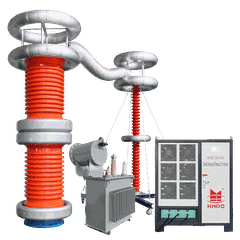


Tan Delta Tester: Dissipation Factor Testing for Electrical Insulation
1. What Is a Tan Delta Tester?
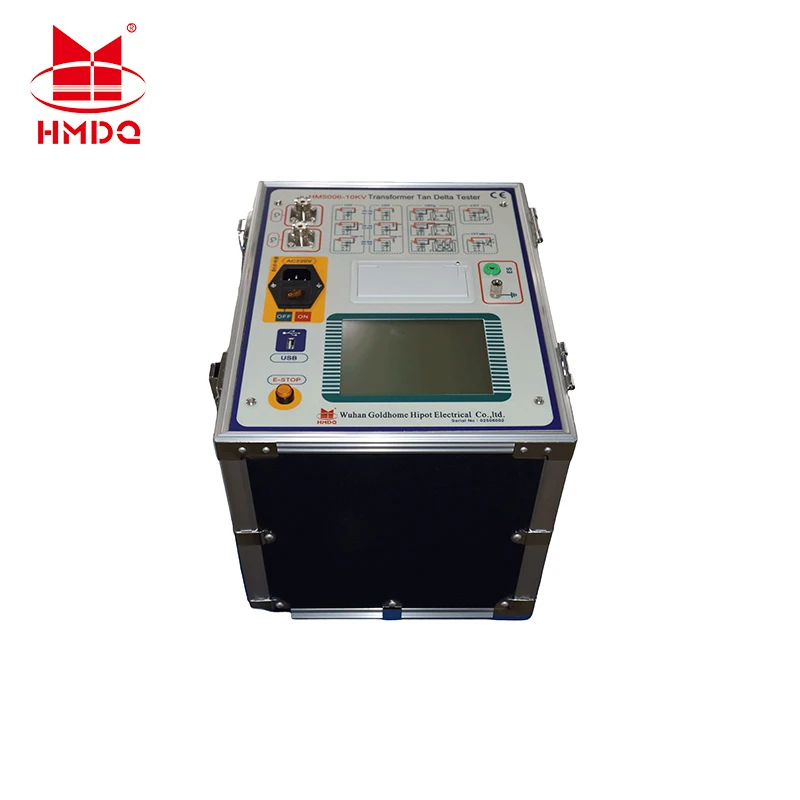
A tan delta tester is an electrical diagnostic instrument used to evaluate the dielectric properties and insulation condition of high-voltage electrical equipment.
Tan delta is also known as the dielectric dissipation factor (DDF). In power equipment testing, it is closely related to insulation power factor (PF).
The test measures the dielectric losses within an insulation system when an AC voltage is applied.
An ideal insulating material behaves like a perfect capacitor, with very little energy loss. In real electrical insulation, however, a small resistive current flows through the material. This produces dielectric losses.
As insulation ages or becomes contaminated by moisture, oil degradation products or other impurities, its dielectric losses may increase.
A tan delta test helps identify changes in insulation condition before a complete insulation failure occurs.
Common applications include:
Power transformers
Transformer bushings
Current transformers (CTs)
Voltage transformers (VTs/PTs)
Power cables
Generators and motors
Capacitors and other high-voltage insulation components
A tan delta tester is widely used during factory testing, commissioning, preventive maintenance and condition assessment.
2. What Is Dissipation Factor (Tan Delta)?
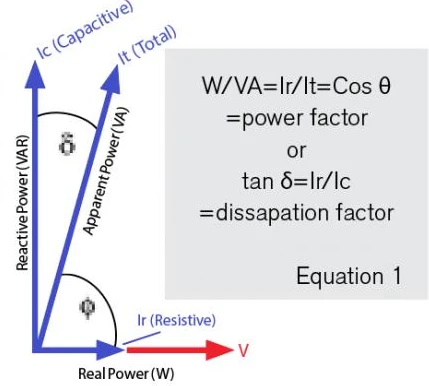
Dissipation factor describes the relationship between the resistive component and capacitive component of the current flowing through an insulation system.
When AC voltage is applied to an ideal capacitor, the current leads the voltage by 90 degrees.
In real insulation, dielectric losses cause the current phase angle to deviate slightly from the ideal capacitive condition.
The angle between the ideal capacitive current and the actual total current is called the loss angle, represented by δ.
The dissipation factor is calculated as:
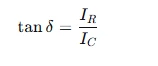
A low tan delta value generally indicates lower dielectric losses, while an increasing value may indicate deterioration, moisture or contamination.
Relationship Between Tan Delta and Power Factor
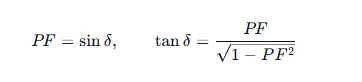
For low-loss insulation, the two values are numerically very close. However, they should not be treated as exactly interchangeable when precise calculations are required.
Both parameters are dimensionless and are often reported as percentages.
3. How Does a Tan Delta Tester Work?
A tan delta tester applies an AC test voltage to the insulation under examination and measures the resulting current and its phase relationship with the applied voltage.
The instrument analyzes the current components and calculates the dielectric dissipation factor.
A typical measurement system includes:
AC high-voltage source
Voltage measurement circuit
Current measurement circuit
Phase-angle measurement system
Capacitance and dissipation factor calculation unit
Control and data display system
Basic Working Process
Step 1: Apply AC voltage
The instrument applies a controlled AC voltage to the insulation under test.
Step 2: Measure the current
The measurement circuit records the current flowing through the test object.
Step 3: Analyze the phase angle
The instrument identifies the phase relationship between voltage and current.
Step 4: Calculate dielectric loss
The instrument calculates tan delta from the resistive and capacitive current components.
Step 5: Display test results
Depending on the instrument, the displayed results may include:
Tan delta
Power factor
Capacitance
Test voltage
Test frequency
Test current
Some advanced instruments also support automatic voltage stepping, temperature correction, data storage and test report generation.
4. Main Applications of Tan Delta Testing
4.1 Power Transformer Insulation Testing
Power transformers contain several insulation systems, including winding insulation, barriers, pressboard and insulating oil.
Tan delta testing can help assess dielectric losses in transformer insulation.
Typical measurement arrangements include:
High-voltage winding to ground
Low-voltage winding to ground
High-voltage winding to low-voltage winding
Individual winding insulation sections, where applicable
Capacitance measurements are commonly recorded together with dissipation factor.
An increase in dielectric loss or an abnormal change in capacitance may indicate insulation deterioration, contamination or physical changes in the insulation system.
Test connections must follow the transformer design and the applicable measurement procedure.
4.2 Transformer Bushing Testing
Bushings provide an insulated path for high-voltage conductors through grounded transformer tanks and other equipment enclosures.
Bushing insulation can deteriorate due to moisture ingress, ageing, contamination or internal defects.
Tan delta and capacitance measurements are used to evaluate bushing insulation condition.
For suitable bushings with test taps, measurements may include:
C1 insulation: Main insulation between the high-voltage conductor and the test tap.
C2 insulation: Insulation between the test tap and the grounded flange.
The actual measurement arrangement depends on bushing construction and the manufacturer's instructions.
4.3 Current Transformer (CT) and Voltage Transformer (VT/PT) Testing
Instrument transformers use insulation systems to separate high-voltage primary circuits from secondary measurement and protection circuits.
Tan delta testing can help evaluate the dielectric condition of their insulation.
It may be used during factory testing, commissioning and maintenance of suitable CTs and VTs.
The test voltage and connection method must be selected according to the equipment design and applicable procedures.
4.4 Power Cable Insulation Testing
Dielectric loss measurements can also be used to assess suitable power cable insulation systems.
For certain cable applications, VLF tan delta testing evaluates dielectric losses at very low frequency.
The measurement may provide information about insulation ageing and changes in dielectric properties.
VLF tan delta testing is different from a conventional power-frequency transformer tan delta test. The instrument, test frequency, voltage levels and interpretation criteria must match the cable test method.
4.5 Generator and Motor Insulation Testing
Tan delta testing can be used for suitable rotating machine stator winding insulation systems.
Depending on the test method, measurements may be performed on individual bars, coils or complete windings.
Changes in dielectric loss with applied voltage can provide additional information about insulation condition.
IEC 60034-27-3 provides guidance for dielectric dissipation factor testing of stator winding insulation systems.
5. Important Parameters in Tan Delta Testing
A tan delta test should not be evaluated using a single number alone. Several measurement parameters provide additional information.
| Parameter | Meaning | Diagnostic Value |
|---|---|---|
| Tan delta | Dielectric dissipation factor | Indicates dielectric losses |
| Power factor | Ratio of real power to apparent power | Provides related insulation loss information |
| Capacitance | Electrical capacitance of the test object | Helps identify changes in insulation geometry or condition |
| Test voltage | Applied AC voltage | Ensures the measurement follows the selected procedure |
| Test frequency | Frequency of the applied voltage | Affects the dielectric response |
| Temperature | Temperature of the test object or insulation | Important for result comparison and interpretation |
| Voltage tip-up | Change in tan delta with increasing voltage | May help identify voltage-dependent dielectric loss behavior |
Why Is Capacitance Important?
Tan delta testing is often performed together with capacitance measurement.
An increase in capacitance may indicate changes in the insulation structure, such as shorted capacitive sections in certain bushing designs.
When capacitance and tan delta are evaluated together, engineers can obtain more diagnostic information than from either value alone.
6. How to Perform a Tan Delta Test
The exact procedure depends on the equipment under test and the selected test method. A typical field procedure includes the following steps.
Step 1: Identify the test object
Confirm the equipment type, rated voltage, insulation arrangement and manufacturer's test requirements.
Step 2: Isolate the equipment
Disconnect the equipment from the power system and apply the required lockout/tagout procedure.
Verify that the test object is de-energized and safely grounded before making connections.
Step 3: Inspect the insulation surface
Check bushings, terminals and accessible insulation surfaces for moisture, oil, dust or contamination.
Clean and dry surfaces where required by the test procedure.
Step 4: Connect the test leads
Connect the high-voltage output, measurement lead and grounding lead according to the test configuration.
Select the appropriate measurement mode, such as GST, GST-Guard or UST, if supported by the instrument and suitable for the test object.
Step 5: Select test parameters
Set the test voltage and frequency according to the equipment manufacturer's instructions and applicable standards.
For voltage-dependent measurements, apply the specified voltage steps.
Step 6: Perform the measurement
Apply the test voltage and allow the instrument to measure capacitance and dielectric losses.
Record the results at each specified voltage level.
Step 7: Discharge the test object
After completing the test, allow the instrument's discharge function to operate as specified.
Discharge and ground the test object using the approved procedure before disconnecting the leads.
Step 8: Analyze the results
Review tan delta, capacitance, test voltage and environmental conditions.
Compare the results with factory records, previous measurements and the applicable acceptance criteria.
High-voltage dielectric testing must only be performed by trained personnel using approved safety procedures.
7. What Causes High Tan Delta Values?
An increase in tan delta may indicate changes in insulation condition.
Common contributing factors include:
Moisture
Moisture can increase the conductivity and dielectric losses of insulation materials.
In oil-paper transformer insulation, moisture distribution between oil and solid insulation should also be considered.
Insulation Ageing
Thermal, electrical and chemical ageing can change the dielectric properties of insulation materials.
Long-term deterioration may lead to increasing dielectric losses.
Contamination
Dust, oil residues, surface moisture and other contaminants can influence measurements, particularly when surface leakage is included in the measurement circuit.
Internal Insulation Defects
Delamination, voids, cracks and other insulation defects may change dielectric behavior.
Further testing may be necessary to identify the cause.
Temperature Differences
Dielectric loss is temperature-dependent. Measurements taken at different temperatures may not be directly comparable.
Temperature correction should follow the relevant equipment-specific procedure rather than applying one universal correction factor.
8. Tan Delta Test vs. Insulation Resistance Test vs. Partial Discharge Test
These tests provide different information about electrical insulation.
| Comparison | Tan Delta Test | Insulation Resistance Test | Partial Discharge Test |
|---|---|---|---|
| Main purpose | Evaluate dielectric losses | Measure insulation resistance | Detect localized electrical discharges |
| Test voltage | Usually AC | DC | Depends on the PD test method |
| Main result | Tan delta, PF and capacitance | MΩ, GΩ or TΩ | Apparent charge, phase-resolved patterns or other PD indicators |
| Main diagnostic focus | Overall dielectric loss behavior | Leakage and insulation resistance | Localized insulation defects |
| Typical applications | Transformers, bushings, CTs, VTs and rotating machines | Transformers, motors, cables and switchgear | Transformers, GIS, cables and other HV equipment |
These methods complement each other.
A tan delta test provides information about dielectric losses, an insulation resistance test measures resistance under DC voltage, and a partial discharge test detects localized electrical discharge activity.
No single test can independently establish the complete condition of every insulation system.
9. How to Choose a Tan Delta Tester
When selecting a tan delta test instrument, consider the test objects, required voltage range and measurement capabilities.
| Selection Factor | What to Check |
|---|---|
| Test voltage | Suitable voltage range for the equipment under test |
| Test frequency | Power-frequency or other required frequencies |
| Tan delta measurement | Measurement range and accuracy |
| Capacitance measurement | Supported capacitance range and accuracy |
| Measurement modes | GST, GST-Guard and UST, where required |
| Voltage stepping | Support for automatic voltage-dependent testing |
| Interference suppression | Suitability for field testing in substations |
| Temperature measurement | Temperature input and correction capabilities |
| Data management | Internal storage, export and reporting |
| Safety protection | Overvoltage, overcurrent and grounding protection |
| Portability | Weight, dimensions and suitability for field work |
Field Tester vs. Laboratory Tester
| Item | Field Tan Delta Tester | Laboratory Tan Delta Tester |
|---|---|---|
| Main application | On-site equipment condition assessment | Material and component testing |
| Design | Portable field configuration | Laboratory configuration |
| Test objects | Transformers, bushings and instrument transformers | Insulation materials, samples and components |
| Environment | Substation and industrial sites | Controlled laboratory environment |
| Measurement requirements | Field interference suppression and practical connections | Controlled test conditions and specialized measurement methods |
The appropriate instrument depends on the test object and measurement objective.
10. Goldhome Tan Delta and Insulation Testing Equipment
Wuhan Goldhome Hipot Electrical Co., Ltd. (Goldhome Hipot) provides electrical testing equipment for power utilities, transformer manufacturers, electrical equipment manufacturers and testing laboratories.
Goldhome's testing equipment range includes dielectric loss and capacitance testing solutions for electrical insulation assessment, together with other transformer and high-voltage testing equipment.
For customers selecting a tan delta tester, the required configuration should be determined according to:
Maximum test voltage
Tan delta measurement range and accuracy
Capacitance measurement range
Supported GST, GST-Guard and UST modes
Test frequency
Interference suppression requirements
Data storage and reporting functions
Goldhome also provides related transformer testing solutions for insulation resistance, high-voltage withstand testing and partial discharge measurement applications.
For product information and technical consultation:
Company: Wuhan Goldhome Hipot Electrical Co., Ltd.
Website: https://www.goldhomehipot.com
Contact: Visit the official website for technical support and product information.
11. Frequently Asked Questions
Q1. What is a tan delta tester used for?
A tan delta tester measures dielectric dissipation factor and capacitance to evaluate the insulation condition of electrical equipment such as transformers, bushings, CTs, VTs and rotating machines.
Q2. What is a good tan delta value?
There is no single acceptance value suitable for all electrical equipment.
Interpretation depends on insulation type, equipment design, temperature, test voltage, measurement method and applicable standards. Factory records and historical measurements are important references.
Q3. Is tan delta the same as power factor?
They are closely related but mathematically different. For low-loss insulation, their numerical values are very close. The measurement report should clearly identify which parameter is being reported.
Q4. Why is capacitance measured during a tan delta test?
Capacitance provides additional information about the physical and electrical condition of the insulation system. Changes in capacitance may indicate structural changes or defects in certain components.
Q5. Can a tan delta tester test transformer bushings?
Yes. A suitable tan delta tester can measure the dielectric loss factor and capacitance of compatible transformer bushings. The test connection depends on the bushing design and whether a capacitance or test tap is available.
Q6. Can tan delta testing detect moisture in transformer insulation?
An increase in dielectric losses may indicate moisture or other insulation deterioration. However, tan delta is not a direct moisture measurement. Additional tests may be required to determine the moisture content and its distribution.
Q7. What is the difference between power-frequency tan delta and VLF tan delta testing?
Power-frequency tan delta testing is commonly used for transformers, bushings and instrument transformers. VLF tan delta testing is used for suitable cable systems at very low frequency. The test equipment, voltage levels and interpretation criteria differ.
Q8. How often should tan delta testing be performed?
The testing interval depends on the equipment type, operating conditions, maintenance strategy, historical results and manufacturer recommendations. It is commonly included in commissioning and periodic condition assessment programs.
12. Conclusion
A tan delta tester is an important diagnostic instrument for evaluating dielectric losses in electrical insulation.
By measuring dissipation factor and capacitance, it helps maintenance engineers assess the condition of transformers, bushings, CTs, VTs, cables and other high-voltage insulation systems.
For reliable evaluation, test results should be interpreted together with temperature, test voltage, capacitance, previous measurements and other diagnostic information.
When selecting a tan delta tester, users should consider the required voltage range, measurement accuracy, test modes, capacitance range, interference suppression and data management functions.
For more information about dielectric loss testing equipment and high-voltage testing solutions, visit:
Goldhome Hipot: https://www.goldhomehipot.com
WhatsApp:+8618971538425


