

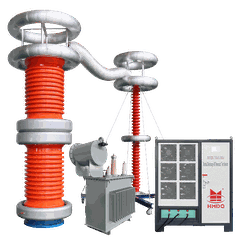



Portable waveform analysers: precision and portability in modern electrical testing solutions
Advances in electrical testing require the use of instruments that offer not only laboratory-grade accuracy, but also adaptability to dynamic field conditions. Portable waveform analysers represent a breakthrough in this area, combining high-precision measurement capabilities with the convenience of portability. These devices enable engineers and technicians to perform detailed assessments of supply quality, troubleshoot complex electrical systems, and ensure compliance with industry standards, all without being tied to a fixed location.
Summary of key advantages
1.High-precision measurement
Modern portable waveform analyzers integrate the latest digital signal processing (DSP) technology to capture and analyze voltage, current, and frequency waveforms with exceptional precision. This enables the detection of subtle anomalies such as harmonic distortions, transient currents, or dips that can indicate fundamental issues in electrical systems.
2.Greater mobility for field applications
Designed for harsh environments, these lightweight yet rugged devices feature long-lasting battery systems and intuitive interfaces. Their portability allows for rapid deployment in a variety of settings, from industrial facilities to renewable energy plants, electrical substations, and remote installations around the world, including Belt and Road initiatives and infrastructure projects in Latin America.
3.User-focused design and connectivity
Many advanced models support real-time data transmission, cloud integration, and compatibility with diagnostic software. These features facilitate seamless collaboration between field teams and central monitoring systems, streamlining decision-making and reporting processes.
Applications in different sectors
Portable waveform analyzers are essential in the following sectors:
- Power quality monitoring: Determination of harmonics, vibrations, and voltage imbalance.
- Preventive maintenance: Evaluating the condition of transformers, switches, and rotating machines.
- Renewable energy integration: Evaluating grid compatibility for solar and wind energy installations.
- Commissioning and compatibility: Verification of compliance with IEEE, IEC, and other international standards.
The technology behind the tools
Innovations in miniaturization and semiconductor technology have enabled the development of compact devices without compromising performance. Proprietary algorithms improve noise reduction and signal clarity, while modular designs allow for customization based on specific testing requirements. These advances reflect a broader trend in high-tech electrical testing solutions aimed at increasing efficiency and reliability.
Conclusion
Portable waveform analyzers are an example of precision engineering combined with practical mobility. By providing reliable, high-fidelity measurements in a compact form factor, they meet the growing demand for fast and accurate electrical testing in an increasingly decentralized and interconnected world.


