
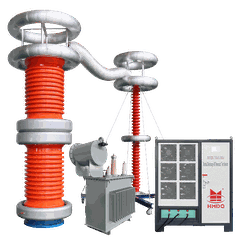



Presentation of the technical superiority of 50 kV VLF insulation test equipment in the field of modern power supply network diagnostics.

Introduction
In high-voltage electrical testing, very low frequency (VLF) hipot test sets have become essential for ensuring the reliability and safety of energy infrastructure. The 50 kV VLF hipot test set is a key tool in diagnostics, combining precision engineering with innovative methods. This article examines its technical strengths, highlighting how it achieves accurate insulation assessments while complying with strict global safety protocols.
Core technology: 0.1 Hz VLF output for efficient testing
A key feature of modern 50 kV VLF test sets is their 0.1 Hz operating frequency, which drastically reduces the energy required to evaluate long cables and high-capacitance loads. Unlike traditional DC testing, which can accidentally damage insulation, VLF testing uses a sinusoidal waveform at this low frequency, simulating real AC loads without the disadvantages. This method reduces potential equipment damage and improves the identification of hidden problems such as water trees or partial discharges.
- Safety and standards compliance: Systems operating at frequencies up to 0.1 Hz comply with international standards such as IEEE 400.2, creating a safer testing environment for personnel and equipment.
- Portability and versatility: These devices feature a modern, compact and lightweight design with intuitive controls, facilitating field work in a variety of scenarios, from urban cable networks to remote industrial facilities.
- Precision diagnostics: The built-in measurement functions provide comprehensive data on the condition of the insulation and support preventive maintenance to minimise downtime and extend the life of the equipment.
Key benefits in practical applications
- Improved safety and compliance: By generating test voltages at frequencies as low as 0.1 Hz, these systems comply with international standards such as IEEE 400.2, ensuring that test procedures reduce the risk to personnel and equipment.
- Portability and adaptability in the field: Modern designs incorporate lightweight components and user-friendly interfaces, allowing technicians to perform tests in a variety of environments, from urban underground networks to remote industrial sites.
- Data quality and diagnostic depth: Integrated measurement functions provide detailed information on insulation condition, enabling predictive maintenance strategies that reduce downtime and extend equipment life.
Industrial applications and case studies
VLF hipot test kits are widely used in the maintenance of medium-voltage cables, transformers, and rotating machinery. For example, in large projects in regions involved in international infrastructure initiatives, these tools simplify routine commissioning and fault identification without disrupting network stability. One notable application is the evaluation of cross-linked polyethylene (XLPE) cables, where they help verify insulation integrity after installation or repair.
This series of testers has many applications in the maintenance of medium-voltage cables, transformers and electric motors. In infrastructure projects in emerging markets and developed economies, for example, they facilitate equipment commissioning and troubleshooting without interrupting network operation. Typical applications include checking the insulation performance of cross-linked polyethylene (XLPE) cables after installation.
Conclusion
The 50 kV VLF hipot test kit is a testament to the advancement of high-voltage diagnostic technology, offering safety, efficiency, and accuracy. As power grids evolve and expand, the use of such advanced testing solutions becomes increasingly important to maintain system robustness. Professionals looking to enhance their diagnostic capabilities should consider incorporating VLF testing methods into their maintenance protocols and take advantage of the proven benefits of sustainable infrastructure management.

