





Products Video
HM306 Zinc Oxide Arrester Resistive Current Tester Wiring and Setting Parameter Video
Product Overview

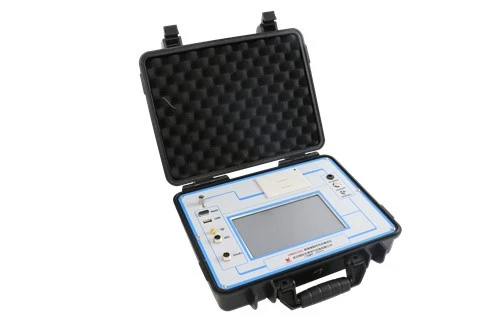
The HM6020A Surge Arrester Resistive Current Tester is a specialized instrument designed to test the electrical performance of zinc oxide surge arresters. It is used for live or de-energized testing of zinc oxide surge arresters at various voltage levels, thereby enabling the timely detection of hazardous defects such as moisture ingress in the internal insulation and aging of the varistors.
product Functions
| Three-Phase Simultaneous Measurement | Standard | Color Touchscreen | Standard |
| Bluetooth Control and Data Upload | Standard | RS-485 Synchronization and Wireless | Standard |
| Data Export via USB Flash Driv | Standard | Edge-Phase Interference Suppression | Standard |
| Lithium-Ion Battery | Standard | RS-232 MODBUS Communication | Standard |
| Host Computer Control and Data Upload | Standard |
|
|

Technical Parameters

1. Lithium-ion Battery Specifications:
Charging Time > 2.5 hours
Continuous Operating Time > 7 hours
Intermittent Operating Time > 7×24 hours
2. Package Dimensions: Main Unit 42 cm × 34 cm × 18 cm
3. Package Weight: Main Unit 7.5 kg
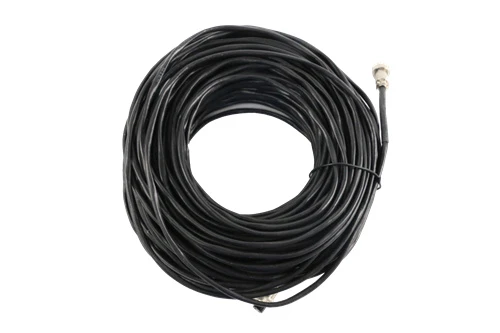
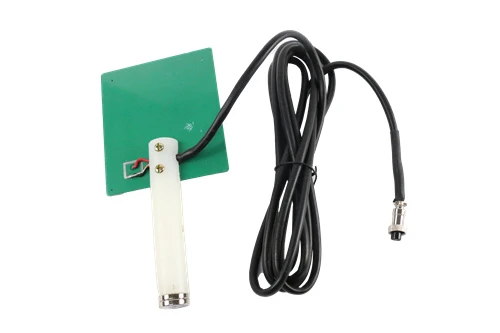
Accessories List


 \
\

Product & FAQ
Q:Based on test data, how can you determine the quality of a zinc oxide surge arrester?
A: Test data-such as that from a multimeter or test generator-can only provide precise measurements; it cannot indicate whether the device is in good or poor condition. The leakage current of a zinc oxide surge arrester varies depending on its voltage rating. The higher the voltage rating, the greater the leakage current. When analyzing measurement data, you generally examine the fundamental component of the total current, the peak value of the total current, the fundamental component of the resistive current, the peak value of the resistive current, and the phase angle difference.
Q:How do you test a valve-type surge arrester?
A:Valve-type surge arresters cannot be tested with this equipment. They contain a component similar to a spark gap; if the applied voltage does not exceed the spark gap voltage, the circuit is effectively open, and the leakage current is 0.
Q: Why is the phase angle difference inconsistent for a three-phase zinc oxide surge arrester?
A: This occurs because the three phases of high-voltage lines are relatively close together, and the induced voltages from the other two phases affect the current in the current phase, resulting in a lower reading for Phase A and a higher reading for Phase C. This is a normal physical phenomenon and does not indicate a problem with the testing principle or the tester.
Q: How do you set the phase shift angle during a no-voltage measurement?
A: During a no-voltage measurement, you cannot assess the condition of the zinc oxide surge arrester based on the phase angle difference. Start by setting the phase shift angle to 83.5 degrees, and then adjust this value based on the actual phase angle.
Hot Tags: portable zinc oxide lightning arrester characteristic tester, China portable zinc oxide lightning arrester characteristic tester manufacturers, factory


