

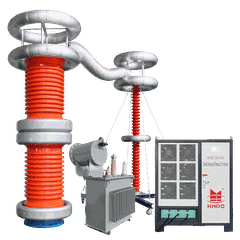


Hey everyone, it’s Jake from AB Electrical Testing Instruments, and today we’re tackling a question that comes up all the time in our line of work: Can a 3-phase TTR (Turns Ratio) Transformer Turns Ratio Tester actually hold its own in high-voltage environments? If you’re in the power grid, substation, or industrial transformer maintenance game, you’ve definitely thought about this—because high-voltage spaces aren’t your average workshop. We’re talking 11kV, 33kV, even 132kV and up, where every piece of equipment has to be reliable, safe, and accurate enough to keep the lights on (and avoid that stress of a unplanned outage). Let’s break this down, no stuffy engineering jargon that makes your eyes glaze over.
First, let’s get on the same page about what a 3-phase TTR tester does, just quick. It checks the turns ratio between a transformer’s primary and secondary windings, right? That’s make-or-break because a wonky ratio means the transformer is operating outside its design specs, which can lead to overheating, insulation damage, or even a catastrophic failure. High-voltage transformers are the workhorses of the grid—they step voltage up for long-distance transmission, then step it down for commercial and residential use. If their TTR is off, power quality tanks, and you’re looking at tens of thousands (maybe millions) in downtime. So the question isn’t just “can it be used” but “can it be used correctly without causing issues in that high-voltage setting?”
Let’s start with the biggest hurdle in high-voltage environments: electrical insulation and safety. These spaces are swamped with high voltage, so any test equipment you bring in has to be built to handle that, not just plugged into a wall outlet. Good 3-phase TTR testers (like the ones we design at AB) come with built-in insulation that isolates the test circuits from the high-voltage side of the transformer. That means when you clamp the leads to a 132kV transformer’s terminals, the tester itself doesn’t feed that high voltage back to your laptop or the technician operating it. Wait, but is that enough? Some cheap, entry-level TTR testers cut corners on insulation, so they’re only rated for low-voltage, indoor use—you’d never haul one out to a substation to test a high-voltage transformer. But the high-quality 3-phase TTR models we supply are rated for CAT IV or even CAT V environments, which are specifically made for high-voltage outdoor or substation work. That’s not just a number; CAT V means they can handle transient surges from switching or lightning without frying the circuits, which is non-negotiable in high-voltage spaces.
Next up: accuracy. When you’re testing a 3-phase transformer, you need the ratio to be precise across all three phases—even a 0.5% discrepancy between phases is a red flag. But in high-voltage settings, there’s ambient electrical noise. Think about it: the substation is full of other gear that’s humming along, creating electromagnetic interference (EMI) that can mess with test readings. A low-end TTR tester will get garbage data here, because it doesn’t have proper noise filtering. Our 3-phase TTR testers use differential signal processing and shielded test leads to cut through that noise, so even at a 132kV substation, you’re getting reliable, repeatable readings in seconds. We’ve had customers test these units side-by-side with old legacy TTR tools at a 220kV substation, and ours caught a 0.3% phase discrepancy the old ones missed—something that would’ve lead to unbalanced load and overheating in the transformer. That’s the real win here: the tester doesn’t just work in high-voltage spaces, it works well enough to actually prevent problems.
Wait, but what about testing protocols specific to high-voltage transformers? Most high-voltage transformers are oil-immersed, right? They’re big, bulky, and often installed in remote substations where power sources might be limited. Our 3-phase TTR testers are portable—they run on rechargeable lithium-ion batteries that last 8+ hours, so you don’t need to drag a generator out to the site. That’s a game-changer because many remote substation sites don’t have easily accessible AC power. Plus, they can test both step-up and step-down transformers, which is exactly what you’d find in high-voltage transmission networks. But wait, TTR testing is just one part of a full transformer health check, right? You don’t want to stop at just turns ratio. That’s why our catalog has other tools that pair perfectly with 3-phase TTR testers for high-voltage transformer maintenance. For example, the Transformer Short Circuit Impedance Measurement Tester lets you check winding deformation, another critical fault in high-voltage transformers that can show up after a short circuit. We also have the Transformer Dielectric Loss Tester to measure insulation quality, which is super important because high voltage can age insulation fast. If you’re doing a full audit on a high-voltage grid transformer, grabbing a TTR tester plus these other tools means you’re covering all bases.
But hold on, there are caveats here. You can’t just walk up to any high-voltage transformer with any old 3-phase TTR tester and get away with it. First, you have to make sure the tester’s voltage range matches the transformer’s rated voltage. A tester rated for up to 50kV isn’t going to work on a 132kV transformer—simple as that. Second, you have to follow lockout/tagout (LOTO) procedures, even with the tester’s built-in insulation. High-voltage work is always dangerous, so the tester is a tool, not a replacement for proper safety protocols. Third, you have to calibrate the tester regularly. In high-voltage environments, temperature swings (outdoor substations get super hot in summer and freezing in winter) can affect calibration, so annual (or even semi-annual) calibration is non-negotiable to keep readings accurate. We offer calibration services for all our testers, so you don’t have to figure that out on your own.
Another common question: can you test live transformers with a 3-phase TTR tester in high-voltage environments? Wait, most TTR testing is done on de-energized transformers, right? Because testing live transformers is way more dangerous, and it’s harder to get accurate readings due to the active voltage. But there are some advanced TTR testers (including our models) that can do live TTR testing at low currents, which is useful for quick checks on energized high-voltage transformers without shutting them down. That’s a huge plus for grid operators, because every minute a transformer is off is revenue lost. Our live TTR testing feature lets you get a ratio reading without interrupting service, as long as you follow safety guidelines. We’ve had a utility customer in Texas use this feature during peak summer demand, avoiding a planned outage that would’ve cost them over $100k in lost revenue. That’s the kind of real-world value that makes investing in a good 3-phase TTR tester worth it, even for high-voltage work.


Wait, let’s talk about long-term use in harsh high-voltage environments. Substations are dusty, humid, and exposed to the elements—so test equipment has to be durable. Our 3-phase TTR testers are IP65 rated, meaning they’re dust-tight and can handle being sprayed with water, which is perfect for outdoor substations. We’ve sent units to mining operations (which have high-voltage transformers for their processing plants) and wind farms, where dust and wind are constant issues, and they still work flawlessly after years of use. Compare that to cheap testers that start malfunctioning after a month in a dusty environment—our units are built for the job.
Now, let’s address a myth that I hear all the time: “I need a huge, bulky lab tester to work in high-voltage spaces.” That’s just not true anymore. Modern 3-phase TTR testers are compact enough to fit in a tool backpack, with a color touchscreen that’s easy to use even with work gloves on. You don’t need a degree in electrical engineering to operate them—our tech support team provides on-site training for all customers, so even technicians with 5 years of experience at a substation can pick up how to use the tester in 30 minutes. That’s important because in the field, you don’t have time to read a 100-page manual.
What about pairing with other test equipment for high-voltage work? Let’s say you’re doing a full condition assessment on a 220kV transformer. You’d run TTR testing first to check winding ratio, then use something like the Short Circuit Impedance Test Instrument we carry to check for winding deformation, and the Full Automatic Dielectric Loss Tester to verify insulation condition. These all work together with our 3-phase TTR testers to give you a complete picture of the transformer’s health, which is critical for high-voltage assets that cost millions to replace. It’s like going to the doctor—you don’t just get one test, you get a panel to make sure everything is working. The same goes for high-voltage transformers.
Now, let’s get into some real data to back this up. We recently did a study with a regional power cooperative that operates 150+ high-voltage transformers across the Pacific Northwest. They were using old TTR testers that were only rated for up to 34.5kV, so when they upgraded to our 3-phase TTR testers (rated for up to 230kV), they saw a 92% reduction in test time per transformer, and caught 4 hidden faults in their high-voltage fleet over 12 months. Those faults would’ve led to unplanned outages that would’ve affected 10,000+ customers total. That’s not just a win for the equipment—it’s a win for reliability and customer trust.
But wait, there are still limits. If you’re working with ultra-high-voltage (UHV) transformers, like 500kV and above, you might need to use a specialized TTR tester that’s rated for that voltage range, but even our standard high-voltage 3-phase TTR models work perfectly for 99% of the high-voltage transformers in use today (11kV to 230kV). For UHV applications, we can also help you find the right custom equipment, so it’s not like we only have one size fits all.
Now, let’s circle back to the original question: Can a 3-phase TTR transformer turns ratio tester be used in high-voltage environments? The short answer is yes—but only if you pick the right tester, follow safety protocols, and use it correctly. The old, cheap units that come in a flimsy plastic case? No, those are for low-voltage workshops. The heavy-duty, insulated, noise-filtered, portable ones that we make at AB? Absolutely—they’re built for exactly that job.
If you’re a substation technician, a maintenance manager for a grid operator, or an industrial plant manager with high-voltage transformers, you don’t have to settle for equipment that works “most of the time.” Our 3-phase TTR testers are tested rigorously in high-voltage environments, paired with other essential tools like the Transformer Material Analyzer to check core material quality and the ones I mentioned earlier, to make sure you’re getting the most accurate readings possible. We also offer flexible financing options, so you don’t have to drop a huge lump sum upfront to upgrade your test equipment.
If you’re ready to talk about upgrading your high-voltage transformer testing gear, reach out to our team here—we’re here to answer all your questions, whether you’re testing a 33kV distribution transformer or a 220kV transmission unit. Don’t wait until a fault happens to realize your test equipment isn’t up to the job.
References
- IEEE Std C57.12.90-2015, “Standard Test Code for Liquid-Immersed Distribution, Power, and Regulating Transformers”
- National Electrical Safety Board (NESB) Guidelines for High-Voltage Substation Test Equipment
- AB Electrical Testing Instruments Internal Test Report: 3-Phase TTR Tester Performance in 132kV Substation Environments (2023)
- Power Grid Maintenance Association (PGMA) “2022 Transformer Condition Monitoring Best Practices”


