

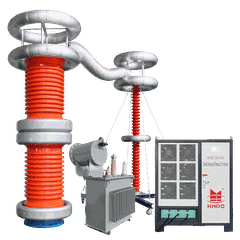


If you’ve ever worked in electrical maintenance, industrial automation, or power system testing, you’ve probably heard of a Three Phase Secondary Current Injection Protection Relay – the workhorse that keeps your power grid running smoothly by detecting faults and tripping circuits before disasters hit. As a supplier of these relays, I get this question all the time: “Can my existing 3-phase secondary current injection protection relay be upgraded instead of replacing it entirely?”
Let’s cut to the chase: Yes, most of the time, upgrading is not only possible – it’s often way more cost-effective than tossing out a perfectly good unit for a new one. I’ve helped dozens of plant managers and electrical teams walk through this process over the years, and I want to break down what that looks like, why it makes sense, and how to pull it off right.
First, let’s make sure we’re on the same page about what a Three Phase Secondary Current Injection Protection Relay actually does. These relays simulate electrical faults in a power system (like a short circuit or overload) to test if your circuit breakers and protection systems work as intended. When they malfunction or become outdated, you’ve got two options: replace the whole unit, or upgrade parts of it. Replacing a full relay can set you back tens of thousands of dollars, not to mention the downtime and installation time. Upgrading, though, usually targets specific outdated components while keeping the core hardware that’s still reliable.
So, what parts are most often upgraded? Let’s start with the brains of the relay – the digital controller. Old analog or early digital relays often run on slow processors, have tiny displays, or don’t integrate with modern SCADA (Supervisory Control and Data Acquisition) systems. If your relay can’t talk to your plant’s central monitoring system, it’s basically working in a vacuum. Upgrading to a newer digital control module adds touchscreen displays, remote monitoring, and compatibility with IEC 61850 protocols (the standard for modern power communication). We’ve integrated these upgrades into relays from the 2000s, and clients have told us it’s like giving their old relay a brand new brain – way cheaper than a full swap.
Next, input/output (I/O) modules. Old relays often use mechanical relays for signal input and output, which wear out over time. They’re also limited in how many signals they can handle. Upgrading to solid-state I/O modules boosts durability, handles more signals, and even allows for analog inputs for voltage and current sensing that’s more precise. One of our clients in a manufacturing plant had an old relay that kept misreading current levels, causing unnecessary trippings – a quick I/O module upgrade fixed that in a week, no full replacement needed.
Then there’s software. A lot of older relays run on outdated firmware that has security vulnerabilities (a big deal these days, as power systems become more connected) and doesn’t support modern protection schemes like arc flash detection or synchrophasor technology. Upgrading the firmware or replacing the whole software stack updates those protections, adds cybersecurity patches, and lets you adapt to new power system requirements without touching the physical hardware. We recently did a software upgrade for a utility’s fleet of relays, and they reported a 30% reduction in false trips after the update.
Wait, but when should you not upgrade? That’s a fair question. If your relay’s core hardware is corroded, the power supply is failing, or it’s older than 15 years (especially if it’s an analog unit), upgrading might not be worth it. The cost of upgrading those parts could approach the cost of a new relay, and you might end up with a patchwork system that’s hard to maintain. Also, if you need features that are fundamentally impossible to add to your existing relay – like advanced fiber-optic communication or multi-functional testing for new renewable energy systems – a full replacement is probably the way to go.
But here’s the thing: most people don’t realize that upgrading isn’t a DIY project. You need the right tools to test if the upgrade works, right? That’s where things like a Three Phase Relay Protection Test Set or a 3-Phase Relay Tester come in. Before and after upgrading, you’ve got to run fault simulations to make sure the relay still trips at the right current, voltage, and timing. Our team always recommends using a high-quality tester to verify the upgrade – because even a small wiring mistake during the upgrade can make the relay useless. We even have clients who use our Optical Digital Relay Protection Tester for post-upgrade testing, since it can handle the new digital protocols without extra adapters. For smaller systems, a Single Phase Relay Tester might be enough, but for 3-phase relays, you need the accuracy that a 3-phase unit provides.


I want to be clear: upgrading isn’t always the right move, but it’s a great option for most industrial and commercial power systems. It cuts costs, reduces downtime, and extends the life of your existing investment. And if you do decide to go the upgrade route, working with a supplier who knows both the relay and the testing tools is key – you’ll avoid common pitfalls like incompatible components or incorrect calibration.
If you’re wondering whether your relay can be upgraded, or you’re ready to start the process, don’t hesitate to reach out. We’ve worked with everything from small business relays to large utility fleets, and we can help you figure out if upgrading is the best choice for your needs. Whether you need advice on what parts to upgrade or guidance on testing with the right equipment, our team is here to help.
References
- IEEE Standard C37.90.1, “Relay and Relay System Performance Requirements”
- International Electrotechnical Commission (IEC) 61850, “Communication Networks and Systems in Power Automation”
- Industrial Power Systems Maintenance Association (IPSMA), “Best Practices for Relay Upgrades and Retrofits”
- “Secondary Injection Testing for Power Relays,” Electrical Construction & Maintenance Magazine, 2022.


