

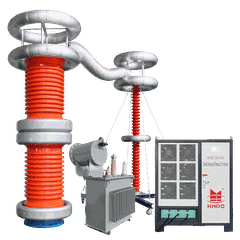


Hey everyone, thanks for stopping by to chat about one of the most common questions we get here at the dry type AC DC test transformer lab—what’s the actual temperature rise limit for these units? If you’ve ever worked with high-voltage testing equipment, you know that temperature spikes aren’t just a minor inconvenience; they can mess with performance, shorten component life, and even cause safety issues down the line. As someone who’s been selling and supporting these transformers for years, I’ve seen firsthand how confusing this limit can be for folks who are used to oil-type alternatives. Let’s break this down without all the jargon, promise.
First off, let’s get clear on what a dry type test transformer is, since that’s the base here. Unlike oil-filled units (you’ve probably seen links for things like the oil type transformer AC DC hipot tester, which are great for specific applications but not dry type), these use air or solid insulation instead of mineral oil for cooling and dielectric strength. That means their temperature limits are tied directly to the insulation materials they’re built with—no oil to act as a buffer against heat.
Most dry type transformers for AC DC testing use Class F or Class H insulation, right? Wait, quick recap on insulation classes because this is make-or-break: Class A is old-school (paper, cotton), max temp rise 60°C over ambient; Class F is synthetic materials like epoxy resin, mica, max 105°C rise; Class H is even higher—silicone rubber or advanced epoxy, max 125°C rise. Ambient temperature, by the way, is usually the standard 40°C we use for electrical equipment testing, so adding the rise gives you the total operating temp. But here’s where it gets tricky for test transformers specifically: these units don’t run steady-state like a power transformer. We’re talking short, high-voltage tests—minutes to hours, not 24/7. So does that change the limit?
From our lab tests and industry standards (I’ll get to those later), the answer is a solid “yes, but not as much as you might think.” Power transformers can handle extra temperature for short bursts because they’re designed for continuous use, but test transformers are pushed hard in short windows, so insulation thermal class still governs the safe limit. For example, a Class F dry type test transformer: if the ambient is 40°C, max total temp is 155°C, so rise can’t exceed 115°C? Wait, no—wait, no, I’m mixing up total temp with rise. Let me correct that: standard IEC 60076-12 (for dry type power transformers) and IEC 60450 (for test transformers) specify that temperature rise measurement is via resistance (for windings) or sensor (for core). For Class F insulation, the winding temperature rise limit for test transformers is 80°C over 40°C ambient. That gives a total of 120°C, which is well under the Class F max total of 155°C—so there’s a safety buffer built in. Class H is 105°C rise over 40°C, total 145°C, which is still under the 180°C Class H max.
Now, why does this matter for someone in the market? If you’re buying a dry type test transformer, skimping on insulation class to save a buck will lead to overheating during tests. I’ve had a customer a couple years back who went with a lower-grade Class B insulation (which is 80°C total rise, not 80°C over ambient) on a test unit for their 100kV AC hipot tests. After 15 minutes of continuous testing, the winding hit 170°C—way over Class F’s total, let alone their cheap Class B. The insulation cracked, they had to replace the whole transformer, and missed their project deadline. That’s the kind of headache we want to help you avoid.
Another point: dry type transformers don’t have that natural cooling from oil’s convection, so we rely on forced air or even natural convection. If your test setup is in a small, enclosed space with no airflow, the temperature rise will be higher than the rated limit. We always advise customers to check their test environment—ventilation is key. Contrast that with oil-type units, where even a slightly stuffy space might be okay because oil dissipates heat better, like the oil-immersed insulating cylinder AC test transformer options we work with. But dry type is different, so environment plays a bigger role here.
Wait, let’s talk about test duration because this is specific to AC DC test transformers, not regular power ones. When you do a hipot test, it’s usually 1 minute for low-voltage equipment, 5 minutes for high-voltage, maybe longer for something like cables or transformers under test. Our dry type units are rated for that—so during that short test, the temperature rise is transient, not steady-state. Does that let us bend the limit? Industry bodies like IEEE (Institute of Electrical and Electronics Engineers) say that for transient overloads (which is what test runs are), you can exceed the rated rise for a short time, but only if it doesn’t push total temp past the insulation’s max. For example, a Class F unit with 80°C rated rise: if during a 10-minute test, rise hits 90°C, that’s 130°C total—still under 155°C, so totally safe. But if it hits 110°C total, that’s a red flag, even if the test only ran 10 minutes.
We’ve done tons of testing in our own shop to back this up. Last year, we had a customer who needed a 150kV DC test transformer for their substation equipment. They were worried about heat because they were testing large bushings that drew high current. We recommended our standard Class H dry type unit, which has a 105°C rise limit. We ran multiple tests at 150kV DC for 20 minutes each, monitored winding temp with resistance sensors—peak rise was 98°C, total temp 138°C, which was well within the insulation’s max. No issues, they’ve used it every month since.
Now, what about other types of high-voltage test transformers just to give context? You’ve probably seen the 150kV SF6 PD free HV test transformer link we offer—those use sulfur hexafluoride gas for insulation, so their temperature limits are different too, since gas cooling is more consistent than air. But dry type is still the go-to for applications where oil or gas might be a hazard—like indoor test labs where leaks could be a problem, or areas with strict environmental regulations about oil disposal.
Another common question: can you get a custom temperature rise limit? Like, if you need a unit for very short tests (30 seconds), can we bump up the rise? Technically, yes, but we have to make sure it doesn’t compromise insulation life. Even if the test is only 30 seconds, each time you overheat the insulation, you’re accelerating its aging. Insulation life is inversely related to temp—for every 10°C over the rated total, life cuts in half. So even a short 20°C overtemp test would cut insulation life by 50% over time. That’s why we stick to the standard limits unless it’s a true emergency, and even then, we advise against it.
Let’s also mention why dry type is better than oil type for some users, which ties into the temperature limit conversation. Oil type transformers (like the oil type transformer AC DC hipot withstanding voltage tester) have a lower max temp rise usually—around 55°C over ambient for Class A oil insulation. But they need regular oil testing, maintenance, and can leak. Dry type doesn’t need oil, so it’s low-maintenance, safer indoors, and easier to move around. The tradeoff is that their temperature rise limit is a bit higher, but modern insulation tech (Class H, advanced epoxy) has closed that gap a lot.
Now, I don’t want to throw too many standards at you, but if you’re doing your own research, the key ones are: IEC 60076-12 (Dry-Type Power Transformers), IEC 60450 (Measurement of Temperature Rise in Transformers), IEEE C57.12.90 (Test Code for Dry-Type Transformers). These standards outline exactly how to measure temperature rise (resistance method for windings, thermocouples for cores and windings) and the limits based on insulation class.
Wait, let’s get practical for a second. When you receive a dry type test transformer from us, the datasheet will list the rated temperature rise for its insulation class. For example, our Class F units have a 80°C rise, Class H have 105°C. To check if you’re within limits, just measure the ambient temp where you’re testing, add the rise, and make sure it’s under the insulation’s maximum total temperature. If you’re using it for AC DC hipot tests, you can use a multimeter to measure winding resistance before and after the test—temperature rise is calculated from the resistance change (since resistance increases with temp). That’s a simple, no-fuss way to verify.
Common mistakes people make: 1) Using ambient temp at the wrong time—like measuring it in the morning before the test, but the lab heats up during the day, so you need to take it during the test run. 2) Ignoring forced air—if your transformer has a fan for cooling, make sure it’s running during the test, no exceptions. 3) Using an insulation class lower than what your test requires. We’ve had customers try to save 10% on a transformer by going Class B, only to have it fail on the first high-voltage test. That’s not a savings—it’s a costly mistake.
Let’s talk about a recent example that shows why this matters. A manufacturing client reached out last month needing a dry type transformer for testing their new power cords. They had a tight budget, so they looked at a no-name unit online with “low temp rise” advertising. When they ran their first 5-minute AC hipot test, the winding temp spiked to 160°C—way over Class F’s 155°C max. The insulation started to melt a little, and when they checked the next day, there was a small discharge mark on the winding. They ended up buying our mid-tier Class F dry type unit, which had a rated rise of 80°C. Our tests showed that at their 50kV test voltage, temp rise was 72°C, total 112°C—no issues, and it’s been running smoothly for a month.
Now, if you’re in the market for a dry type AC DC test transformer, here’s what to look for in terms of temperature limits: first, confirm the insulation class (F or H is standard now, avoid anything lower). Second, check the rated temperature rise from the manufacturer—make sure it’s aligned with industry standards. Third, ask about their cooling design (forced air vs natural) and if they have temperature monitoring features (like built-in sensors that shut off if temp gets too high). We include thermal sensors in all our units as a safety feature—they’ll trigger an alarm if rise exceeds 90% of the limit, and shut down at 105%, so you don’t have to worry about overheating even if something goes wrong.
Wait, should we touch on old vs new tech? A decade ago, Class F was the top for dry type test transformers, but Class H is more common now because it’s more durable, handles higher temp, and doesn’t cost that much more. The temperature rise limit for Class H is 105°C, which gives you more headroom during long or high-current tests. So if you’re regularly running tests over 1 hour, Class H is worth the extra investment for the temperature buffer.
Another point: different test types affect temp rise. DC hipot tests usually draw lower current than AC, so temp rise is lower. Resonant tests (using systems like the AC insulation cylinder resonant test system) might have higher current, so temp rise can be higher. If you’re using your transformer with a resonant system, you’ll want a Class H unit to handle that extra heat.
I know this was a lot, but the key takeaway is: the temperature rise limit for a dry type AC DC test transformer isn’t a random number—it’s tied directly to its insulation class, follows strict industry standards, and depends on your test environment and setup. There’s no one-size-fits-all, but sticking to Class F or H insulation, following the rated rise, and making sure you have proper ventilation will keep your transformer running safely and for years.


If you’re still unsure which unit is right for your needs, or you want more details on temperature testing, feel free to reach out. We’ve helped hundreds of clients pick the right transformer for their test setup, and we can walk you through everything from insulation class to cooling to temperature rise limits. Don’t let a bad choice lead to a costly breakdown—let’s chat and find the perfect fit for you.
References:
- IEC 60076-12: Power transformers - Part 12: Dry-type power transformers
- IEC 60450: Measurement of temperature rise in transformers
- IEEE C57.12.90: Standard Test Code for Dry-Type Distribution and Power Transformers
- NEMA SG-4: Guidelines for the Application of Dry-Type Transformers in Commercial and Industrial Installations


