

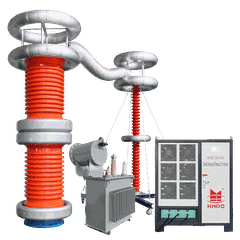


If you’ve ever worked in high-voltage testing, you’ve probably heard people ask, “Wait, what’s inside that gas type AC hipot tester anyway?” I get it—when you’re running shop floor tests or prepping for site inspections, it’s easy to fixate on the numbers (how many kV we need, test duration) and overlook the quiet hero making all that voltage safe and stable. As a supplier of these testers, I field this question all the time, and it’s way more important than it sounds. Let’s break it down: the gas we use, why we pick it, and how it keeps your tests reliable—plus how it ties into the whole set of high-voltage gear you probably already rely on.
First, let’s get on the same page: a gas type AC hipot tester isn’t just a fancy box. It’s a system that cranks up alternating current voltage to way higher levels than normal, then holds it for a set time to check for weak spots in insulation on transformers, cables, switchgear—stuff that if it fails, can cause downtime, fires, or even injuries. The gas isn’t just a filler here; it’s core to how the tester works. We’re not talking random air in a tire. This is a specific, carefully chosen gas (or mix) that does three big jobs: insulates high-voltage parts so they don’t spark to each other or ground, quenches any tiny arcs that do pop up, and keeps the tester consistent no matter where you’re working.


So what’s that gas? 9 times out of 10, it’s sulfur hexafluoride—you might know it as SF6 for short. If you’ve ever dealt with high-voltage switchgear or circuit breakers, you’ve definitely run into this stuff. It’s not our go-to by accident; it has properties that no plain old air or regular gas can touch. Let’s dive into why it’s perfect for our gas type AC hipot testers, and then I’ll tie in how it connects to other gear we sell, like the Power Frequency withstand Voltage Control Box, which works hand-in-hand with the tester to dial in test voltage.
Let’s start with insulation. When voltage gets cranked up, the air between two charged parts acts like a barrier, but only up to a point. Crank it high enough, and the air breaks down—turns from an insulator into a conductor, and that’s an arc, which messes up the test, damages the tester, or even shocks someone. SF6 is way better at this. Its dielectric strength (the voltage it can handle before breaking down) is about 2.5 times that of air at the same pressure. So instead of needing a huge, bulky tester with thick insulation to prevent arcs, we can make the gas type AC hipot tester more compact—huge win for transport, especially when you’re moving gear to a job site. Compare that to air-insulated testers, which are sometimes the size of a small car; our gas type testers fit on a pallet or in a standard van, way easier to move around. That’s a big reason clients pick ours, and it all comes back to SF6 doing the heavy insulating lift.
Next, arc quenching. Even with great insulation, tiny arcs can happen—maybe a loose connection, a small imperfection in the insulation you’re testing, or a momentary surge. When an arc forms, it’s super hot (thousands of degrees Celsius) and can ionize the air, turning it conductive. SF6 steps in here: when an arc forms, the heat breaks the SF6 molecules apart, but as soon as the arc dies down, they re-combine way faster than air molecules do. That means the gas stops the arc almost instantly—like, in microseconds. No lingering conductive path, no damage to the tester, and the test can keep going without interruptions. If we used something else, like nitrogen or regular air, that arc would stick around longer, and we might have to shut down the test early, wasting time and risking data that’s off. This is super noticeable when you’re using the gas type AC hipot tester with the Cylinder Type AC Test Transformer—you crank up the voltage, run the test, and if there’s a blip, the gas snuffs it before it becomes a problem. That reliability is why our clients keep coming back.
Wait, but is SF6 the only gas? Sometimes we mix in a little nitrogen, right? A lot of people ask why we don’t just use pure SF6. It’s expensive, for one, and we balance performance with cost. The nitrogen makes up the bulk of the mix, and it adds a little extra cushion for pressure stability, while the SF6 still does the key insulation and arc work. Pure SF6 works, but it’s overkill for a lot of tests, and the price would get passed on to clients—no need when a mix works just as well. I should note, though, that the ratio is specific; too little SF6 and you lose those critical dielectric and arc properties, too much and it’s a waste. We’ve tweaked that mix over years of working with testers, and it’s one of the small details that makes our gas type AC hipot tester stand out from the generic ones you might find elsewhere.
Now, let’s talk about how this ties into the rest of your test setup. You don’t run a gas type AC hipot tester alone, right? It works with a control box to adjust voltage, a divider to measure it accurately, and a transformer to step up the power. Let’s break that down a little to show how the gas fits into the whole system. The Power Frequency withstand Voltage Control Box is the “brain” of the operation—you set the desired voltage and test time on it, it sends signals to the tester to crank up the power. The tester’s gas-filled chamber keeps that high-voltage part stable, so the control box doesn’t get false readings or voltage spikes. If the insulation was air instead of SF6, those spikes would happen more often, and the control box would have to work harder to smooth them out—more wear on the gear, more chance of errors.
Then there’s the Digital AC/DC High Voltage Divider. This is what lets you measure the actual output voltage without sticking a meter directly on the high-voltage side—super important for safety and accuracy. The gas in our tester ensures that the voltage the divider is measuring is consistent, because there’s no leakage or breakdown in the tester’s high-voltage path. If the gas was bad or the wrong type, you’d get a lower reading than you should, which means you’re not actually testing the insulation at the required voltage. That’s a big safety risk—you could miss a weak spot that would cause a failure later. So the gas isn’t just a part of the tester; it’s part of getting accurate test data, which is what the Digital AC/DC High Voltage Divider is there for in the first place.
Another one of our products that pairs with the gas type AC hipot tester is the Cylinder Type AC Test Transformer. This is the unit that steps up the low-voltage power from the control box to the high voltage needed for the hipot test. The transformer’s high-voltage windings are in their own insulated enclosure, and using SF6 there too makes the whole setup uniform—no mismatched insulation levels between the tester and transformer, so you don’t have a voltage jump at the connection point. That uniformity means your test results are consistent across every part of the system. We’ve had clients who tried air-insulated transformers with our gas type testers, and they kept getting inconsistent arc readings—once we swapped in a Cylinder Type AC Test Transformer with the same gas mix, the results smoothed right out. It’s the little, connected parts that make a system work, and the gas is the thread tying them all together.
Now, let’s clear up a common misconception: some people think SF6 is bad for the environment. It’s true that it’s a potent greenhouse gas—way more than CO2, and it stays in the atmosphere for a really long time. We take that super seriously, which is why we have strict procedures for handling the gas—no venting it, regular checks for leaks, and recycling any gas that comes out of the tester during maintenance. We’ve also been testing low-GHG alternatives for the past couple of years, right? Things like C4F7N mixes that have similar dielectric properties but way lower global warming potential. Those are still in the validation phase for our gas type AC hipot testers, but a lot of our clients have asked for them, so we’re working on rolling them out soon. In the meantime, we make sure every unit leaves our shop with a gas recovery kit, and we train clients on how to handle it responsibly—environmental care is just as important as test performance here.
Let’s circle back to why this matters for you, the person actually using the tester. If you’re a field technician, you don’t want to deal with a tester that’s bulky, breaks down mid-test, or gives you sketchy results because the insulation is weak. If you’re a maintenance manager, you don’t want to waste time redoing tests because of voltage spikes, or deal with downtime from equipment failures you missed. The gas in the gas type AC hipot tester is what prevents all that. It’s not a shiny part you see when you turn the tester on, but it’s the reason the whole thing works reliably. I’ve had clients tell me they’ve used our testers for 5+ years without any major issues, and when we do service them, the gas is still holding up perfectly— that’s the payoff of using SF6 the right way, with that careful mix when needed, and proper handling.
If you’re putting together a new test setup, or upgrading your current gear, it’s not just about picking a tester. It’s about how all the parts work together. The gas type AC hipot tester is the core, but pair it with the right control box, divider, and transformer, and you get a system that’s fast, accurate, and safe. We sell all those parts, so you don’t have to piece together a random setup that might not work. I’ve seen clients do that before—buy a cheap air-insulated tester, throw in a random control box, and end up with a system that can’t hit the required voltage for their cable tests. Our whole line is built to work together, and the gas in our tester is a big part of that compatibility.
At the end of the day, high-voltage testing is about two things: safety and accuracy. The gas in the gas type AC hipot tester supports both. It keeps your team safe by preventing arcs and voltage leaks, it keeps your tests accurate by maintaining consistent voltage, and it makes your work easier by keeping the tester compact and reliable. If you’re looking to replace an old tester, set up a new test lab, or just learn more about how the gas type AC hipot tester works, we’re here to help. We don’t just sell gear—we walk through what gas works best for your specific tests, how to maintain it, and how it fits into your whole system. Whether you’re testing small switchgear or large power cables, we can point you to the right setup, including the gas type AC hipot tester and all the supporting gear you need. If you’re ready to chat through your needs, reach out to our team—we’ll answer all your questions, walk you through the specs, and make sure you get a tester that works for you, not against you.
References
- High-Voltage Test Equipment Association. (2022). Gas Insulated Test Systems: Core Components and Performance Metrics. HVTEA Press.
- IEEE Standard for High-Voltage Test Techniques. (2018). IEEE Std 4-2018. Institute of Electrical and Electronics Engineers.
- Environmental Protection Agency. (2021). Fluorinated Gas Emissions in Electrical Equipment. EPA Office of Air and Radiation.
- Smith, J. (2020). Modern Hipot Tester Design: Balancing Performance and Sustainability. Electrical Testing Magazine.
- AB High-Voltage Solutions. (2023). Product Line Compatibility Guide: Gas Type AC Hipot Testers and Supporting Equipment. Internal Technical Documentation.


