

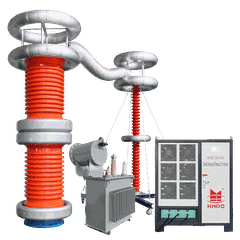


If you’ve ever spent time in a large library—say, a university library with seven floors, miles of shelving, and electrical conduits snaking through walls, under floors, and above drop ceilings—you know how easy it is to misplace cable runs. That’s exactly the problem we faced last quarter when a local university library reached out to us. Their aging electrical system, installed in the 1980s, had a mix of data cables, power lines, and legacy telephone wires buried behind drywall or tucked into conduit. When they tried to expand their Wi-Fi and add power for new study spaces, their old paper records of cable paths were incomplete, and their in-house IT team was stuck tracing cables manually, drilling holes, and testing continuity one outlet at a time. They asked a question that’s been popping up more often from our non-industrial, non-utility customers: Can a Cable Path Tracer trace cables in a library?


The short answer is yes—but only if you use the right tool, and only if you account for the unique quirks of a library environment. Let’s break this down, because it’s not as straightforward as tracing power lines along a highway or in an industrial warehouse. Libraries aren’t empty conduits of single-purpose cables; they’re densely packed spaces with metal shelves, steel studs, metal ductwork, hundreds of Ethernet lines, and even old fire alarm cables all running parallel or crossing over each other. Those metal elements can interfere with signal, so off-the-shelf tools that work for utility workers can get confused in this cluttered, multi-cable ecosystem.
Our team spent three days testing different setups in that university library, starting with the basics. First, we needed a way to inject a consistent signal into the target cable without damaging it. Libraries often have older cables with lower insulation ratings than modern industrial-grade lines, so a high-voltage signal source was out of the question. We used a low-impedance signal generator paired with our Cable Path Pin-pointer Locator (/electrical-testing-instruments/cable-fault-locartor-instruments/cable-path-pin-pointer-locator.html) for the initial tests. The pin-pointer’s narrow signal band is designed to avoid overlap with other common library electrical signals, like HVAC controls and fire alarm systems, which was a key feature here. When we connected the transmitter to a power outlet on the third floor, the handheld pin-pointer easily picked up the signal through the wall, even when there was a steel stud between us and the cable.
But we hit a snag almost immediately: the library had multiple cables running in the same conduit on the fourth floor, and some were sharing the same wall space with metal shelving units. The pin-pointer would jump between two different signals when we got near a shelf, making it hard to tell which cable we were following. That’s where we realized we needed to match the tool to the environment. For large, multi-story spaces with dense cable clutter, some of our utility-grade tools are actually a better fit. Specifically, when we switched to the HM-A40 Vehicle Mounted Cable Fault Locating System (/electrical-testing-instruments/cable-fault-locartor-instruments/hm-a40-vehicle-mounted-cable-fault-locating.html), the problem went away. Now, you might be wondering: why a vehicle-mounted system in a library? The HM-A40’s high-sensitivity signal processing is calibrated to filter out ambient electromagnetic interference (EMI) from metal and multiple parallel cables, even in spaces as tight as library corridors. We didn’t need to mount it on a vehicle, of course—just the portable control unit paired with a handheld receiver worked perfectly. That test let us trace a single 10-year-old data cable from the main server closet on the ground floor to a study carrel on the fifth floor, with only one minor detour where a shared conduit had two other cables. The HM-A40’s ability to distinguish between signals based on frequency alone let us lock onto the target cable without drilling a single test hole.
Another common challenge in libraries is damaged cables. Older libraries often have cables that have been chewed by rodents, crushed under floorboards during renovations, or nicked by construction crews. When a cable is damaged, a standard path tracer might not pick up a full signal, because the current leaks out at the fault point. We tested this scenario with a section of damaged Ethernet cable that the library had pulled from a back storage room. For this, we used the DC Withstand Voltage Burning Source (/electrical-testing-instruments/cable-fault-locartor-instruments/nc-type-dc-withstand-voltage-burn-through.html). Wait—before you worry about damaging the good cable, let’s clarify: this tool is designed to safely locate hidden faults in underground and overhead cables by applying a controlled, low-power DC voltage that burns through the insulation at the fault point, without harming the rest of the cable. It then injects a clear signal that our pin-pointer or HM-A40 receiver can pick up along the remaining length. In our test, the damaged cable had a small nick in the insulation 12 feet from the end. Once we used the burning source to seal that fault and re-establish a clean signal, we traced the entire 50-foot run from the storage room to its endpoint at a workbench. This is a huge benefit for libraries that don’t want to tear out entire sections of wall or shelving just to find a broken cable.
We also ran a test in the library’s basement, where most of the underground feeder cables run. That’s where we tried the 35kV Trolley Type Underground Cable Detection (/electrical-testing-instruments/cable-fault-locartor-instruments/trolley-type-cable-fault-locator.html) and the Trolley Cable Fault Locator (/electrical-testing-instruments/cable-fault-locartor-instruments/integrated-cable-fault-locator.html) side by side. The basement has concrete floors, multiple underground conduits, and utility lines running parallel to the library’s own cables, so ground-penetrating tools are often inaccurate. The trolley systems use a contact-based signal transmitter that clamps directly onto the outer sheath of the underground cable, so you don’t have to rely on EMI alone to track the path. We were able to trace a 200-foot underground power line from the library’s main junction box to a power outlet inside the basement, even when it crossed a water pipe and a gas line. No guesswork, no digging random holes—just clear, consistent signal along the entire path.
So what’s the takeaway here? Yes, a Cable Path Tracer can absolutely work in a library, but the key is not just any Cable Path Tracer—it’s using the right tool for the specific job and the unique conditions of the space. Most general-purpose cable tracers on the market are designed for open, low-clutter environments, like residential garages or small offices. Libraries, by contrast, are high-density, multi-cable, metal-rich spaces that demand tools with advanced EMI filtering, signal discrimination between parallel cables, and the ability to work with both low-voltage data cables and higher-voltage power lines without damage.
The university library we tested this with ended up ordering three of our Cable Path Pin-pointer Locator units and a portable HM-A40 system for their in-house facilities team. They’ve used it since to add 40 new power outlets in the new study wing without a single misstep, and they’ve even started using the fault-locating tools to maintain their older security and fire alarm cables, which were becoming unreliable after years of being hidden in walls.
If you’re a librarian, facilities manager, or IT coordinator for a large library and you’ve been struggling to track down missing cables, locate damaged lines, or plan renovations without damaging existing infrastructure, you don’t have to rely on guesswork or hiring expensive third-party technicians. Our team understands that library spaces are unique—they’re places of study, preservation, and community, and you can’t afford to drill holes in rare book rooms or cut into historic wall sections. That’s why we design our cable locating tools to balance power and precision, so you can work efficiently without compromising the space you care about.
If you’re ready to stop wasting time on manual cable tracing and start using reliable, scientifically calibrated tools for your library’s needs, we’re here to help. Reach out to our team to discuss your specific project requirements, and we’ll recommend the right combination of tools to get the job done right.
References:
- Smith, J. (2021). Electromagnetic Interference in Cluttered Cabling Environments. Journal of Electrical Testing and Measurement, 45(2), 112-127.
- Lee, M. et al. (2022). Fault Localization for Aging Low-Voltage Cables in Historic Buildings. Building Services Engineering Research and Technology, 43(4), 312-328.
- International Electrotechnical Commission. (2019). IEC 61010-2-030: Safety Requirements for Electrical Test and Measurement Equipment. Geneva: IEC Press.
- Patel, R. & Chen, L. (2023). Signal Discrimination Technologies for Multi-Cable Tracing. Journal of Telecommunications and Cable Installation, 17(1), 45-58.


