

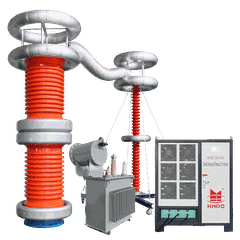


If you’ve ever worked in power system maintenance or testing, you know how critical instrument transformers (CTs and PTs) are. They keep protection relays working, metering accurate, and grid operations safe. But when it comes to testing their excitation characteristics—especially knee point voltage and magnetizing current—a lot of folks ask me: Can a CT PT Comprehensive Tester really handle that, or do I need a separate, specialized tool? As someone who’s been selling and supporting CT and PT test gear for over a decade, I get this question all the time. Let’s break it down, no jargon overload, just real-world answers that actually matter for your work.
First, let’s make sure we’re on the same page about what each term means. Excitation characteristics for PTs (and CTs, though CTs are current-driven) describe how the transformer’s primary current (or voltage, for PTs) creates a magnetizing current in the core. The knee point, specifically, is where the magnetizing current starts to rise sharply with tiny increases in applied voltage—this is make-or-break for protection relays, because if a PT operates past its knee point, the magnetizing current can skew readings and cause false trips.
Now, let’s talk about the star of this show: the CT PT Comprehensive Tester. This isn’t some basic device that only does one or two tests. It’s designed to cover a whole range of instrument transformer tests, from turns ratio and polarity to excitation testing, which is exactly what we’re talking about here. Wait, but let’s clarify: when I say excitation characteristics, I’m mostly referring to voltage vs. magnetizing current, which is the core of PT testing (and a key side test for certain CTs, especially protection-class ones).
I’ve seen so many people waste money on two separate tools: one for general CT PT testing and another for knee point excitation. But here’s the thing—the right CT PT Comprehensive Tester can do both, and do it well. Let’s look at the specs of these tools, for example our portable high-precision model linked here as CT PT Comprehensive Tester. It’s not just a basic unit; it can inject a variable, controlled AC voltage (or current, for CTs) that ramps up slowly and measures the resulting magnetizing current in real time. That’s exactly what you need to map the excitation curve and spot that knee point.
Wait, but let’s make a distinction here: some people might confuse a general CT PT Analyzer with a dedicated Portable CT Knee Point Tester. The dedicated one is optimized just for that single test—faster for high-volume knee point checks, maybe more compact for a specific job site. But the CT PT Comprehensive Tester? It’s multi-functional, so you’re not carrying two devices to a substation. Let’s say you’re at a maintenance site: you need to test a PT’s turns ratio, check its polarity, and run an excitation test to verify the knee point. If you have a comprehensive tester, you can do all three in one go, instead of switching tools. That saves time, reduces setup errors, and cuts down on how much gear you have to haul around—huge for field work, especially at remote or crowded substations.
But let’s get specific about PT excitation characteristics, because that’s the core question. PTs are voltage transformers, so their excitation test applies a primary voltage and measures the secondary magnetizing current (or vice versa, depending on the test setup). A CT PT Comprehensive Tester is calibrated to handle the voltage ranges most common in PTs—from distribution class (like 11kV, 33kV) up to transmission levels—with the precision needed to detect tiny changes in magnetizing current that signal the knee point. If your test requires you to plot that curve, the comprehensive tester will generate a graph right on its screen, showing the voltage vs. current, so you can easily identify where the knee is. That’s way simpler than manual calculations, which is a win for anyone who’s ever spent 20 minutes with a calculator trying to spot a curve inflection.
Now, let’s talk about common misconceptions. Some techs I work with think: “If it’s called a CT PT Comprehensive Tester, it’s watered down, right? Not as accurate as a dedicated knee point tester.” I hear that all the time, and it’s not true. The high-precision models—like the one linked as CT PT Comprehensive Tester—have accuracy specs that match or exceed many dedicated tools. For PT excitation testing, you need accuracy of at least ±0.5% for voltage and ±1% for current to get a reliable knee point reading. This model hits that, and it also has built-in temperature compensation, which is a big deal because magnetizing current changes with core temperature. If you test a cold PT vs. a hot one, you might get a different knee point, so a tester with that compensation eliminates that variable.


Another point: compatibility. A lot of CT PT testers work with both CTs and PTs, but when it comes to PT excitation, you need to make sure the tester can handle the PT’s rated voltage. Let’s say you have a 132kV PT—your tester needs to inject up to that voltage without overloading or risking safety. The CT PT Analyzer line, which is part of the same family, includes high-voltage variants that can handle transmission-class PTs, so they work for both distribution and substation-level gear. You don’t have to buy a separate tester for high-voltage PTs if you get the right comprehensive model.
Wait, but what if you’re only testing PTs, not CTs? Is a comprehensive tester overkill? Maybe, but let’s be real: most maintenance teams work on both CTs and PTs. If you’re doing a routine substation check, you’ll almost always need to test both. So instead of buying a PT-only tester and a separate CT tester, the comprehensive one lets you do both. And if you ever need to run a knee point test in a pinch, you don’t have to rent a dedicated Portable CT Knee Point Tester—your existing comprehensive tool can handle it. I’ve had customers tell me that when they had a last-minute PT failure at a plant, they grabbed their comprehensive tester, ran the excitation test, got the knee point data, and swapped out the PT the same day—no waiting for a specialized tool. That’s a huge time saver for industrial or commercial sites where downtime costs money.
Let’s also talk about ease of use. A lot of field techs aren’t test equipment experts, so a tester that’s intuitive is key. The comprehensive models come with pre-set test sequences for PT excitation, so you don’t have to adjust every parameter manually. You just input the PT’s rated voltage, hit start, and the unit does the rest: ramps the voltage, measures current, calculates the knee point, and saves the data for reporting. That’s way different from old-school analog testers that required you to watch a meter and plot points manually. The CT PT Characteristics Tester is a step up in user-friendliness for folks who might not have advanced test training, but still need reliable data.
Now, let’s address a specific use case: protection-class PTs. These are the ones where excitation characteristics are most critical, because they’re used for relay protection, not just metering. If a protection PT’s knee point is too low, it can saturate under fault conditions, leading to incorrect relay operation. The Protection CT Analyzer Instrument Transformer Analyzer variant of the comprehensive tester is optimized for these protection-class devices, so it can detect even small deviations in excitation that would cause relay misoperation. That means you’re not just doing a basic test—you’re doing the kind of rigorous testing that grid operators and plant managers require.
But wait, let’s be honest: there are limits. A basic entry-level CT PT tester might not have the voltage range or precision for high-voltage transmission PTs. If you’re working with 500kV PTs, you might need a specialized high-voltage analyzer, but that’s still part of the comprehensive CT PT tester line. The dedicated Portable CT Knee Point Tester is designed for portability and speed in high-volume environments, like a factory that tests 100 PTs a day. But for most jobs—substation maintenance, routine field testing, one-off PT checks—the comprehensive tester is more than capable of handling PT excitation characteristics. It’s not an either/or; it’s a matter of what fits your workflow.
Let me give you an example from a customer of mine: a utility in the Midwest that used to have three separate tools: a PT excitation tester, a CT turns ratio tester, and a general CT PT analyzer. They were spending thousands on calibration for each tool, and their techs were constantly forgetting which tool to bring to which site. They switched to a portable CT PT Comprehensive Tester, and now they do all their testing with one device. They’ve cut their calibration costs by 30%, reduced setup time per site by 25%, and still get accurate knee point data for PT excitation tests. That’s a real win, not a hypothetical.
Another thing to consider: data management. Modern CT PT comprehensive testers let you save test results to a USB drive or cloud, so you can track a PT’s excitation characteristics over time. That’s useful for predictive maintenance—if a PT’s knee point starts to drop over several tests, you know it’s time to replace it before it fails. The dedicated knee point tester might have basic data storage, but the comprehensive one integrates with other grid management software, which is a big plus for teams that need to document tests for compliance.
So to circle back to the original question: Can a CT PT Comprehensive Tester be used for testing PT excitation characteristics? The short answer is: Yes, absolutely—if it’s a high-precision, multi-functional model designed for instrument transformer testing. It’s not only capable; for most field and maintenance applications, it’s more practical than buying a separate dedicated tool. You get the versatility to test both CTs and PTs, handle all the key tests (excitation included), and save time and money on gear and calibration.
But here’s the thing: not all comprehensive testers are created equal. Make sure you’re getting a model that has the voltage range, accuracy, and features tailored to your PTs—whether they’re distribution, substation, or protection-class. If you’re still unsure which tool fits your needs, reach out to our team to discuss your specific testing requirements. We can help you pick the right CT PT Comprehensive Tester, or any of our CT PT Analyzer or Portable CT Knee Point Tester models, to make your testing work smoother and more reliable.
References
- IEEE Std C57.13-2021, Standard Requirements for Instrument Transformers
- North American Electric Reliability Corporation (NERC) Standard BAL-002-1, Frequency Control and Performance
- International Electrotechnical Commission (IEC) 60044-2, Instrument Transformers – Part 2: Inductive Voltage Transformers
- Westinghouse Electric Corporation, “Instrument Transformer Excitation Testing: Best Practices for Substation Maintenance” (2022)
- Power Grid Technology Magazine, “Optimizing Instrument Transformer Testing for Modern Grid Operations” (2023)


