

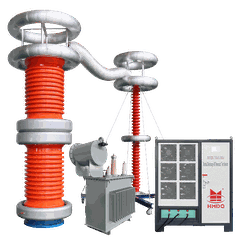



In the realm of electrical equipment testing, ensuring the reliability and safety of both new and old assets is of paramount importance. One technology that has gained significant traction in this field is the AC Resonant Test System With Partial Discharge (PD) measurement capabilities. As a leading supplier of such systems, I am often asked whether these advanced test systems can be effectively used for both new and old electrical equipment. This blog aims to explore this question in detail, providing insights into the applicability, advantages, and considerations when using an AC Resonant Test System With PD for different types of electrical equipment.


Understanding AC Resonant Test Systems With PD
Before delving into the applicability of these test systems, it is essential to understand what they are and how they work. An AC Resonant Test System With PD is a specialized piece of equipment designed to perform high-voltage testing on electrical insulation. The resonant principle allows the system to generate high voltages at a specific frequency, which is often close to the power frequency (50 or 60 Hz). This is important because testing at the power frequency closely mimics the actual operating conditions of the electrical equipment, providing more accurate and reliable test results.
The addition of Partial Discharge (PD) measurement capabilities to the AC Resonant Test System enhances its functionality significantly. Partial discharges are small electrical discharges that occur within the insulation material when the electrical stress exceeds a certain threshold. These discharges can cause gradual degradation of the insulation, leading to eventual failure of the electrical equipment. By detecting and monitoring PD activity during the high-voltage test, operators can assess the quality of the insulation and identify potential issues before they develop into more severe problems.
Using AC Resonant Test Systems With PD for New Electrical Equipment
When it comes to new electrical equipment, the use of an AC Resonant Test System With PD offers several key benefits. Firstly, it provides a comprehensive quality assurance check during the manufacturing and commissioning stages. By subjecting the new equipment to high-voltage testing with PD measurement, manufacturers can ensure that the insulation meets the required standards and specifications. This helps to identify any manufacturing defects or design flaws early on, allowing for timely corrective actions to be taken.
For example, in the case of new power transformers, the AC Resonant Test System With PD can detect any internal insulation defects, such as voids or impurities in the insulation material. These defects, if left undetected, could lead to premature failure of the transformer, resulting in costly downtime and repairs. By performing the high-voltage test with PD measurement, manufacturers can be confident that the transformers they produce are of high quality and reliable.
Another advantage of using an AC Resonant Test System With PD for new electrical equipment is that it can help to optimize the design and manufacturing processes. By analyzing the PD data collected during the testing, engineers can gain valuable insights into the behavior of the insulation under different operating conditions. This information can be used to improve the insulation design, select the appropriate insulation materials, and optimize the manufacturing processes to reduce the likelihood of PD occurrence.
Using AC Resonant Test Systems With PD for Old Electrical Equipment
Old electrical equipment, on the other hand, often presents a different set of challenges. Over time, the insulation of electrical equipment deteriorates due to factors such as aging, environmental stress, and electrical overloading. This can lead to an increase in PD activity and a decrease in the overall insulation performance. The AC Resonant Test System With PD is particularly well-suited for detecting and evaluating the insulation condition of old electrical equipment.
One of the main benefits of using this test system for old equipment is that it can provide early warning signs of insulation degradation. By periodically performing high-voltage testing with PD measurement, operators can monitor the change in PD activity over time and detect any trends or anomalies. This allows for proactive maintenance planning, where repairs or replacements can be scheduled before a catastrophic failure occurs.
For instance, in an aging cable network, the AC Resonant Test System With PD can detect PD activity in the cable insulation. This can indicate the presence of water trees, which are a common cause of cable failure. By identifying the cables with high PD activity, operators can prioritize their replacement or repair, reducing the risk of cable breakdown and service interruption.
Another advantage of using an AC Resonant Test System With PD for old electrical equipment is that it can help to extend the service life of the equipment. By accurately assessing the insulation condition, operators can determine the remaining useful life of the equipment and make informed decisions about whether to continue using it or replace it. In some cases, minor repairs or maintenance can be carried out to improve the insulation performance and extend the service life of the equipment, saving significant costs compared to replacing the entire equipment.
Considerations When Using AC Resonant Test Systems With PD
While the AC Resonant Test System With PD offers many benefits for both new and old electrical equipment, there are some considerations that need to be taken into account. Firstly, the test system needs to be properly calibrated and maintained to ensure accurate and reliable test results. This includes regular calibration of the high-voltage source, the PD measurement equipment, and the resonant components.
Secondly, the test conditions need to be carefully controlled. The temperature, humidity, and altitude can all affect the PD activity and the insulation performance of the electrical equipment. Therefore, it is important to conduct the tests under controlled environmental conditions and to take these factors into account when interpreting the test results.
Thirdly, the interpretation of the PD data requires expertise and experience. The PD activity can be affected by many factors, and it is not always straightforward to determine whether the PD readings are normal or indicate a potential problem. Therefore, it is recommended to have a qualified engineer or technician review and analyze the PD data to ensure accurate and reliable decision-making.
Our Product Range
As a supplier of AC Resonant Test Systems With PD, we offer a wide range of products to meet the diverse needs of our customers. Our AC Series Resonant Test Device is a compact and portable solution for high-voltage testing, making it suitable for on-site testing of various electrical equipment. Our AC Series Resonant Test System provides a more comprehensive testing solution, with advanced features and higher power capabilities. For large-scale testing projects, our Integrated Container AC Resonant Test System offers a complete testing solution in a single container, ensuring easy transportation and installation.
Conclusion
In conclusion, an AC Resonant Test System With PD can be effectively used for both new and old electrical equipment. For new equipment, it provides a comprehensive quality assurance check and helps to optimize the design and manufacturing processes. For old equipment, it can detect early signs of insulation degradation, allowing for proactive maintenance planning and extending the service life of the equipment. However, it is important to consider the calibration, test conditions, and data interpretation when using these test systems.
If you are interested in learning more about our AC Resonant Test Systems With PD or would like to discuss your specific testing requirements, please feel free to contact us for a consultation. Our team of experts is ready to provide you with the best solutions to meet your needs.
References
[1] International Electrotechnical Commission. (IEC). IEC 60270:2000 – High-voltage test techniques – Partial discharge measurements.
[2] CIGRE Technical Brochure 330: Guide for Partial Discharge Measurement on HV Equipment in Service.


