

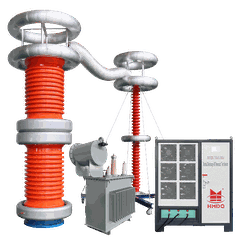



How to optimize the design of a High Voltage AC Resonant Test System?
As a supplier of High Voltage AC Resonant Test Systems, I understand the critical importance of optimizing the design of these systems. High voltage AC resonant test systems are widely used in the electrical power industry for testing the insulation performance of high - voltage equipment such as cables, transformers, and gas - insulated switchgear. An optimized design can not only improve the testing accuracy and efficiency but also enhance the safety and reliability of the test process.
1. Understanding the Basic Principles of High Voltage AC Resonant Test Systems
Before delving into the optimization of the design, it is essential to understand the basic principles of high voltage AC resonant test systems. These systems operate based on the principle of resonance, where the inductive reactance and capacitive reactance in the circuit are equal, resulting in a minimum impedance and maximum current flow at the resonant frequency.
There are two main types of resonant test systems: series resonance and parallel resonance. In a series resonance test system, the inductor, capacitor, and the test object are connected in series. When the system reaches resonance, the voltage across the test object can be significantly higher than the input voltage. This type of system is suitable for testing high - capacitance objects such as long cables. You can learn more about Series Resonance Test Set.


Parallel resonance test systems, on the other hand, have the inductor and capacitor connected in parallel with the test object. At resonance, the current through the inductor and capacitor is much larger than the input current, and the voltage across the test object remains relatively stable.
2. Key Factors in Design Optimization
2.1 Frequency Range
The frequency range of the resonant test system is a crucial factor. Different types of high - voltage equipment require different test frequencies. For example, XLPE cables usually require a test frequency in the range of 20 - 300 Hz. By designing the system to have a wide and adjustable frequency range, it can be used to test a variety of high - voltage equipment. Our 270kVA Variable Frequency Resonant Test Device is designed with a flexible frequency range to meet different testing requirements.
2.2 Power Rating
The power rating of the resonant test system determines its ability to supply the necessary energy for the test. A higher power rating is required for testing large - capacity equipment. However, increasing the power rating also means higher costs and larger equipment size. Therefore, it is necessary to balance the power rating based on the specific testing needs. For applications where high - power testing is required, our Integrated Container AC Resonant Test System provides a reliable solution.
2.3 Component Selection
The selection of components such as inductors, capacitors, and power supplies is critical for the performance of the resonant test system. High - quality components can improve the accuracy and stability of the system. For inductors, low - loss materials and proper winding techniques should be used to reduce the resistance and improve the Q - factor. Capacitors should have high capacitance stability and low dielectric loss. The power supply should be able to provide a stable and adjustable output voltage and frequency.
2.4 Safety Design
Safety is of utmost importance in high - voltage testing. The design of the resonant test system should include multiple safety features. For example, over - voltage protection, over - current protection, and grounding protection should be installed to prevent damage to the test equipment and ensure the safety of the operators. Additionally, the system should be designed with proper insulation and shielding to reduce the risk of electrical shock.
3. Advanced Design Techniques
3.1 Digital Control
The use of digital control technology can significantly improve the performance of the resonant test system. Digital controllers can accurately control the frequency, voltage, and current of the system, and can also perform real - time monitoring and fault diagnosis. For example, a digital controller can adjust the frequency of the system to quickly reach the resonant point, improving the testing efficiency.
3.2 Modular Design
Modular design allows for easy expansion and maintenance of the resonant test system. Different modules can be designed for different functions, such as power supply module, resonance module, and control module. This modular approach makes it easier to upgrade the system and replace faulty components.
3.3 Simulation and Modeling
Before the actual design and manufacturing of the resonant test system, simulation and modeling can be used to optimize the design. Software tools can be used to simulate the electrical characteristics of the system, such as the resonant frequency, voltage distribution, and current flow. This can help to identify potential problems and optimize the design parameters.
4. Case Studies
Let's take a look at some real - world case studies to illustrate the importance of design optimization. In a project for testing a long - distance high - voltage cable, an optimized series resonance test system was used. By carefully selecting the components and adjusting the frequency range, the system was able to accurately measure the insulation performance of the cable. The digital control system ensured that the test process was efficient and reliable, and the safety features protected the operators and the test equipment.
In another case, a power plant needed to test multiple high - voltage transformers. The modular design of the resonant test system allowed for easy installation and configuration. The system was able to quickly adapt to different testing requirements, and the simulation - based design optimization ensured that the system had high performance and accuracy.
5. Conclusion and Call to Action
Optimizing the design of a high - voltage AC resonant test system is a complex but rewarding task. By considering factors such as frequency range, power rating, component selection, and safety design, and by using advanced design techniques such as digital control, modular design, and simulation, we can create a high - performance and reliable test system.
If you are in need of a high - voltage AC resonant test system or want to discuss the optimization of your existing system, we are here to help. Our team of experts has extensive experience in designing and manufacturing high - quality test systems. Contact us to start a procurement discussion and find the best solution for your high - voltage testing needs.
References
- Electrical Power System Testing Handbook
- High - Voltage Engineering: Theory and Practice by M. S. Naidu and V. Kamaraju


