

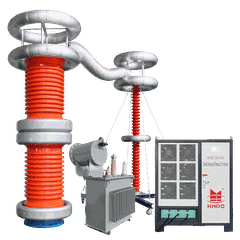


If you've ever worked in high-voltage testing, you know that the reliability of every test starts with the equipment powering it-and for many critical industrial and utility applications, that's an insulation cylinder oil-immersed test transformer. As a supplier of these specialized units, I've spent years walking customers through not just selling them, but ensuring they understand how to properly test the performance of their equipment. Because even the most well-built test transformer is useless if it's not operating to specification, and improper testing can lead to inaccurate results that put your entire project at risk.
A few years back, I had a customer reach out in a panic. They'd purchased a used oil-immersed test transformer to run 10kV insulation resistance tests on distribution lines, but their initial results were all over the place. They'd skipped a key performance check, and within weeks, the transformer's insulation cylinder had degraded so badly that it failed a routine safety audit. That's when I realized: most operators focus on the output voltage or load capacity, but the real performance of an insulation cylinder oil-immersed test transformer lives in three core areas: oil quality, insulation integrity, and loading behavior. Getting all three right requires a structured testing process-not just guessing.
Today, I'm breaking down exactly how to test these transformers, step by step, drawing on hands-on experience from our own team and feedback from hundreds of clients around the world. By the end, you'll know how to validate that your unit is operating as it should, extend its lifespan, and avoid the kind of costly mistakes that my customer faced. And if you're in the market for a new unit, don't forget to check out our line of high-performance models here: Insulation Cylinder Oil Immersed Test Transformers.
Start with the Foundation: Pre-Test Preparation That You Can't Skip
Before you even hook up your test instruments, there are a few critical pre-test steps that set the stage for accurate results. First, make sure your test transformer is in a stable, temperature-controlled environment. Oil-immersed transformers are sensitive to extreme temperatures; testing in direct sunlight or near a cold wall can skew oil quality readings and voltage output. Most manufacturers (ours included) recommend testing between 20°C and 30°C for consistency.
Next, give the oil a chance to settle. If your transformer has been in storage, moved, or running recent tests, the oil will have air bubbles and suspended particles that throw off measurements. We usually advise letting it sit for 24 to 48 hours before testing-longer if it's been stored for more than a month.
One last pre-test note: verify the transformer's rated specifications. For example, a 10kVA, 50kV unit will have different testing thresholds than a 20kVA, 100kV unit. Misaligning your test parameters with the unit's rating is the #1 mistake we see new operators make. If you're unsure what your unit's specs are, cross-reference the serial number or reach out to your supplier-we always keep records for every unit we sell.
Test 1: Oil Quality Testing-The Heart of Insulation Cylinder Performance
The insulation cylinder and the oil it's immersed in are the backbone of your test transformer. The oil acts as both an insulator and a coolant, so its condition directly impacts how well the cylinder works. A common myth is that "oil is oil"-but for test transformers, even small contaminants can lead to huge failures.
Breakdown Voltage (BDV) Test: The First Line of Defense
The most basic and critical oil test is the breakdown voltage test, which measures how much voltage the oil can withstand before it conducts electricity. If the oil is contaminated with water, dust, or metal particles, its BDV drops sharply, and that can cause flashovers in the insulation cylinder during high-voltage tests.
To run this test, you'll need an Insulating Oil Single-cup Breakdown Voltage Tester. This instrument uses two standardized electrodes submerged in the oil sample, and it slowly increases voltage until a spark jumps between them. For new test transformers, the minimum BDV should be around 30kV; for units in active use, we recommend a threshold of 25kV. If your sample falls below that, you'll need to filter or replace the oil before running any major tests.
Moisture Content: Hidden Damage in the Oil
Water is the silent killer of oil-immersed transformers. Even trace amounts of moisture can reduce insulation resistance and accelerate the breakdown of the cylinder. A lot of operators skip moisture testing because they think their oil looks "clear," but water is invisible in oil until it hits a certain threshold.
That's where a Transformer Oil Trace Moisture Tester comes in. This device uses Karl Fischer titration to measure parts per million (PPM) of water in the oil. For test transformers, the maximum allowable moisture is 20 PPM for new units and 30 PPM for used units. Last year, a client of ours had a transformer that passed BDV at 26kV but failed moisture at 35 PPM-within three months, their insulation cylinder had cracked due to water-induced corrosion. Don't make that mistake.
Acid Number and Dissolved Gases: Checking for Degradation
As oil ages, it reacts with oxygen and high temperatures to form acids and dissolved gases. Acids eat away at the insulation cylinder's paper and fiber materials, while gases can indicate internal partial discharges that will eventually destroy the transformer.
To test for acids, use a Fully Automatic Water-soluble Acid Tester, which measures the acid number in milligrams of potassium hydroxide per gram of oil (mg KOH/g). The limit for test transformers is 0.1 mg KOH/g; anything higher means the oil is breaking down and needs to be changed.
For dissolved gases, a Gas Chromatograph Analyzer is your go-to tool. This instrument separates and identifies gases like hydrogen, methane, and ethylene in the oil, which signal specific issues: hydrogen = partial discharges, methane = overheating, acetylene = arcing. We had a client a few months back whose Gas Chromatograph Analyzer picked up high acetylene levels in an oil sample-we traced it to a faulty internal connection in the transformer, and replacing that part saved them from a $20,000 failure during a grid test.
Test 2: Insulation Cylinder Integrity-Beyond the Oil
Once you're confident the oil is good, it's time to test the actual insulation cylinder. This is the part that isolates the high-voltage winding from the low-voltage side, so any defects here will make your test transformer dangerous and inaccurate.
Insulation Resistance Test
The first step in cylinder testing is insulation resistance (IR), measured with a megohmmeter. You'll test between the high-voltage terminal, low-voltage terminal, and the transformer's tank (ground). A healthy insulation cylinder should have an IR of at least 1000 MΩ at 1000V. If the IR is lower, it could mean moisture in the cylinder, physical cracks, or contaminants trapped between the layers of the cylinder.
For more detailed results, run a polarization index (PI) test. This compares the IR at 1 minute to the IR at 10 minutes; a PI of 2 or higher means the insulation is dry and in good shape. A PI below 1.5 is a red flag-moisture or damage is present.
Partial Discharge (PD) Testing
Partial discharges are tiny, invisible electrical sparks that erode the insulation cylinder over time. Even small PDs can reduce the lifespan of the transformer by years, and they're often hard to catch with other tests.


To test for PD, use a high-voltage partial discharge detector. Apply the rated voltage of your transformer and measure the discharge current. For test transformers, the acceptable PD level is less than 100 pC (picocoulombs) at rated voltage. If you read higher, that means there's a flaw in the cylinder-could be a tiny air bubble in the insulation, a manufacturing defect, or damage from a previous overload.
Test 3: Performance Under Load-Real-World Operation
The final test is making sure your transformer works when it's under load, not just in a lab setting. A lot of units look good in oil and cylinder tests, but fail when they're powering a test load.
Load Voltage Regulation Test
Voltage regulation measures how much the output voltage drops when the transformer is under full load. For test transformers, a good regulation is less than 2%-meaning at full load, the voltage will only drop by 2% from the rated value. To test this, connect a variable resistive load to the high-voltage side, measure the voltage at no load and full load, and calculate the difference. If your regulation is higher, the transformer's winding is inefficient, or there's a fault in the core.
Temperature Rise Test
When a transformer runs under load, it heats up. If the insulation cylinder or oil gets too hot, it will degrade quickly. Run a temperature rise test by applying full load for 8 hours, then measure the oil temperature and cylinder surface temperature. The maximum allowable temperature rise is 65°C above ambient temperature for the oil, and 70°C for the cylinder. If it's higher, you could have a blocked cooling channel, or the transformer is overloaded beyond its rated kVA.
Common Mistakes to Avoid (From Our 10+ Years in Business)
After working with thousands of test transformer operators, there are a handful of mistakes that come up again and again.
First, don't skip oil quality testing. We've seen operators spend thousands on a new insulation cylinder, only to install it in old, contaminated oil that ruins the new cylinder in weeks.
Second, never test a transformer without verifying its rated voltage and kVA. Trying to run a 100kV test on a 50kV unit is a recipe for explosion, and it will void any warranty.
Third, don't ignore small signs. If your transformer is making a strange humming noise, or your test results are inconsistent, don't wait for a full failure. Run a quick PD test or gas analysis to catch issues early.
Final Notes on Maximizing Your Transformer's Lifespan
Testing isn't just about checking if your transformer works-it's about extending its life. We recommend running these tests every 6 months for active transformers, and every 12 months for units in storage. If you do find issues, address them quickly: filter or replace oil, repair or replace the insulation cylinder, or have your unit serviced by a professional.
If you're looking for a reliable insulation cylinder oil-immersed test transformer, our team builds units with high-grade insulation materials and standardized oil systems, designed to pass all these tests with flying colors. You can browse our line here: Insulation Cylinder Oil Immersed Test Transformers.
When it comes to test transformers, performance isn't just a spec on a sheet-it's the difference between accurate test results, project delays, and safety hazards. By following these testing steps, you'll have confidence in your equipment every time you turn it on.
References
- IEEE Std C57.12.00-2015, "IEEE Standard for General Requirements for Liquid-Immersed Distribution, Power, and Regulating Transformers"
- IEC 60422-2013, "Mineral Insulating Oils in Electrical Equipment-Guide for Maintenance and Sampling"
- National Electric Safety Code (NESC) 2023, "Safety Rules for the Construction and Maintenance of Electric Supply Stations and Lines"
- ASTM D1816-21, "Standard Test Method for Dielectric Breakdown Voltage of Insulating Oils Using VDE Electrodes"


