

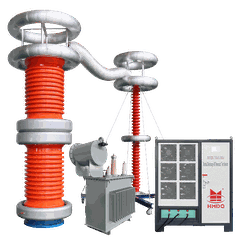



When dealing with high-voltage testing, an Inductive Resonant Test System is an indispensable tool. As a reliable supplier of such systems, I've witnessed firsthand the importance of safety precautions. In this blog, I'll delve into the crucial safety measures that should be taken when using an Inductive Resonant Test System.
Understanding the Inductive Resonant Test System
Before we discuss safety precautions, it's essential to understand what an Inductive Resonant Test System is. This system is used for high-voltage testing of various electrical equipment, such as cables, transformers, and generators. It operates on the principle of resonance, where the inductance and capacitance in the circuit are adjusted to achieve a resonant condition. At resonance, the voltage across the test object can be significantly increased, allowing for accurate testing of its insulation properties.
Our company offers a range of products related to Inductive Resonant Test Systems, including Compensation Capacitor Of Resonant Test Set, AC Resonant Test Set, and Integrated Container AC Resonant Test System. These products are designed to meet the diverse needs of our customers in the high-voltage testing field.


Pre - operation Safety Precautions
Personnel Training
All personnel involved in the operation of the Inductive Resonant Test System must receive comprehensive training. This training should cover the basic principles of the system, its operation procedures, and safety regulations. Only trained and authorized personnel should be allowed to operate the equipment. For example, they should know how to properly connect the test leads, set the parameters, and interpret the test results.
Site Inspection
Before starting the test, a thorough inspection of the test site is necessary. The area should be clean, dry, and free from any flammable or explosive materials. The test equipment should be placed on a stable surface to prevent it from tipping over. Additionally, the site should be well - ventilated to dissipate any heat generated during the test.
Equipment Check
Inspect the Inductive Resonant Test System and all its components for any signs of damage or wear. Check the cables, connectors, and capacitors for proper insulation. Ensure that all switches and controls are in the correct position. Any damaged or malfunctioning parts should be replaced before the test.
Safety Precautions During Operation
Personal Protective Equipment (PPE)
Operators must wear appropriate PPE, including safety helmets, insulating gloves, safety shoes, and protective eyewear. These items provide protection against electrical shocks, burns, and other potential hazards. For example, insulating gloves should be regularly tested to ensure their effectiveness.
Isolation and Lockout
The test area should be properly isolated from unauthorized personnel. Warning signs should be placed around the test site to indicate the presence of high - voltage equipment. Before starting the test, all power sources should be locked out and tagged to prevent accidental energization. This ensures that no one can turn on the power while the test is in progress.
Monitoring and Control
During the test, continuous monitoring of the system parameters is essential. Operators should keep an eye on the voltage, current, and temperature readings. Any abnormal readings should be immediately investigated and addressed. In addition, the test should be carried out at a slow and controlled pace to avoid sudden voltage surges.
Emergency Procedures
All operators should be familiar with the emergency procedures in case of an accident. There should be a clear evacuation plan in place, and emergency equipment such as fire extinguishers and first - aid kits should be readily available. In the event of an electrical fire, dry powder or carbon dioxide fire extinguishers should be used, as water can conduct electricity and cause further damage.
Post - operation Safety Precautions
De - energization and Discharge
After the test is completed, the system should be de - energized. All power sources should be turned off, and the test equipment should be discharged to remove any residual charge. This is a critical step to prevent electrical shocks when handling the equipment.
Equipment Storage
The Inductive Resonant Test System and its components should be properly stored after use. They should be kept in a dry, clean, and protected environment to prevent damage. Cables should be coiled neatly, and all parts should be stored in their designated locations.
Maintenance and Inspection
Regular maintenance and inspection of the equipment are necessary to ensure its continued safe and reliable operation. This includes checking for loose connections, worn parts, and any signs of damage. Any issues should be addressed promptly to prevent future problems.
Importance of Safety in High - Voltage Testing
Safety is of utmost importance when using an Inductive Resonant Test System. High - voltage testing involves significant risks, including electrical shocks, fires, and explosions. By following the safety precautions outlined above, we can minimize these risks and ensure the well - being of the operators and the integrity of the test equipment.
Moreover, compliance with safety regulations not only protects the individuals involved but also helps to maintain the reputation of our company. Our customers rely on us to provide high - quality and safe testing equipment. By prioritizing safety, we can build trust and long - term relationships with our clients.
Contact Us for Procurement
If you are in the market for an Inductive Resonant Test System or related products, we are here to help. Our team of experts can provide you with detailed information about our products, including their features, specifications, and applications. We can also offer customized solutions to meet your specific requirements.
Whether you need a Compensation Capacitor Of Resonant Test Set, an AC Resonant Test Set, or an Integrated Container AC Resonant Test System, we have the right product for you. Contact us today to start the procurement process and take the first step towards high - quality high - voltage testing.
References
- Electrical Safety Standards and Guidelines, International Electrotechnical Commission (IEC).
- High - Voltage Testing Handbook, various industry - recognized publications.


