


Hey there! As a supplier of AC Resonant Test Sets, I've seen firsthand how the insulation condition of the test object can throw a real curveball at the test results. Let's dig into this topic and see what's really going on.
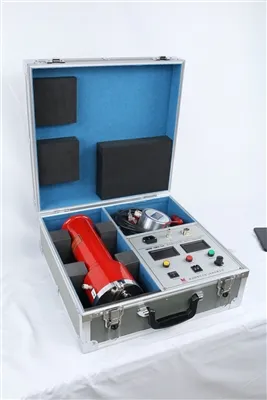
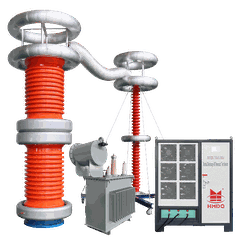
First off, what's an AC Resonant Test Set? Well, it's a crucial piece of equipment used to test the insulation integrity of high - voltage electrical equipment. We've got some great options like the HV Cable AC Resonant Tester, the AC Variable Frequency Resonant Test System, and the AC Series Resonant Test Device. These tools help us simulate real - world operating conditions and check if the insulation can withstand the stress.
Now, let's talk about insulation. The insulation of a test object is like a protective shield. It's supposed to prevent the flow of electric current where it's not wanted. When the insulation is in good condition, it acts as a high - resistance barrier, allowing only a tiny amount of leakage current. But when things go wrong with the insulation, it can severely mess up our test results.
One of the most obvious impacts of poor insulation is on the measured leakage current. In a healthy insulation system, the leakage current is extremely low. But if there are defects in the insulation, like cracks, moisture ingress, or aging degradation, the resistance of the insulation drops. This means more current can flow through the insulation, and the measured leakage current during the test will be higher than normal.
For example, if we're testing a high - voltage cable with damaged insulation, the increased leakage current can make it seem like there's a problem with the cable's overall performance. It might even lead us to think that the cable is at risk of failure when, in fact, it could just be a localized insulation issue. This false alarm can cause unnecessary downtime for maintenance and replacement, which is a big headache for our customers.
Another area where insulation condition affects test results is in the resonance characteristics of the AC Resonant Test Set. These test sets work based on the principle of resonance, where the inductive and capacitive reactances in the circuit cancel each other out, allowing for efficient testing at high voltages.
When the insulation of the test object is good, the capacitance of the test object is relatively stable. This stability helps the test set achieve resonance more easily and accurately. But when the insulation is compromised, the capacitance can change. For instance, if there's moisture in the insulation, it can increase the dielectric constant of the insulating material, which in turn increases the capacitance.
This change in capacitance throws off the resonance point of the test set. The test set might struggle to reach the desired resonance frequency, or it might operate at an incorrect frequency. As a result, the test voltage and current waveforms can become distorted, and the test results won't accurately represent the true condition of the test object.
The insulation condition also has an impact on the breakdown voltage measurement. The breakdown voltage is the voltage at which the insulation fails and allows a large amount of current to flow. In a well - insulated test object, the breakdown voltage should be within a certain expected range.
However, if the insulation has been damaged, the breakdown voltage can be significantly lower. This is a serious concern because it means that the test object might not be able to withstand the normal operating voltages in the field. During the test, if we measure a lower - than - expected breakdown voltage, we need to be extra careful in diagnosing whether it's a genuine problem with the equipment or just a result of poor insulation.
Let's take a look at some real - world scenarios. Imagine a power utility company that's using our AC Resonant Test Set to test the insulation of their transformers. If the transformers have been exposed to harsh environmental conditions over time, the insulation might start to degrade. When they run the test, they might see abnormal leakage current readings and distorted resonance waveforms.
These inaccurate test results can lead to wrong decisions. The utility company might decide to replace a transformer that could have been repaired with some insulation treatment. On the other hand, if they ignore the abnormal results due to a misunderstanding of the impact of insulation condition, they could be putting the entire power grid at risk.
So, how can we deal with these issues? Well, as a supplier, we offer comprehensive training to our customers on how to properly assess the insulation condition before and during the test. We also provide advanced diagnostic tools that can help in accurately determining whether the abnormal test results are due to insulation problems or other factors.
We recommend regular maintenance and inspection of the test objects to ensure the insulation is in good shape. This includes visual inspections, moisture content measurements, and other non - destructive testing methods. By taking these preventive measures, our customers can get more reliable test results and make better - informed decisions about the maintenance and replacement of their high - voltage equipment.


In conclusion, the insulation condition of the test object has a huge impact on the test results of an AC Resonant Test Set. It can affect the measured leakage current, resonance characteristics, and breakdown voltage, leading to inaccurate assessments of the test object's condition. As a supplier, we're committed to helping our customers understand these impacts and providing them with the tools and knowledge to overcome these challenges.
If you're in the market for an AC Resonant Test Set or have any questions about how insulation condition might affect your testing, don't hesitate to reach out. We're here to assist you in getting the most accurate and reliable test results for your high - voltage equipment.
References
- Electrical Insulation Handbook, McGraw - Hill
- High - Voltage Testing Techniques, John Wiley & Sons