

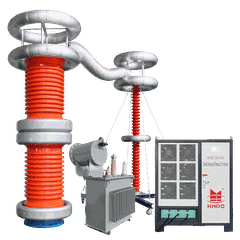


Unlocking the Performance of High-Capacity Oil-Immersed HV Testing Transformers
Introduction
High-voltage testing is a fundamental pillar of electrical safety and the reliability of energy installations. For testing in the range of 20 kVA to 200 kV, the choice of test transformer is crucial. Among the various technologies available, lightweight oil-cooled AC/DC high-voltage test transformers stand out for their unique combination of high performance, compact design, and exceptional operational stability. This article discusses the technology behind these robust devices, with a particular focus on the central role of oil cooling, a feature that enables them to meet the stringent requirements of modern electrical testing.
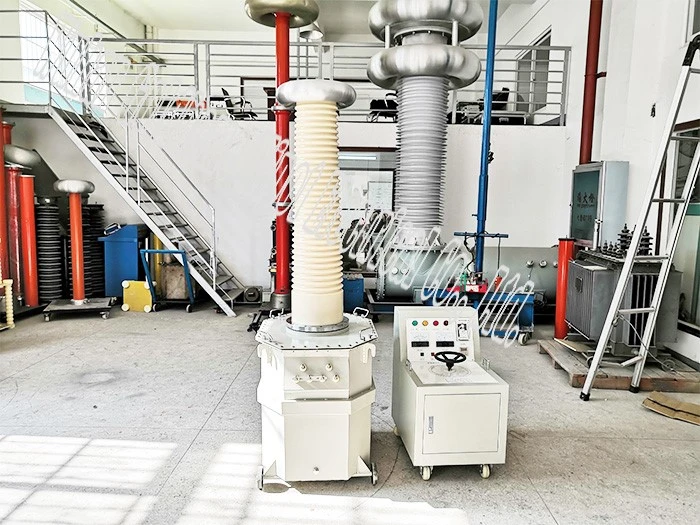
The main advantage: oil cooling and insulation
The term 'oil-filled' refers to a design in which the transformer core and windings are encapsulated in a sealed tank filled with a special insulating oil. This is not simply a cooling mechanism, but an integrated solution that simultaneously addresses several major challenges in high-power, high-voltage applications.
Superior heat dissipation: During prolonged high-current testing, transformers generate significant heat. The insulating oil effectively absorbs this heat from the windings and transfers it to the walls of the tank, which are often designed with cooling fins or radiators to dissipate the heat into the ambient air. This superior thermal management prevents the formation of dangerous hot spots, ensuring that the transformer can deliver its full 20 kVA capacity consistently, without performance degradation or risk of thermal failure. This capability is essential for endurance testing on cables, switchgear and other components.
Protection and Lifespan: The oil-immersed environment effectively shields precision windings and cores from environmental contaminants such as moisture and dust, which can degrade insulation performance. Simultaneously, the oil-immersed structure provides shock absorption, mitigating mechanical stress caused by electromagnetic forces. This protective environment significantly contributes to the long-term reliability and service life of testing equipment.
Important applications in electrical testing
Due to their robustness, oil transformers are the ideal choice for a wide range of demanding field and laboratory testing scenarios. Their ability to supply stable AC and DC high voltage is particularly valuable.
Power cable testing: They are widely used for AC withstand voltage tests and DC insulation withstand voltage tests on medium- and high-voltage power cables to ensure insulation integrity before commissioning.
Switchgear and GIS testing: Gas-insulated switchgear (GIS) and circuit breakers require rigorous high-voltage testing to verify their insulation strength, a task these transformers perform exceptionally well.
Transformer manufacturing and maintenance: Used for induction voltage testing and other routine inspections of power and distribution transformers.
Research and Development Applications: Due to its stability and high capacity, it is the preferred equipment for developing and validating new electrical components in high-voltage laboratories.
Conclusion
For engineers and technicians seeking reliable high-voltage testing equipment to meet demanding application requirements, understanding the advantages of oil-immersed technology is crucial. Integrating advanced cooling and insulation technologies into a compact, lightweight design represents a significant technological breakthrough. This technology ensures test transformers deliver the required power and voltage while maintaining the stability and safety essential for verifying the integrity of critical electrical equipment. Given the ongoing evolution of global high-voltage testing standards, such high-performance oil-cooled equipment remains indispensable for ensuring the safety and reliability of power supply systems, particularly in large-scale infrastructure projects.


