


How a Thumper Cable Fault Locator Works?
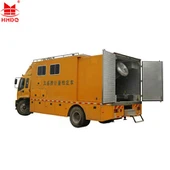
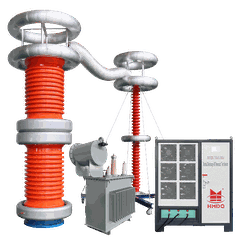
A Thumper Cable Fault Locator is a high-voltage cable fault location system that uses a surge/thumping method to locate high-resistance and intermittent faults in underground power cables.

1.How a Thumper Cable Fault Locator Works
The basic process is:
Charge – The equipment charges a high-voltage capacitor.
Discharge – The stored energy is discharged into the faulty cable.
Thumping – The discharge creates a high-voltage surge that travels along the cable and produces a characteristic discharge sound/vibration at the fault.
Pre-location – TDR or other measurement methods can estimate the distance to the fault.
Pinpointing – An acoustic/magnetic receiver is used to identify the exact fault location.
Thumper vs. TDR Cable Fault Locator
| Feature | Thumper | TDR |
|---|---|---|
| Main function | Fault pinpointing | Fault pre-location |
| Principle | High-voltage surge discharge | Reflected electrical pulse |
| High-resistance faults | Very effective | Can be difficult |
| Exact fault location | Excellent with acoustic detection | Usually estimated |
| Cable stress | High | Very low |
| Typical application | Underground MV/HV cable | Cable testing and fault pre-location |
In practice, TDR + Thumper is often a better combination than using either technology alone:
TDR → determine approximate distance → Thumper → pinpoint exact fault.
Typical Applications
A thumper cable fault locator is commonly used for:
Underground MV power cables
6–35 kV distribution cables
XLPE cables
PILC cables
Industrial power cables
Substation cable networks
Intermittent cable faults
High-resistance and flashover faults
Cable faults where conventional continuity testing cannot determine the location
Important Difference: Thumper vs. Cable Tester
A thumper is primarily a fault-location tool, not simply an insulation resistance tester.
For example:
- Megger/Insulation Resistance Tester:
Checks insulation resistance and identifies whether insulation is deteriorated.
- VLF Tester:
Performs withstand and diagnostic testing of medium-voltage cables.
- TDR Cable Fault Locator:
Determines the approximate distance to a cable fault.
- Thumper Cable Fault Locator:
Generates a high-energy surge to help pinpoint the physical location of the fault.
For a complete MV cable fault diagnosis system, a typical configuration is:
VLF / AC Test → TDR Pre-location → Thumper → Acoustic & Magnetic Pinpointing