

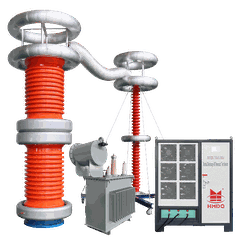



Can a primary current injection test set be used for testing differential relays? This is a question that often arises in the field of electrical testing and maintenance. As a supplier of primary current injection test sets, I am frequently asked about the compatibility and effectiveness of our products in testing differential relays. In this blog post, I will explore this topic in detail, discussing the principles behind differential relays, the function of primary current injection test sets, and the feasibility of using these test sets for differential relay testing.
Understanding Differential Relays
Differential relays are an essential component in electrical power systems, designed to protect equipment such as transformers, generators, and busbars from internal faults. The basic principle of a differential relay is to compare the current entering and leaving a protected zone. Under normal operating conditions, the sum of the currents entering and leaving the zone should be zero. However, in the event of an internal fault, there will be an imbalance in the currents, and the differential relay will detect this imbalance and trip the circuit breaker to isolate the faulty equipment.
The accuracy and reliability of differential relays are crucial for the safe and efficient operation of power systems. Therefore, regular testing and maintenance of these relays are necessary to ensure their proper functioning.
The Function of Primary Current Injection Test Sets
A primary current injection test set is a specialized piece of equipment used to inject high currents into electrical circuits for testing purposes. These test sets are capable of generating currents ranging from a few amperes to several thousand amperes, depending on the model and application.
The main function of a primary current injection test set is to simulate real-world operating conditions and test the performance of electrical equipment, such as circuit breakers, relays, and current transformers. By injecting a known current into the circuit, the test set allows technicians to measure the response of the equipment and verify its functionality.
Can a Primary Current Injection Test Set be Used for Testing Differential Relays?
The answer is yes, a primary current injection test set can be used for testing differential relays. However, there are several factors to consider when using these test sets for differential relay testing.
1. Current Capacity
Differential relays typically require high currents for testing, especially for large transformers and generators. Therefore, it is essential to choose a primary current injection test set with sufficient current capacity to meet the testing requirements. For example, our 7000A Primary Current Injection Test Set is capable of generating up to 7000A of current, making it suitable for testing large differential relays.
2. Accuracy
The accuracy of the primary current injection test set is crucial for obtaining reliable test results. Differential relays are designed to detect small imbalances in current, so even a slight error in the injected current can lead to inaccurate test results. Therefore, it is important to choose a test set with high accuracy and precision.
3. Waveform Quality
The waveform of the injected current can also affect the performance of differential relays. A distorted or non-sinusoidal waveform can cause false tripping or incorrect operation of the relay. Therefore, it is important to choose a primary current injection test set that can generate a clean and stable sinusoidal waveform.
4. Test Configuration
Proper test configuration is essential for accurate differential relay testing. The test set should be connected to the relay in such a way that the injected current accurately represents the real-world operating conditions. This may require the use of additional equipment, such as current transformers and shunts, to ensure the correct current levels and phase relationships.
The Testing Process
When using a primary current injection test set for differential relay testing, the following steps are typically involved:
1. Preparation
Before starting the test, it is important to ensure that the test set is properly calibrated and functioning correctly. The relay should also be disconnected from the power system and isolated to prevent any accidental energization.
2. Connection
The test set should be connected to the relay according to the manufacturer's instructions. This may involve connecting the test set to the current transformers or directly to the relay terminals.


3. Current Injection
Once the connections are made, the test set can be used to inject a known current into the circuit. The injected current should be gradually increased until the relay trips or reaches its rated operating current.
4. Measurement and Analysis
During the test, the response of the relay should be measured and recorded. This may include the tripping time, operating current, and other parameters. The test results should then be analyzed to determine the performance of the relay and identify any potential issues.
5. Verification
After the test is completed, the relay should be reconnected to the power system and verified to ensure its proper functioning.
Advantages of Using a Primary Current Injection Test Set for Differential Relay Testing
There are several advantages to using a primary current injection test set for differential relay testing:
1. Realistic Testing
By injecting high currents into the circuit, a primary current injection test set can simulate real-world operating conditions and provide a more accurate assessment of the relay's performance.
2. Efficiency
The use of a test set allows technicians to perform the test quickly and efficiently, reducing the downtime of the equipment.
3. Safety
Testing with a primary current injection test set is a safe and controlled method of verifying the performance of differential relays, as it eliminates the need to energize the relay with high voltages.
Conclusion
In conclusion, a primary current injection test set can be effectively used for testing differential relays. However, it is important to choose the right test set with sufficient current capacity, accuracy, and waveform quality, and to follow the proper testing procedures to ensure reliable and accurate test results.
As a supplier of primary current injection test sets, we offer a wide range of products to meet the diverse needs of our customers. Our 7000A Primary Current Injection Test Set, DC Primary Current Injection Test Set, and Primary Current Generator are all designed to provide high-quality testing solutions for differential relays and other electrical equipment.
If you are interested in learning more about our products or have any questions about differential relay testing, please feel free to contact us. We are always happy to assist you with your testing needs and provide you with the best possible solutions.
References
- Electrical Power Systems: Design and Analysis, Second Edition, by Turan Gonen
- Protective Relaying: Principles and Applications, Fourth Edition, by J. Lewis Blackburn and Thomas J. Domin
- Relay Testing Handbook, by Doble Engineering Company


