

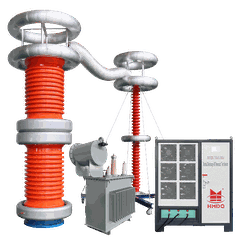



Resonance is a crucial phenomenon in an Inductive Resonant Test System, as it allows for efficient and accurate testing of electrical equipment. As a leading supplier of Inductive Resonant Test System, I understand the significance of achieving resonance and the challenges that come with it. In this blog post, I will share some insights on how to achieve resonance in an Inductive Resonant Test System.
Understanding the Basics of Resonance
Before delving into the methods of achieving resonance, it is essential to understand the basic principles of resonance in an electrical circuit. Resonance occurs when the inductive reactance (XL) and capacitive reactance (XC) in an AC circuit are equal, resulting in a minimum impedance and maximum current flow. In an Inductive Resonant Test System, resonance is typically achieved by adjusting the frequency of the power supply or the inductance and capacitance values in the circuit.


The resonant frequency (fr) of an LC circuit can be calculated using the following formula:
[fr = \frac{1}{2\pi\sqrt{LC}}]
Where:
- fr is the resonant frequency in Hertz (Hz)
- L is the inductance in Henrys (H)
- C is the capacitance in Farads (F)
Factors Affecting Resonance in an Inductive Resonant Test System
Several factors can affect the ability to achieve resonance in an Inductive Resonant Test System. These factors include:
- Inductance and Capacitance Values: The inductance and capacitance values in the circuit must be carefully selected to ensure that the resonant frequency matches the desired test frequency. Any deviation from the resonant frequency can result in a decrease in the efficiency of the test system.
- Power Supply Frequency: The frequency of the power supply must be adjustable to match the resonant frequency of the circuit. Most Inductive Resonant Test Systems are equipped with a variable frequency power supply that allows for precise control of the test frequency.
- Load Characteristics: The characteristics of the load being tested, such as its capacitance and resistance, can also affect the resonance of the test system. It is important to consider the load characteristics when designing and operating the test system.
- Circuit Losses: Circuit losses, such as resistance and dielectric losses, can reduce the efficiency of the test system and make it more difficult to achieve resonance. Minimizing circuit losses is essential for achieving optimal resonance.
Methods of Achieving Resonance in an Inductive Resonant Test System
There are several methods that can be used to achieve resonance in an Inductive Resonant Test System. These methods include:
- Adjusting the Frequency of the Power Supply: One of the most common methods of achieving resonance is to adjust the frequency of the power supply until the resonant frequency of the circuit is reached. This can be done manually or automatically using a frequency control system.
- Changing the Inductance or Capacitance Values: Another method of achieving resonance is to change the inductance or capacitance values in the circuit. This can be done by adding or removing inductors or capacitors from the circuit or by adjusting the values of variable inductors or capacitors.
- Using a Tuning Capacitor: A tuning capacitor can be used to fine-tune the resonant frequency of the circuit. By adjusting the capacitance of the tuning capacitor, the resonant frequency can be adjusted to match the desired test frequency.
- Using a Phase-Locked Loop (PLL) System: A PLL system can be used to automatically adjust the frequency of the power supply to maintain resonance in the circuit. The PLL system continuously monitors the phase difference between the voltage and current in the circuit and adjusts the frequency of the power supply to minimize the phase difference.
Best Practices for Achieving Resonance in an Inductive Resonant Test System
To achieve optimal resonance in an Inductive Resonant Test System, it is important to follow these best practices:
- Select the Right Components: Choosing the right inductors, capacitors, and other components for the test system is essential for achieving resonance. Components should be selected based on their specifications, quality, and compatibility with the test system.
- Perform Regular Maintenance: Regular maintenance of the test system is important to ensure that it is operating at its best. This includes cleaning the components, checking the connections, and calibrating the instruments.
- Follow the Manufacturer's Instructions: It is important to follow the manufacturer's instructions when operating the test system. This includes using the correct power supply, adjusting the frequency and other parameters correctly, and following the safety procedures.
- Conduct Pre-Test Checks: Before conducting a test, it is important to perform pre-test checks to ensure that the test system is working properly. This includes checking the voltage, current, and frequency of the power supply, as well as the impedance and capacitance of the load.
Applications of Inductive Resonant Test Systems
Inductive Resonant Test Systems are widely used in various industries for testing electrical equipment, such as cables, transformers, and generators. Some of the common applications of Inductive Resonant Test Systems include:
- High-Voltage Testing: Inductive Resonant Test Systems are used to test the insulation of high-voltage equipment, such as cables and transformers, at high voltages. This helps to detect any insulation defects or weaknesses in the equipment.
- Partial Discharge Testing: AC Resonant Test System with PD are used to detect partial discharges in electrical equipment. Partial discharges can cause damage to the insulation of the equipment over time, leading to failure.
- Power Frequency Testing: Inductive Resonant Test Systems are used to test the performance of electrical equipment at power frequency. This helps to ensure that the equipment is operating within the specified parameters.
Conclusion
Achieving resonance in an Inductive Resonant Test System is essential for efficient and accurate testing of electrical equipment. By understanding the basic principles of resonance, considering the factors that affect resonance, and using the appropriate methods and best practices, it is possible to achieve optimal resonance in the test system. As a supplier of Inductive Resonant Test System, we are committed to providing our customers with high-quality test systems and technical support to help them achieve the best results.
If you are interested in learning more about our Inductive Resonant Test Systems or have any questions about achieving resonance in your test system, please do not hesitate to contact us. Our team of experts is ready to assist you with your testing needs and provide you with the best solutions.
References
- Electric Power Systems Testing Handbook, by H. W. Dommel
- High-Voltage Engineering: Theory and Practice, by M. S. Naidu and V. Kamaraju
- Power System Testing and Diagnosis, by G. C. Montanari and A. C. Montanari


