

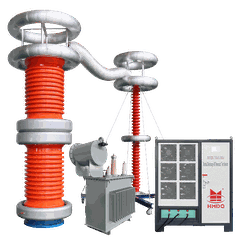



Hey there! As a supplier of the AC Resonant Test System For CVT, I'm super excited to dive into the function of the control unit in this system. It's a crucial part that plays a significant role in making the whole testing process smooth and efficient.


Let's start by understanding what an AC Resonant Test System For CVT is. It's a specialized piece of equipment used to test the performance and integrity of Capacitor Voltage Transformers (CVTs). These tests are essential to ensure that the CVTs are working properly and can handle the electrical loads they're designed for.
Now, let's talk about the control unit. The control unit acts as the brain of the AC Resonant Test System For CVT. It's responsible for managing and coordinating all the different components of the system. One of its primary functions is to control the frequency of the alternating current (AC) that's used in the testing process. By adjusting the frequency, the control unit can achieve resonance in the system. Resonance is a state where the inductive and capacitive reactances in the circuit cancel each other out, resulting in a high current flow at a specific frequency. This high current is used to simulate the actual operating conditions of the CVT and test its performance.
Another important function of the control unit is to monitor and control the voltage and current levels during the test. It ensures that the voltage and current are within the safe and acceptable limits for the CVT being tested. If the voltage or current exceeds the set limits, the control unit can automatically shut down the system to prevent any damage to the CVT or the testing equipment.
The control unit also provides a user interface for the operator to interact with the system. Through this interface, the operator can set the test parameters, such as the test voltage, frequency, and duration. The control unit then uses these parameters to control the operation of the system and perform the test. It also displays the test results in real-time, allowing the operator to monitor the progress of the test and make any necessary adjustments.
In addition to these functions, the control unit also has some built-in safety features. For example, it has overvoltage and overcurrent protection to prevent any damage to the system in case of a fault. It also has a grounding protection system to ensure the safety of the operator and the equipment.
Now, let's take a look at some of the specific features of the control unit in our AC Resonant Test System For CVT. Our control unit is designed to be user-friendly and easy to operate. It has a large touch screen display that provides clear and intuitive information about the test parameters and results. The display also shows the status of the system, such as the voltage, current, and frequency, in real-time.
Our control unit also has a built-in memory that can store the test results for future reference. This is useful for keeping track of the test history and comparing the results of different tests. It also allows the operator to generate reports and share the results with other stakeholders.
Another important feature of our control unit is its compatibility with different types of CVTs. It can be easily configured to work with CVTs of different ratings and specifications. This makes our AC Resonant Test System For CVT a versatile and flexible solution for testing CVTs in different applications.
Now, I'd like to mention some of the products we offer that are related to the AC Resonant Test System For CVT. We have the 270kVA Variable Frequency Resonant Test Device, which is a powerful and reliable device for testing CVTs. It has a high power output and can be used for testing CVTs of different ratings.
We also have the AC Variable Frequency Resonant Test System, which is a complete testing solution for CVTs. It includes the control unit, the resonant reactor, and the power supply. This system is designed to be easy to use and can be customized to meet the specific needs of our customers.
And finally, we have the HV Cable AC Resonant Tester, which is a specialized device for testing high-voltage cables. It can be used to test the insulation resistance and dielectric strength of the cables.
In conclusion, the control unit is a crucial part of the AC Resonant Test System For CVT. It plays a vital role in controlling the frequency, voltage, and current levels during the test, as well as providing a user interface for the operator. Our control unit is designed to be user-friendly, reliable, and compatible with different types of CVTs. If you're in the market for an AC Resonant Test System For CVT, we'd love to hear from you. Contact us to discuss your specific requirements and find the right solution for your needs.
References:
- Electrical Engineering Textbooks
- Industry Standards and Guidelines for CVT Testing


