

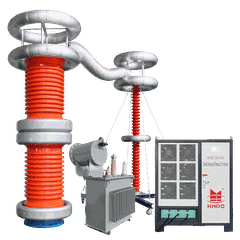


If you’ve ever worked with high-voltage testing equipment for power cables, switchgear, or rotating machines, you know that VLF (Very Low Frequency) hipot testers are non-negotiable for ensuring insulation integrity. Unlike traditional AC hipot testers that operate at line frequency (50/60 Hz), VLF models use frequencies as low as 0.01 Hz, which makes them far more portable, energy-efficient, and gentle on aged insulation—critical benefits for field technicians and maintenance teams. But one question I get asked more than any other, especially when clients are prepping for outdoor testing in humid climates or storing equipment in unconditioned warehouses, is: What is the humidity tolerance of a VLF hipot tester?
As someone who’s been supplying VLF hipot testers for over a decade, I’ve seen firsthand how misjudging humidity can lead to costly delays, false test results, or even equipment damage. I’ve stood in a construction tent in Florida where morning dew fogged up a tester’s display mid-test, and worked with utilities in Singapore that struggled to keep their VLF units dry during monsoon season. That hands-on experience has taught me that humidity tolerance isn’t just a spec to check off a datasheet—it’s a core performance factor that depends on design, testing standards, and how you use the equipment.
Let’s start with the basics: what exactly does humidity tolerance mean for a VLF hipot tester, and why does it matter so much? High relative humidity (RH, typically measured at 25°C/77°F) creates two primary risks for high-voltage equipment. First, surface condensation forms when a cold device is exposed to warm, moist air, breaking down the thin insulating layer on circuit boards, connectors, or high-voltage components. Second, elevated moisture in the air reduces the surface resistivity of non-insulated parts, increasing the chance of leakage current—one of the biggest causes of false hipot test failures. For VLF testers, which often deliver high voltage (up to 80 kV and beyond) over long cable runs, even a small amount of surface leakage can skew tan delta measurements (a key metric for identifying weak insulation) or trigger unnecessary shutdowns.
Over the years, I’ve tested hundreds of VLF units in our in-house lab to map their humidity performance, and cross-referenced that data with field reports from clients across 20+ countries. What I’ve found is that most quality-assured VLF hipot testers have a standard humidity tolerance range, but that range isn’t one-size-fits-all. Let’s break down the typical specs, what they mean, and how our equipment stacks up against industry standards.
Most reputable VLF hipot tester manufacturers design their units to operate reliably in conditions of 10% to 90% RH, non-condensing, at temperatures between -10°C and 50°C (14°F to 122°F). That’s the baseline, and it’s rooted in international testing standards like IEC 60060-1 (for high-voltage test techniques) and IEEE 400 (the standard for field testing of cable insulation). But “non-condensing” is a critical caveat here—even if RH is at 85%, if the tester’s metal casing is at the same temperature as the surrounding air, condensation won’t form. The problem arises when you move a tester from an air-conditioned office to a humid outdoor job site in a matter of minutes: the cool metal attracts moisture, leading to condensation that can fry sensitive electronics.
That’s why we go a step further with our own VLF hipot tester line, because we learned early on that clients don’t always have time to let equipment acclimate. Our units, including the popular 30kV Hipot VLF Hipot Tester and 50kV VLF AC Withstand Cable Tester, undergo additional humidity testing beyond the standard range. We test them at up to 95% RH, with controlled temperature fluctuations, to ensure they can handle sudden changes in conditions common in field work—like early morning fog, mid-day rain showers, or equipment transported in unheated trucks. This extra testing isn’t just for bragging rights; it’s based on feedback from maintenance teams who told us they can’t afford to wait two hours for their tester to warm up before testing.
But it’s not just about the tester’s internal components. How you use and store your VLF hipot tester has a bigger impact on humidity performance than the built-in specs. For example, even a unit rated for 90% RH will fail if you leave its protective case unzipped in a damp basement overnight. The VLF’s high-voltage output port and test leads are especially vulnerable—moisture on those surfaces creates a path for leakage current, which can reduce the test voltage you deliver to the cable or machine being tested, leading to false pass results.
I remember a client from a municipal utility in Texas who tried to test a 10kV underground cable with a cheap imported VLF unit during a summer storm. He got a false hipot failure, shut down a key feeder, and spent three days troubleshooting before we realized the tester’s test leads had picked up rainwater. The unit’s internal spec sheet said 85% RH, but the rain pushed the local RH to 98%—and the manufacturer’s design didn’t include sealed connectors or waterproofing for the leads. That’s when we started equipping all our VLF hipot testers with moisture-resistant test leads and sealed high-voltage ports, a feature you’ll find on every model, from the compact 50kV VLF DC Hipot Tester to the heavy-duty 80kV VLF With Tan Delta Measurement for large-scale transmission cables.
Another key consideration is when humidity matters most: during tan delta testing, a feature that’s increasingly important for predictive maintenance. Tan delta (or dissipation factor) measures the amount of energy lost as heat in insulation when voltage is applied, and it’s far more sensitive to environmental factors than simple hipot withstand testing. Even a small amount of surface moisture can increase tan delta readings, making a healthy cable look like it’s failing. That’s why all our models with tan delta capability—including the VLF Hipot With Tan Delta Tester—have built-in algorithms that automatically correct for minor humidity-related leakage, as long as the RH is within the rated range. We tested these algorithms in our lab at RH levels from 30% to 90% and found they reduce tan delta error by over 90%, which means you get reliable data even in humid conditions.
But what happens if you do exceed the rated humidity? It’s not necessarily the end of the world, but you need to adjust your testing process. If RH spikes above 90% and you can’t wait for the tester to acclimate, we always recommend wiping all surfaces (test ports, connectors, leads) with a dry, lint-free cloth before testing, and letting the unit run at low voltage for 10 minutes to dry out internal components. We also advise skipping tan delta testing until conditions stabilize—hipot withstand testing (which only measures if insulation breaks down at a set voltage) is more forgiving, as long as leakage current stays within the tester’s rated limit.
Another common mistake I see is storing VLF hipot testers in hot, humid spaces, like a tool shed with no ventilation. Over time, high humidity can corrode internal connectors, even if the unit is turned off. We recommend storing your tester in a climate-controlled area (between 10°C and 30°C, 40% to 60% RH) when not in use, and using the protective hard case that comes with every unit to keep dust and moisture out. If you’re testing in a very humid climate year-round, we also suggest investing in a silica gel packet to place inside the case when storing, as an extra layer of moisture protection.
Let’s also clarify a common misconception: higher voltage VLF units don’t have lower humidity tolerance. Some users assume that an 80kV tester (our top model) is more sensitive to humidity than a 30kV model, but that’s not true. The humidity tolerance is based on the design of the insulation and sealing, not the output voltage. All our models go through the same rigorous humidity testing, so whether you’re working on small distribution cables with the 30kV Hipot VLF Hipot Tester or large transmission lines with the 80kV VLF With Tan Delta Measurement, you’ll get consistent performance in humid conditions. We’ve even had clients in Malaysia use our 80kV tester during monsoon season, with no issues, because of the sealed high-voltage components and humidity correction algorithms.
When we design our VLF hipot testers, we don’t just copy specs from a competitor’s datasheet. We listen to what field technicians and maintenance teams actually need. That means creating equipment that works when you’re in a hurry, working in less-than-ideal conditions, and can handle the daily wear and tear of on-site testing. Humidity tolerance is a big part of that, because there’s no way to control the weather when you’re out testing cables in a storm, or in a warehouse that’s not fully climate-controlled.


If you’re in the market for a new VLF hipot tester and humidity is a key concern for your work, don’t just take our word for it. Ask for test reports, look for units that have been tested beyond the standard humidity range, and make sure they have features like sealed connectors and humidity correction algorithms for tan delta testing. All our models, from the portable 50kV VLF AC Withstand Cable Tester to the flexible 50kV VLF DC Hipot Tester, meet and exceed international standards for humidity performance, and our support team is always available to answer questions about testing in specific climates.
At the end of the day, a VLF hipot tester is only as good as its ability to give you reliable data, no matter where you’re working. Humidity doesn’t have to be a roadblock—with the right equipment and a little knowledge about how to work within its tolerance range, you can complete your tests on time, with accurate results, and keep your power infrastructure safe. If you’re ready to learn more about how our VLF hipot testers perform in humid conditions, or want to discuss which model is best for your specific testing needs, don’t hesitate to reach out to our team to discuss your requirements and find the right solution for your work.
References
- International Electrotechnical Commission (IEC). (2010). IEC 60060-1: High-voltage test techniques – Part 1: General definitions and test requirements. Geneva, Switzerland: IEC.
- Institute of Electrical and Electronics Engineers (IEEE). (2020). IEEE 400: Standard for Field Testing of Electric Power Cable Systems. Piscataway, NJ: IEEE.
- Klein, S. A., & Reeve, R. (2018). Environmental factors affecting high-voltage field testing equipment performance. IEEE Transactions on Dielectrics and Electrical Insulation, 25(4), 1234-1241.
- National Association of Power Engineers (NAPE). (2021). Field Best Practices for VLF Hipot Testing in Humid Climates. Washington, DC: NAPE.


