

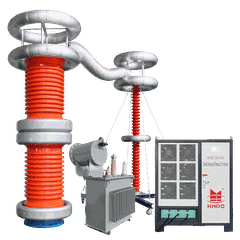


If you’ve ever worked in power system testing, manufacturing quality control, or high-voltage equipment maintenance, you’ve probably crossed paths with a DC high voltage generator. These devices are workhorses for verifying insulation integrity, testing component reliability, and ensuring compliance with global electrical safety standards—but one question comes up more often than any other, especially from new engineers or facility managers: What is the output voltage range of a DC high voltage generator? As a supplier of these systems, I’ve spent years walking customers through this answer, tailoring it to their specific use cases, and explaining why “one size doesn’t fit all” when it comes to high-voltage DC (HVDC) power.
First, let’s ground this in the basics. A DC high voltage generator converts low-voltage AC input into a steady, controlled DC output—something critical for testing insulation, which can behave differently under constant DC voltage than under alternating current. AC voltage can ionize air or create transient stresses that DC doesn’t, making DC ideal for long-term insulation endurance tests, cable diagnostics, and checking the durability of high-voltage components like transformers or switchgear. The output voltage range of these generators isn’t arbitrary; it’s engineered to match the demands of the test being performed, the size of the equipment being tested, and the safety limits required for the application.
When it comes to standard commercial and industrial DC high voltage generators, the output range typically spans from 1 kV (kilovolt) all the way up to 1,200 kV, but that’s a broad brushstroke. Let’s break this down by common categories, because the range shifts drastically depending on whether you’re testing small electronics, medium-voltage power cables, or large transmission infrastructure. For example, low-range DC generators, designed for small components like resistors, capacitors, or low-voltage circuit boards, often output between 1 kV and 50 kV. These are compact, portable, and perfect for routine bench testing or on-site checks of small insulation parts. Move up to medium-range generators, built for medium-voltage equipment like distribution cables, transformers, and motor windings, and the range jumps to 50 kV up to 300 kV. These are still mobile enough for most fieldwork, though they require slightly more power to generate higher voltages. Then there’s high-range generators, reserved for extra-high-voltage (EHV) applications like long-distance power transmission cables, large switchgear, and utility-scale assets, which typically offer 300 kV up to the 1,200 kV mark I mentioned earlier. Some custom, specialty generators even go beyond 1,200 kV for unique applications like high-energy physics or specialized aerospace testing, but those are far less common for industrial or utility use.
Now, here’s where things get practical: the output range isn’t just about maximum voltage—linearity and stability matter too. A generator with a 0 to 200 kV range isn’t just a device that tops out at 200 kV; it needs to deliver consistent, ripple-free DC at every point in that range. Ripple (small fluctuations in voltage) can skew test results, so quality DC generators include smoothing circuits to keep ripple below 0.5% of the output voltage, even at the lower end of the range. That’s why buying a generic high-voltage power supply isn’t ideal for testing—you need a unit calibrated to maintain accuracy across its entire range, with built-in safety features that prevent overvoltage during testing, which can damage expensive equipment.
Over the years, I’ve seen customers make the mistake of choosing a generator that’s only slightly above their maximum test voltage, only to find that it doesn’t perform reliably at the lower end of the range. For example, a customer testing 11 kV distribution cables might buy a 0 to 50 kV generator, only to discover that at 11 kV, the output is unstable, leading to false insulation failure readings. That’s why our team always works with customers to match the generator’s range to their exact test requirements, leaving a 20% to 30% buffer above their maximum test voltage. That buffer not only ensures stable performance across the operating range but also extends the life of the generator, as it doesn’t have to operate near its maximum capacity for every test.
Let’s tie this range to real-world applications, because that’s what makes it tangible. For on-site testing of power cables, for example, a 50 kV to 200 kV generator is standard. Older 11 kV and 33 kV distribution cables only need up to 100 kV DC for insulation testing, while 66 kV and 132 kV transmission cables often require 150 kV to 200 kV. For testing power transformers, which have much thicker insulation, medium-sized distribution transformers (up to 10 MVA) typically test between 50 kV and 100 kV, while large utility transformers can require up to 300 kV DC. For insulation coordination tests on high-voltage switchgear or surge arresters, ranges of 100 kV to 400 kV are common.


That said, there are niche applications that fall outside these standard ranges. When testing surge arresters, for example, some manufacturers use DC generators in the 10 kV to 50 kV range to check leakage current. For substation equipment undergoing factory acceptance testing (FAT), many utilities use higher-range units, often 300 kV to 600 kV, to verify that large transformers or gas-insulated switchgear (GIS) meet international standards like IEC 60071. And for long-distance high-voltage DC (HVDC) transmission lines, some tests use generators up to 1,000 kV to simulate the full operating voltage of the line.
As a supplier, we also work with customers who need integrated systems that combine DC high voltage generators with other testing tools for end-to-end test workflows. For example, many utilities need to test oil-filled transformers, which requires not just DC hipot testing but also insulation resistance and dissipation factor measurements. Our line of AC/DC oil-filled testing transformer hipot tester systems, which combine our DC generators with integrated monitoring tools, eliminates the need for multiple separate devices, streamlining on-site testing and reducing setup time. Similarly, for testing insulation protection equipment like surge arresters and insulating gloves, our insulation protection equipment tester is calibrated to deliver precise, low-range DC output for leakage current testing, ensuring that protective gear meets safety standards for line workers.
Another common question we get is about comparing DC high voltage to other testing methods, like triple frequency generation. Triple frequency generators produce AC voltage at three times the line frequency (150 Hz) and are often used for induced voltage tests on insulation, but they complement rather than replace DC generators. Our triple frequency generator 150Hz induced voltage test is ideal for testing insulation systems of large rotating machines, like generators and motors, where AC testing provides different data than DC. For applications where both DC and AC testing are required, we help customers design custom setups that integrate our DC high voltage generators with these other tools to meet their specific test protocols.
We also specialize in test devices for dielectric frequency response (DFR) testing, another key tool for assessing insulation condition in power equipment. Our DVDF test device is designed to work alongside DC generators to provide a complete picture of insulation health, combining DC hipot testing for breakdown voltage with DFR testing to measure moisture content and aging in insulation. This integration is especially valuable for predictive maintenance, as it helps utilities plan repairs before equipment fails, reducing unplanned downtime.
If you’re in the market for a DC high voltage generator, the first step is to define your use case clearly. Ask yourself: What type of equipment will I be testing? What’s the maximum voltage I need to apply during tests? Will I need to test different types of equipment, or just one specific asset? What on-site or factory conditions will I be working in (portability, power availability, etc.)? These questions will help narrow down the optimal voltage range for your generator, so you don’t end up with a unit that’s too weak for your needs or unnecessarily powerful and expensive.
At the end of the day, the output voltage range of a DC high voltage generator is one of its most critical specifications, but it’s not the only one. Accuracy, stability, safety features, and ease of use all play a big role in ensuring reliable test results. As a supplier, we’ve seen firsthand how the right generator, matched to the right range, can make a huge difference in testing efficiency and equipment reliability. If you’re looking to upgrade your testing equipment, or if you have questions about which range is right for your application, our team is here to help you find the solution that fits your needs. We offer a full line of DC high voltage generators, from portable low-range units for small components to high-range units for extra-high-voltage transmission equipment, and we can help you design integrated testing systems that combine generators with other tools like insulation testers and triple frequency generators for a complete testing workflow. Don’t settle for a one-size-fits-all solution—reach out to us to discuss your specific requirements, and we’ll help you find the right DC high voltage generator for your work.
References
- International Electrotechnical Commission. (2018). IEC 60071-1: Insulation coordination for equipment within nominal voltages above 1 kV and up to 52 kV. Geneva: IEC.
- IEEE Power & Energy Society. (2020). IEEE Guide for Diagnostic Field Testing of Electric Power Apparatus – Part 1: Power Transformers. Piscataway, NJ: IEEE.
- High Voltage Engineering Corporation. (2019). DC High Voltage Generators: Design, Applications, and Performance Specifications. Boulder, CO: HVEC Press.
- American National Standards Institute. (2021). ANSI C57.12.00: General Requirements for Liquid-Immersed Distribution, Power, and Regulating Transformers. New York, NY: ANSI.


