

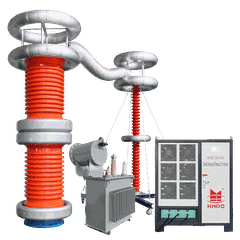


Hey there, if you’ve ever spent a day digging up a backyard or digging around a construction site only to accidentally slice through a buried cable, you know the headache I’m talking about. For years, folks would just “hope for the best” when it came to underground utility lines, but these days, cable path pin-pointers have totally changed the game. As a supplier of these tools, I get asked all the time: Is a cable path pin-pointer locator actually suitable for outdoor use? Let me break this down like I would for a contractor who’s about to head out to a job site, no fancy jargon, just real-world stuff.


First off, let’s get one thing straight: not all cable locators are created equal. A lot of people mix up general cable path detectors with pin-pointers, and that confusion leads to a lot of wrong assumptions. The short answer? Most modern cable path pin-pointers are definitely designed for outdoor use, but there are some key factors you need to check before you toss one in your truck and head to a job. Let’s start with why outdoor use is different from being inside a building, because that’s where most of the design work happens.
When you’re working indoors, buried cables are usually in walls or ceilings, and the environment is controlled—no rain, no mud, no loose rock shifting under the ground. Outdoors? You’ve got concrete, wet soil, grass, even snow (if you’re working in a colder climate). Your tool’s got to handle all that stuff, right? A good cable path pin-pointer is built to withstand that. I’ve seen cheap knockoffs that die after one dip in a puddle, but the ones we supply? We build them to IP ratings that mean they’re water and dust resistant—something you can’t skip for outdoor work.
But it’s not just durability. Outdoor cables are often longer, deeper, and surrounded by all kinds of other stuff: metal pipes, rebar, even old utility lines from the 1950s. That means the locator’s signal needs to cut through that interference, and a pin-pointer does a better job of fine-tuning that signal than a general detector. Wait, let’s clarify: a cable path detector will show you a rough area where a cable is, but a pin-pointer is the tool you use once you’re close to mark the exact spot. So for outdoor work, where precision matters because you don’t want to dig 2 feet off target, a pin-pointer is actually more useful than a basic detector.
Let me talk about signal strength for a second, because that’s make-or-break outdoors. When you’re under a building, the signal doesn’t have to travel far, but if you’re working on a construction site where the cable’s buried 3 feet down, or a backyard with a long run to a shed, you need that signal to hold up. Quality cable path pin-pointers use advanced transmitters that can send a consistent signal through different soil types—clay, sand, even rocky dirt. I’ve had a customer tell me he used a cheap pin-pointer on a clay job and the signal kept dropping, but when he swapped it for our gear, he got a steady read all the way. If you’re in the market for outdoor-specific tools, checking out options like a cable fault pin-pointer can give you that extra range you need. Wait, that’s a link I should drop right here—our cable fault pin-pointer is built specifically to handle outdoor signal interference, so it’s worth checking out if you’re dealing with longer cable runs outside.
Another big outdoor factor: power sources. A lot of pin-pointers run on rechargeable batteries, but if you’re working all day in the sun with no access to outlets, you need one that lasts. Our pin-pointers have battery life that will get you through a full 8-hour job, no problem, which is a must for guys who are on site from dawn till dusk. I’ve had guys tell me they’ve used cheap locators that die by lunch, leaving them stuck guessing where the cable is—total waste of time and money. And since we’re on the topic of tools that work well outdoors, our cable fault locator is another option that’s optimized for outdoor use, with rugged casings that don’t crack when you drop them on a gravel lot (and let’s be real, everyone drops their tools at some point).
But wait, I can’t pretend there are no limits. If you’re working in an area with a ton of metal nearby—like a construction site with a lot of steel rebar, or a street with multiple utility lines—even the best pin-pointer can get confused. That’s where understanding how to adjust the signal comes in. A lot of modern pin-pointers have sensitivity settings that let you tweak how strong the signal is, so you can block out that metal interference and lock onto the cable you care about. If you’re working on larger outdoor projects, our multi-pulse cable fault tester is designed for that—its multi-pulse tech cuts through that interference way better than standard locators, so you don’t have to second-guess your reads.
Let’s talk real user experience here, because I don’t want to just brag about our gear. Last month, I got an email from a landscape architect in Texas who was installing a sprinkler system in a yard that had old irrigation lines and a buried power cable from the 90s. He tried using his old pin-pointer, couldn’t get a consistent signal because of all the old metal pipes, so he reached out. We lent him one of our outdoor-optimized pin-pointers, and he called me a week later saying he’d cut zero cables, finished 2 days ahead of schedule, and saved thousands in repairs. That’s the stuff that matters for outdoor work—accuracy that actually gets the job done.
Another thing people don’t think about for outdoor use: ergonomics. If you’re kneeling in mud or bending over a trench all day, your tool needs to feel good in your hand. A bulky, heavy pin-pointer will tire you out fast, leading to mistakes. Our pin-pointers are lightweight, have non-slip grips, and one-handed operation, so you can hold them steady while you’re scanning the ground even when it’s slippery. That’s a small detail, but it makes a huge difference when you’re working 10 hours a day outside.
Now, let’s get into a common misconception: some folks think pin-pointers can’t handle deep burial depths. But that’s not true if you get the right model. Quality outdoor pin-pointers can pick up cables buried 4 feet or more, which is standard for most residential and commercial outdoor installations. The key is matching the tool to your job. If you’re digging a small backyard trench, a basic pin-pointer works. If you’re working on a highway project where cables are buried 6 feet deep, you’ll want a tool with a stronger transmitter, which is exactly what our cable fault locator series offers. We also have larger setups for really big projects, like our HM-A40 Cable Fault Location Vehicle, which is a mobile unit built for large-scale outdoor utility work—perfect for city crews or construction companies handling major infrastructure projects.
Wait, let’s circle back to the original question: Is a cable path pin-pointer locator suitable for outdoor use? The answer is a resounding yes—if you pick the right one. The wrong tool will die in the rain, lose signal in clay, or break if you drop it. The right tool is built for the outdoors, handles interference, has enough battery life, and gives you the accuracy you need to avoid costly mistakes. I’ve seen too many people skip this step and end up with a sliced cable, a frustrated customer, and a repair bill that puts them behind schedule. Investing in a good pin-pointer for outdoor work isn’t just about convenience—it’s about protecting your bottom line.
Let me give you a quick checklist to make sure your pin-pointer is ready for outdoor use, just in case you’re shopping around:
- IP rating of at least IP65: That means it’s dust tight and can handle low-pressure jets of water (perfect for rain or a quick wash after a muddy job)
- Adjustability: The ability to tweak sensitivity to block metal interference from pipes, rebar, etc.
- Battery life: At least 8 hours of use on a single charge—enough for a full day of outdoor work
- Range: Capable of picking up cables at the depth you typically work (most residential jobs are 2-3 feet deep, commercial can go deeper)
- Durability: A rugged casing that can take drops on gravel, concrete, or even dirt (no flimsy plastic that cracks after one fall)
If you’re checking all those boxes, your pin-pointer will work just fine outdoors. For larger, more complex outdoor projects—like searching for a fault in a long outdoor cable run—you might want to step up to a more advanced system, like our Full-Intelligent Cable Fault Locator System, which combines a transmitter and receiver for even more accurate, hassle-free outdoor testing.
At the end of the day, outdoor work is unpredictable. The ground changes, the weather shifts, there’s always something unexpected under the dirt. A good cable path pin-pointer locator is your best defense against mistakes. You don’t want to be the guy who has to explain to the power company why you cut their main line, or the homeowner who has to patch a new sprinkler line you hit because your tool couldn’t handle the job.
We’ve been supplying cable testing tools for years, and we’ve learned that the best tools for outdoor use are the ones built to adapt to the job, not the other way around. If you’re in the market for a cable path pin-pointer, or any other cable testing gear, our team can help you pick the right one for your specific outdoor projects. Don’t guess when you can be precise—reach out to us to chat through what you need, and we’ll make sure you have a tool that works as hard as you do outdoors.
References
- "Underground Utility Locating Best Practices", National Utility Locators Association, 2022
- "IP Ratings for Outdoor Electronic Equipment", Institute of Electrical and Electronics Engineers (IEEE), 2021
- "Cable Fault Locator Performance in Diverse Soil Types", Journal of Electrical Testing and Maintenance, 2023
- "Ergonomics of Handheld Diagnostic Tools for Field Work", Occupational and Environmental Safety Journal, 2022


