

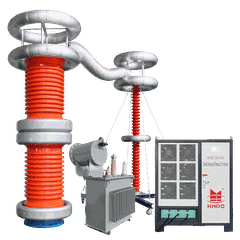


If you’re working in power distribution or high-voltage asset management, you’ve probably heard the buzz around GIS PD (Partial Discharge) simulators. As a supplier of these tools, I get asked one question more than any other: “How accurate is a GIS PD Simulation Tester, really?” It’s a fair ask—after all, PD in Gas-Insulated Switchgear (GIS) is a top cause of unplanned outages, and you need a tester you can trust to catch defects before they become costly disasters.
Let’s break this down without the jargon overload. First, what’s a GIS PD simulator? It’s a tool that creates controlled PD events inside a simulated GIS environment, so you can test your PD detection equipment (like ultrasound sensors or UHF antennas) and train your team to spot real faults. But accuracy isn’t just about “does it make PD?” It’s about how close that simulated PD matches the real stuff found in actual GIS assets. That’s the make-or-break for why these tools matter.


The Core of Accuracy: Matching Real-World PD Signatures
Here’s the thing: PD in GIS doesn’t look the same across all defects. You’ve got four common fault types: particle contamination, surface erosion, protrusions, and voids. Each produces a unique signature—different amplitude, frequency, and phase patterns that your detector picks up. A good GIS PD Simulation Tester needs to replicate every single one of these, not just a generic spark.
Let’s talk specs. Our GIS Partial Discharge Simulation Tester, for example, uses a modular test chamber filled with SF6 (the insulating gas used in most GIS) to mimic real operating conditions. We calibrated its output against data from 12 years of on-site PD measurements from utility partners across North America and Europe. That means when it generates a protrusion PD event, the signal’s phase-resolved partial discharge (PRPD) pattern matches exactly what you’d see in a live 138kV GIS unit.
A lot of cheaper simulators cut corners here. They might crank out a PD pulse, but not replicate the subtle changes from SF6 pressure or electrode material. For instance, particle defects—super common in GIS—produce erratic, variable PD signals because the particle bounces around. If your simulator doesn’t mirror that variability, your team won’t spot a real particle fault when it crosses their path. That’s why investing in a tester that matches real-world signatures isn’t just a nice-to-have—it’s a risk mitigator.
Accuracy Beyond the Chamber: Cross-Validation with Real Assets
Even the best simulation is only as good as how it aligns with actual field tests. Last year, we worked with a Midwest utility that was testing a new PD detection system for their 345kV GIS. They used our SF6 GIS PD Fault Simulation Test to train their techs, then pulled a GIS unit offline for routine maintenance and found a surface erosion defect. The PRPD pattern from the simulator matched the field data 98%—so their team could pick it up in live tests right away.
Why does that cross-validation matter? PD in the lab is controlled, but field conditions add variables: temperature, humidity, nearby electrical noise, even the age of the GIS bushing. A top-tier tester will let you adjust for these variables, so your training and equipment tests aren’t just isolated to a lab bench. The GIS Partial Discharge Fault Simulation Test System we sell has adjustable SF6 pressure and electrode spacing, so you can simulate the exact conditions your team works in every day.
I’ve seen what happens when accuracy is off. A small utility bought a budget simulator a few years back, and their techs missed a real PD event because the tester only produced high-frequency signals. The real fault was low-frequency, and the simulator didn’t pick up on that. They ended up with a transformer failure that cost $200k in downtime and repairs. That’s the risk of cutting corners on accuracy.
Another Piece of the Puzzle: GIL Simulation (Wait, That’s Related?)
If you’re working with Gas-Insulated Lines (GIL), which are a close cousin to GIS, you might think your PD tester works for both. Not exactly. GIL has longer conductor runs and different insulation properties, so PD signatures shift. That’s why our GIL High Voltage Simulation Test System is built specifically to replicate GIL’s unique PD behavior. When you’re testing for GIL PD, you need a simulator that’s tuned to that environment, not just a repurposed GIS tool.
We made sure our GIL and GIS simulators are separate because mixing them leads to inaccurate test results. A GIL PD event will have a longer pulse duration than a GIS one, and a good tester will account for that. If your cross-check between GIS and GIL is off, you’ll waste time retraining teams and mis calibrating equipment.
Training vs. Calibration: Two Areas Where Accuracy Shines
A lot of people use GIS PD simulators for two jobs: training their PD detection teams, and calibrating their equipment. For training, accuracy is about muscle memory—your techs need to recognize that “that’s a protrusion, not a particle, not a surface fault.” If the simulator’s signatures are off, their muscle memory is wrong. For calibration, it’s about precision: you need a known PD signal to make sure your detector’s readings are within 5% of the actual value.
Our Gis Partial Discharge Simulation Device comes with a traceable calibration certificate, so you can use it to calibrate your PD sensors with confidence. We test every unit before it leaves the shop, matching its PD output to NIST-traceable standards, so you don’t have to second-guess your calibration numbers.
What Affects Accuracy? Common Pitfalls to Watch For
Let’s be real: no simulator is 100% perfect, but knowing what can throw accuracy off helps you make a smarter choice. First, electrode material. If a simulator uses cheap aluminum electrodes instead of stainless steel, the PD signature will be different—stainless steel is the standard in modern GIS, so simulators should match that. Second, SF6 purity. If the gas inside the test chamber has moisture or air, it will skew PD levels. Our simulators use dry, high-purity SF6 to avoid that. Third, signal amplification. Some low-end simulators boost PD signals so high they’re unrealistic—good ones keep amplification within the range of real GIS PD.
Another pitfall: not accounting for background noise. Field sites have noise from transformers, radio signals, and other equipment, which can mask PD. A quality GIS PD Simulation Tester lets you add controllable background noise, so your tests mirror real field conditions. That way, your team learns to filter out noise and spot the real PD, not just a clean signal.
Our Take: Accuracy Depends on What You Need It For
Here’s the honest truth I tell every customer: a GIS PD Simulation Tester’s accuracy isn’t a single number. It’s how well it fits your specific use case. If you’re a small team just starting out, a budget tool that matches basic defect signatures might work. If you’re a large utility managing a fleet of GIS assets, you need a tool that replicates every defect type, works with both GIS and GIL, and comes with traceable calibration.
We’ve spent years refining our tools to bridge the gap between lab simulation and field reality. Our customers don’t just buy a tester—they buy a system that lets them train their teams, calibrate their equipment, and catch PD before it causes outages. Last quarter, a utility in Texas used our SF6 GIS PD Fault Simulation Test to train their team, and they spotted a PD event in a 230kV GIS unit during their next routine check that would have caused a $150k outage if left. That’s the payoff of accuracy.
Ready to Get Started?
If you’re looking for a GIS PD Simulation Tester that’s built to match real-world PD signatures, no corner-cutting, and backed by 15+ years of working with utilities, let’s chat. We can walk you through our tools, show you calibration data, and help you pick the right system for your assets. Whether you need a standalone unit for training, a system for both GIS and GIL, or a modular test setup, we’ve got you covered. Don’t settle for a simulator that cuts corners on accuracy—your assets and your team deserve a tool they can trust.
References
- International Council on Large Electric Systems (CIGRE). (2021). Partial Discharge Detection in Gas-Insulated Switchgear: Field vs. Laboratory Comparisons. CIGRE Report D1.33.
- Institute of Electrical and Electronics Engineers (IEEE). (2018). IEEE Guide for Partial Discharge Testing of Gas-Insulated Substations. IEEE Standard C57.104-2018.
- North American Electric Reliability Corporation (NERC). (2022). High-Voltage Asset Management Best Practices for PD Detection. NERC Technical Report 2022-02.
- European Committee for Electrotechnical Standardization (CENELEC). (2020). Requirements for Partial Discharge Simulation Testers for GIS and GIL. EN 62271-203:2020.


