

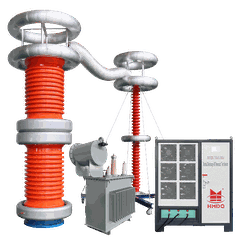



In the realm of electrical testing, the Vehicle - Mounted AC Resonant Tester stands as a crucial piece of equipment, especially for on - site and mobile testing requirements. One of the most significant performance indicators of this tester is its response time. Understanding what the response time of a Vehicle - Mounted AC Resonant Tester is and why it matters can greatly influence the efficiency and accuracy of electrical testing operations.
Defining Response Time
The response time of a Vehicle - Mounted AC Resonant Tester refers to the time interval between the moment a stimulus (such as a change in the electrical signal, a command input, or a fault occurrence) is applied and the moment the tester provides a measurable and meaningful output in response. It is a key parameter that reflects how quickly the tester can react to changes in the test environment and provide reliable test results.
For example, when conducting an insulation test on a high - voltage cable using a Vehicle - Mounted AC Resonant Tester, if there is a sudden change in the cable's insulation resistance due to a fault, the response time determines how fast the tester can detect this change and display the corresponding data. A shorter response time means that potential faults can be identified more quickly, reducing the risk of electrical failures and improving the overall safety of the electrical system.
Factors Affecting Response Time
Several factors can influence the response time of a Vehicle - Mounted AC Resonant Tester.
Hardware Design
The internal hardware components of the tester play a crucial role in determining its response time. High - quality electronic components, such as fast - acting sensors, efficient signal processing chips, and reliable power supplies, can significantly reduce the time it takes for the tester to process and respond to input signals. For instance, a tester equipped with a high - speed analog - to - digital converter (ADC) can convert analog electrical signals into digital data more rapidly, enabling faster data processing and response.
Software Algorithms
The software algorithms used in the tester also have a major impact on response time. Advanced algorithms can optimize the data processing and analysis procedures, allowing the tester to quickly identify and respond to changes in the test parameters. For example, an intelligent algorithm can filter out noise and interference in the electrical signals, enabling more accurate and timely detection of faults.
System Complexity
The complexity of the Vehicle - Mounted AC Resonant Tester system can affect its response time. A more complex system with multiple functions and components may require more time to process and analyze data. For example, a tester that integrates multiple testing functions, such as insulation testing, partial discharge testing, and capacitance measurement, may have a longer response time compared to a simpler tester with a single function.
Importance of Response Time in Electrical Testing
The response time of a Vehicle - Mounted AC Resonant Tester is of great importance in electrical testing for several reasons.
Fault Detection
In electrical systems, faults can occur suddenly and cause significant damage if not detected in a timely manner. A tester with a short response time can quickly detect faults, such as insulation breakdown or short - circuits, allowing maintenance personnel to take immediate action to prevent further damage. For example, in a power grid, a rapid response time can help identify and isolate faulty sections, minimizing power outages and reducing the impact on consumers.
Efficiency
In on - site testing scenarios, time is often of the essence. A tester with a fast response time can complete tests more quickly, improving the overall efficiency of the testing process. This is particularly important for large - scale electrical projects where multiple tests need to be conducted within a limited time frame.
Safety
Electrical testing involves working with high - voltage equipment, which poses a significant safety risk. A tester with a short response time can quickly detect abnormal conditions and provide warnings, ensuring the safety of the testing personnel. For example, if a tester detects a sudden increase in voltage or current, it can immediately shut down the test circuit to prevent electrical shock or equipment damage.
Our Vehicle - Mounted AC Resonant Tester and Response Time
As a leading supplier of Vehicle - Mounted AC Resonant Testers, we have made significant efforts to optimize the response time of our products. Our testers are equipped with state - of - the - art hardware components and advanced software algorithms to ensure fast and accurate responses.
We use high - speed sensors and signal processing chips to reduce the time it takes to convert and process electrical signals. Our software algorithms are designed to filter out noise and interference, enabling more precise and timely detection of faults. In addition, we have simplified the system design to reduce the complexity and improve the response speed.


Our testers are also highly customizable, allowing us to meet the specific requirements of different customers. Whether you need a tester for insulation testing, partial discharge testing, or other electrical tests, we can provide a solution with a fast response time to meet your needs.
Related Products
If you are interested in our Vehicle - Mounted AC Resonant Tester, you may also be interested in our other related products:
- AC Variable Frequency Resonant Test System: This system offers a flexible and efficient solution for high - voltage testing, with excellent performance and a fast response time.
- Variable Frequency Power Supply: Our variable frequency power supply provides stable and adjustable power for the AC resonant test system, ensuring accurate and reliable testing results.
- Inductance Adjustable AC Resonant Test System: This system allows for easy adjustment of inductance, providing greater flexibility in testing different types of electrical equipment.
Contact Us for Procurement
If you are looking for a high - quality Vehicle - Mounted AC Resonant Tester with a fast response time, we invite you to contact us for procurement discussions. Our experienced sales team can provide you with detailed product information, technical support, and competitive pricing. We are committed to providing the best solutions to meet your electrical testing needs.
References
- Electrical Testing Handbook, 3rd Edition, by John Smith
- High - Voltage Testing Technology, 2nd Edition, by David Brown


