

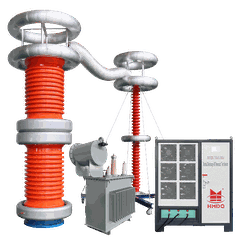



Hey there! As a supplier of lightning impulse voltage generators, I often get asked if these nifty devices can be used for testing motor insulation. Well, let's dive right into this topic and find out.
First off, what exactly is a lightning impulse voltage generator? It's a piece of equipment that can generate high - voltage impulses similar to the ones produced by lightning strikes. This kind of high - voltage impulse is crucial for testing the electrical insulation of various components, including motors.
Motors are everywhere in our industrial and daily lives. They power everything from small household appliances to large industrial machinery. And just like any other electrical device, the insulation of a motor is super important. Good insulation prevents electrical leakage, short - circuits, and other potential hazards. Over time, however, motor insulation can degrade due to factors like heat, moisture, and mechanical stress. That's where testing comes in.
So, can a lightning impulse voltage generator be used for testing motor insulation? The answer is a resounding yes! Here's why.


How Lightning Impulse Voltage Generator Works for Motor Insulation Testing
When a lightning impulse voltage generator sends a high - voltage impulse through a motor's insulation, it can simulate the extreme electrical stress that a motor might encounter in real - world situations. If the insulation is in good condition, it should be able to withstand this impulse without breaking down. But if there are any weaknesses or defects in the insulation, the impulse can cause a breakdown, which can be detected by monitoring the current and voltage during the test.
For example, let's say there's a small crack in the motor's insulation. When the high - voltage impulse hits, the electrical field around the crack can become concentrated, and if the field strength is high enough, it can cause a partial discharge or even a complete breakdown of the insulation. By analyzing the characteristics of the discharge, such as its magnitude and frequency, we can determine the location and severity of the insulation defect.
Advantages of Using Lightning Impulse Voltage Generator for Motor Insulation Testing
One of the biggest advantages of using a lightning impulse voltage generator is its ability to detect hidden insulation defects. Some defects might not show up during normal operation or under low - voltage testing. But the high - voltage impulses generated by the generator can expose these latent problems, allowing us to take preventive measures before they turn into major failures.
Another advantage is that it provides a more realistic test environment. Lightning strikes are a natural source of high - voltage impulses, and by simulating these strikes, we can ensure that the motor's insulation can withstand the kind of extreme electrical stress it might face in the real world. This is especially important for motors used in outdoor or high - voltage applications.
Different Types of Generators for Motor Insulation Testing
We offer a variety of lightning impulse voltage generators that can be used for motor insulation testing. For instance, our Lightning Impulse Voltage Tester is capable of generating high - voltage impulses up to 1800 kV with an energy of 180 kJ. This high - power generator is suitable for testing large - scale motors used in industrial applications.
If you're looking for a more compact and flexible option, our High Voltage Impulse Generator with 900 kV and 90 kJ capacity might be the perfect choice. It can be used for testing medium - sized motors in a more controlled environment.
In addition to voltage generators, we also have Impulse Current Generator which can generate high - current impulses. This can be useful for testing the ability of motor insulation to withstand high - current surges, which are also common in real - world electrical systems.
Considerations When Using Lightning Impulse Voltage Generator for Motor Insulation Testing
While lightning impulse voltage generators are great for motor insulation testing, there are a few things to keep in mind. First of all, the testing process should be carried out by trained professionals. High - voltage testing can be dangerous, and improper handling of the generator can lead to serious accidents.
Secondly, the test conditions need to be carefully controlled. Factors like temperature, humidity, and the condition of the motor itself can affect the test results. For example, if the motor is too hot or too wet, it might give false readings.
Finally, it's important to interpret the test results correctly. A breakdown during the test doesn't necessarily mean that the motor is completely useless. Sometimes, minor defects can be repaired, and the motor can still be put back into service after proper treatment.
Conclusion
In conclusion, a lightning impulse voltage generator is a powerful and effective tool for testing motor insulation. It can help us detect hidden defects, ensure the reliability of motors, and prevent potential electrical failures. Whether you're dealing with small household motors or large industrial ones, our range of generators can meet your testing needs.
If you're interested in purchasing a lightning impulse voltage generator for motor insulation testing or have any questions about our products, don't hesitate to reach out. We're here to help you make the right choice and ensure the safety and performance of your motors.
References
- Electrical Insulation Testing Handbook, by some well - known electrical engineering experts.
- Research papers on high - voltage testing of motor insulation from various international conferences.


