
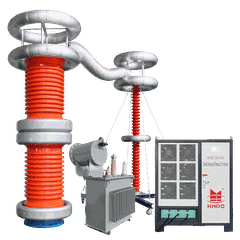


Cable Thumper Selection: Matching Joule Rating to Voltage
Introduction
Choosing a cable thumper is not simply a matter of selecting the highest voltage or the largest joule rating. The right equipment must provide sufficient surge voltage to initiate a discharge at the fault, adequate energy for effective pinpointing, and suitable control over the test conditions.
A cable thumper, also known as a surge generator, stores electrical energy in a capacitor and releases it into a cable under test. When a suitable fault breaks down under the applied surge, technicians can use acoustic and electromagnetic detection equipment to identify its physical location.
For utility maintenance teams, cable repair contractors, and electrical testing engineers, two specifications matter particularly: maximum surge voltage (kV) and discharge energy (J). They are related, but they describe different aspects of equipment performance.
This guide explains how to match these specifications to cable applications, compare equipment ratings, and avoid common selection mistakes.

1. What Do Voltage and Joule Ratings Mean?
Surge voltage: Can the pulse reach the fault's breakdown level?
The voltage rating indicates the maximum voltage that the equipment can apply under its specified operating conditions.
During fault location, the surge must be sufficient to trigger a discharge at the fault. The required breakdown voltage depends on the fault itself, including its resistance, insulation condition, and physical characteristics.
A higher maximum voltage can provide more flexibility when dealing with faults that require a higher breakdown voltage. However, it does not mean the operator should always use the maximum setting.
The cable's rated voltage is also not the same as the required thumper output voltage. Cable rating, insulation design, condition, fault type, and the approved procedure must all be considered.
Joule rating: How much energy can the equipment release?
The joule rating represents the electrical energy stored for discharge under the specified operating conditions. For a capacitor-based surge generator, the stored energy is calculated as:
E = ½ × C × V²
Where:
E = stored energy in joules (J)
C = capacitance in farads (F)
V = capacitor charging voltage in volts (V)
This equation explains why voltage and energy cannot be compared independently without considering capacitance.
For the same capacitance, increasing the charging voltage increases stored energy according to the square of the voltage. If the voltage is reduced to half, the stored energy becomes one-quarter, assuming capacitance remains constant.
In practice, the energy delivered to a fault may differ from the theoretical stored energy because of equipment design, circuit losses, and the discharge path. Always check how the manufacturer defines and specifies the rated energy.
2. Why Voltage and Joule Rating Must Be Considered Together
A thumper with a high voltage rating but insufficient energy at the selected operating point may not provide the discharge response needed for effective pinpointing.
Conversely, a high-energy unit with an unsuitable voltage range may not provide the required flexibility for the cable and fault under investigation.
Consider three selection questions:
Voltage: Can the equipment reach the breakdown voltage required for the target fault?
Energy: Can it deliver a suitable discharge response for the selected pinpointing method?
Control: Can the operator select an appropriate voltage and energy level without applying unnecessary electrical stress to the cable?
These questions are more useful than choosing a thumper based on its highest advertised number alone.
Manufacturers may offer controlled-energy designs with multiple output voltage ranges. Such designs can allow technicians to use a lower output voltage while retaining a useful discharge energy, depending on the equipment's circuit design and specifications.
3. How to Match Thumper Ratings to Cable Applications
There is no universal rule that assigns one joule rating to every cable voltage class. Selection should account for the actual cable system, likely fault conditions, cable length, pinpointing method, and required operating voltage.
The following framework is a starting point for equipment evaluation, not a substitute for manufacturer guidance.
| Cable application | What to evaluate | Selection considerations |
|---|---|---|
| Low-voltage distribution cables | Cable construction, fault type, and accessible test points | A compact, lower-output system may be sufficient for the required fault-location methods |
| Medium-voltage distribution cables | Cable insulation, rated voltage, fault breakdown level, and cable route | Verify surge-voltage range, energy output, TDR/ARM compatibility, and pinpointing accessories |
| Long underground feeder cables | Cable length, joints, fault resistance, and pre-location method | Check whether the system supports suitable high-voltage pre-location and sufficient discharge energy |
| Urban network cables | Multiple cable sections, confined access, and ambient noise | Prioritize controlled output, appropriate energy, portable connections, and compatible detection equipment |
| Higher-voltage or specialized cable systems | Cable insulation design, fault characteristics, and approved procedures | Use equipment specifically rated and configured for the application, with technical guidance from the manufacturer |
Example: Comparing commercially available configurations
Manufacturer specifications illustrate why voltage and energy should be considered together.
| Example equipment | Published surge rating | Intended application context |
|---|---|---|
| Megger EZ-Thump 12 kV, Model V3 | 500 J at 12 kV | Portable underground medium-voltage cable fault location |
| HVI CDS-2010 series | 1,000 J at 5/10/20 kV output ranges | Distribution and utility cable fault location |
| HVI CDS-3632 series | 3,200 J at 9/18/36 kV output ranges | Network systems, longer cables, and demanding fault-location applications |
These are examples of specific product configurations, not a universal sizing chart. Actual performance depends on the model, operating settings, accessories, cable characteristics, and test method.
4. Why Controlled-Energy Output Matters
A useful cable thumper should not simply deliver the maximum possible voltage. It should allow technicians to apply an appropriate surge for the fault-location task.
Controlled-energy designs may provide multiple output-voltage ranges while maintaining a specified discharge-energy capability. This gives operators more flexibility than a design whose maximum energy is available only at its highest voltage setting.
For example, a unit specified to deliver 1,000 J at each of several output ranges offers different operating choices from a unit that delivers its rated energy only at maximum voltage.
Always verify the manufacturer's output-energy specification for each range. Multiple voltage settings do not automatically mean that full rated energy is available at every setting.
Why lower suitable voltage can be preferable
Using unnecessarily high voltage can add stress to cable insulation and accessories. The appropriate objective is to obtain a detectable fault response while limiting unnecessary electrical stress.
A practical approach is to:
Review the cable information and the fault history.
Pre-locate the fault using TDR or another suitable method where possible.
Select a surge setting appropriate for the fault and the approved procedure.
Use the minimum effective voltage and number of discharges needed for pinpointing.
Stop and reassess if the expected response is not obtained.
Megger's cable fault-location guidance similarly emphasizes finding the lowest voltage that causes the fault to appear during the applied procedure.
5. Do You Need a Higher Joule Rating for Longer Cables?
Not automatically.
Cable length can influence the practical difficulty of fault location, but required energy is also affected by cable capacitance, fault characteristics, the test method, and the detection environment.
Longer cables may present greater capacitive loading or more complicated reflections. The appropriate equipment must support the relevant cable and method, but simply increasing the joule rating does not guarantee a better result.
Before selecting a high-energy unit, confirm:
The cable length and construction.
The expected fault type and resistance.
Whether TDR, arc reflection, impulse-current, or another pre-location method is needed.
Whether the surge generator supports the required voltage and energy at the selected setting.
Whether the pinpointing receiver is suitable for the installation environment.
Whether the manufacturer's operating procedure permits the intended test.
Pre-location is especially valuable because it can reduce the amount of cable route that must be searched and help limit unnecessary surging.
6. Five Common Cable Thumper Selection Mistakes
Mistake 1: Selecting by cable voltage class alone
The cable's rated voltage is an important input, but it does not determine the exact surge voltage needed to trigger a particular fault.
Better approach: Evaluate the insulation design, likely fault breakdown level, test method, and equipment operating range.
Mistake 2: Assuming more joules always means better performance
A high-energy unit may be useful in demanding applications, but excess energy is not a substitute for appropriate voltage control, pre-location, and detection equipment.
Better approach: Select sufficient energy for the intended application and verify the available energy at the actual operating voltage.
Mistake 3: Ignoring energy at lower voltage settings
A unit's headline joule rating may refer only to a particular voltage setting.
Better approach: Request the energy specifications for each output range, not just the maximum rating.
Mistake 4: Forgetting pre-location and pinpointing accessories
A surge generator alone may not provide all the functions required for efficient field work.
Better approach: Check compatibility with TDR or radar equipment, arc-reflection methods, and acoustic/electromagnetic receivers as required.
Mistake 5: Repeatedly increasing surge voltage without reassessment
Repeated high-voltage discharges may impose unnecessary stress on the cable and may not solve a problem caused by an unsuitable detection method or incorrect setup.
Better approach: Reassess the fault, connections, pre-location result, and receiver response before changing the test settings.
7. Cable Thumper Selection Checklist
Before purchasing or specifying a cable thumper, use this checklist to compare equipment options.
- Cable type, rated voltage, and insulation construction are documented.
- Typical fault types and required fault-location methods are identified.
- The maximum output voltage is suitable for the application.
- Joule ratings are specified at the relevant output-voltage settings.
- The system provides suitable voltage control.
- TDR or other pre-location functions are available or can be connected.
- Appropriate acoustic/electromagnetic pinpointing accessories are included or available.
- Discharge interval and operating duty meet field requirements.
- Grounding, interlocks, emergency shutdown, and discharge provisions meet the required safety procedures.
The manufacturer confirms suitability for the cable system and intended test procedure.
For utilities and contractors working across multiple voltage classes, a configurable system may offer greater flexibility than a unit selected around a single maximum output rating.
8. Frequently Asked Questions
1.What is a good joule rating for a cable thumper?
There is no single rating that suits every cable. Portable systems may use hundreds of joules, while more demanding network or long-cable applications may require equipment rated in the thousands of joules. The appropriate value depends on the cable, fault, method, and manufacturer's specifications.
2.Is a 1,000 J cable thumper better than a 500 J model?
Not necessarily. A 1,000 J model may provide more energy capacity, but the 500 J model may be sufficient for its intended application. Compare output voltage, energy at each setting, pre-location functions, portability, and compatibility with pinpointing accessories.
3.Should the thumper voltage match the cable's rated voltage?
No. Cable rated voltage and thumper output voltage describe different things. The surge setting must be selected according to the cable design, fault characteristics, equipment instructions, and approved procedure-not by matching the two numbers directly.
4.Does higher voltage always mean higher energy?
For a capacitor with fixed capacitance, stored energy increases with the square of voltage. However, complete equipment designs may use different capacitances or controlled-energy output stages. Check the actual energy specification for each output setting.
5.Can a high-joule thumper locate every cable fault?
No. Fault location also depends on the pre-location method, fault characteristics, cable construction, and pinpointing equipment. Some sheath faults or other defects require a dedicated location method rather than conventional thumping.
6.Is it safer to use a lower surge voltage?
Using the lowest effective voltage can help limit unnecessary electrical stress, but the correct setting depends on the test objective and the equipment's approved procedure. Low voltage is not automatically sufficient, and all high-voltage cable fault-location work requires qualified personnel and appropriate safety controls.
Conclusion
Selecting a cable thumper requires more than comparing maximum voltage and joule ratings.
Voltage determines the available electrical stress that can be applied to initiate a fault discharge, while joule rating describes the stored energy available for the surge. Both must be evaluated alongside output control, pre-location capability, cable construction, and the required pinpointing method.
For most applications, the best equipment is not necessarily the unit with the highest numbers. It is the system that can locate the target fault reliably at an appropriate voltage, provide sufficient energy for the intended method, and avoid unnecessary stress on the cable.