
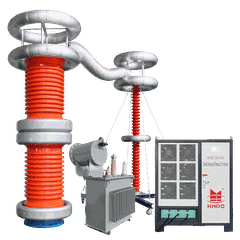


Cable Fault Locators vs Cable Thumpers: Which One Actually Finds Your Fault?
Introduction
When an underground power cable fails, identifying the fault location quickly is essential for reducing excavation work, repair time, and service interruptions.
Two commonly used tools are cable fault locators and cable thumpers. Although they are often discussed as competing options, they serve different purposes.
A cable fault locator may use Time Domain Reflectometry (TDR) to estimate the distance to a fault. A cable thumper, also known as a surge generator, applies high-voltage pulses that can trigger an arc at a fault, allowing technicians to pinpoint its physical location using acoustic or electromagnetic detection equipment.
The practical answer: A TDR-based cable fault locator is often the best starting point for pre-location. A thumper can help pinpoint high-resistance faults that are difficult to detect using a low-voltage TDR alone. Some integrated cable fault location systems combine both functions.
1. What Is a Cable Fault Locator?

A cable fault locator is equipment used to detect, estimate the distance to, or help identify the physical location of a fault in a cable.
The term can refer to a TDR instrument, a dedicated cable fault location system, or a multifunction system combining several test methods.
How does it work?
A common cable fault pre-location method is Time Domain Reflectometry (TDR). The instrument sends a low-voltage electrical pulse into the cable and measures the time taken for the reflected signal to return.
Changes in cable impedance can produce reflections. These may indicate an open circuit, short circuit, joint, cable-end reflection, or another discontinuity.
The instrument uses the signal's travel time and the cable's propagation velocity to estimate the distance to the reflection.
What types of faults can it locate?
A conventional low-voltage TDR is particularly useful for:
Open-circuit faults.
Short circuits and low-resistance faults.
Cable discontinuities and certain joint-related reflections.
Comparing a faulty cable trace with a known reference trace.
However, a basic TDR may not detect a high-resistance fault if the fault does not create a sufficiently clear reflection at the instrument's test voltage.
Advantages
Low-energy pulses are generally less stressful to the cable than high-voltage surge testing.
The distance to a detectable fault can be estimated before excavation.
Waveform traces can help technicians interpret cable conditions.
TDR is often a useful first step in a structured fault-location procedure.
Limitations
A TDR does not necessarily identify the exact position on the ground. Its distance reading must be matched to the actual cable route and physical cable length.
Results can also be affected by incorrect propagation-velocity settings, multiple cable sections, joints, branches, and ambiguous reflections.
For high-resistance or intermittent faults, a low-voltage TDR may need to be combined with a high-voltage pre-location method or another suitable technique.
2. What Is a Cable Thumper?

A cable thumper is a high-voltage surge generator used in cable fault location. It stores electrical energy in a capacitor and releases a controlled pulse into a cable under test.
When the applied surge reaches a suitable insulation fault, it may cause a temporary electrical breakdown or arc. This can produce acoustic and electromagnetic signals that technicians detect at the surface.
The equipment is called a thumper because the discharge may create a noticeable sound or mechanical impulse at the fault location.
How does a thumper work?
The cable is isolated and prepared according to the approved test procedure.
A suitable surge voltage is applied using the designated fault-location equipment.
The surge may trigger an arc at the fault.
A technician uses an acoustic receiver, an electromagnetic detector, or a combined receiver to search the relevant cable route.
The location is marked when the signals indicate the fault point.
A thumper is commonly used for pinpointing, but it may also form part of a system that supports high-voltage pre-location methods. Its precise capabilities depend on the equipment configuration.
What types of faults can it help locate?
A thumper can be useful for certain:
High-resistance insulation faults.
Intermittent faults that break down under surge voltage.
Cable faults that are difficult to identify using a low-voltage TDR alone.
It is not the correct tool for every cable defect. For example, sheath faults may require a dedicated sheath-fault location method, such as a step-voltage or earth-gradient technique.
Advantages
Can help reveal faults that do not produce a clear low-voltage TDR reflection.
Supports physical pinpointing when used with suitable acoustic or electromagnetic detection equipment.
Can be combined with TDR or other pre-location methods to reduce the search area.
Limitations
A thumper does not automatically provide an accurate distance-to-fault reading. Pinpointing effectiveness depends on the fault characteristics, cable construction, installation depth, soil, ducts, ambient noise, and the detection equipment.
Repeated or unnecessarily energetic surges can add electrical stress to the cable insulation. The surge voltage and energy should be kept as low as practical while still meeting the approved test objective.
3. Cable Fault Locator vs Cable Thumper: Key Differences
| Feature | TDR-Based Cable Fault Locator | Cable Thumper |
|---|---|---|
| Main purpose | Estimate the distance to a detectable fault | Help pinpoint a fault through surge-induced discharge |
| Test principle | Low-voltage pulse reflection | High-voltage surge and possible fault arcing |
| Typical output | Waveform and estimated distance | Surge response; acoustic/electromagnetic signals at the fault |
| Best suited to | Open circuits, short circuits, and detectable impedance changes | Certain high-resistance or intermittent faults |
| Exact ground location | Usually requires route correlation and additional pinpointing | Can support pinpointing with a suitable receiver |
| Electrical stress | Generally low for conventional TDR testing | Higher; depends on surge voltage, energy, and test procedure |
| Common limitation | May miss faults with insufficient low-voltage reflection | May not establish fault distance on its own |
| Typical role | First-stage pre-location | Pinpointing or part of a high-voltage location system |
One important distinction: a cable fault locator is a broad equipment category, while a thumper is a specific type of surge-generating equipment. A modern cable fault location system may include both a TDR and a thumper, so the equipment labels alone do not tell you every function the system can perform.
4. Which One Should You Use for Different Cable Faults?
The right choice depends on the fault type and the information needed.
| Fault scenario | Recommended starting method | Why |
|---|---|---|
| Open-circuit fault | TDR | An open end usually produces a strong impedance reflection |
| Low-resistance short circuit | TDR | The impedance change may be clearly visible |
| High-resistance earth fault | TDR assessment followed by a suitable high-voltage pre-location method if needed | The fault may not reflect a low-voltage pulse clearly |
| Intermittent insulation fault | Appropriate pre-location method, potentially including surge-based techniques | The fault may only become electrically visible under specific conditions |
| Fault already pre-located but not physically identified | Acoustic/electromagnetic pinpointing with suitable surge equipment | Helps identify the location along the cable route |
| Cable sheath or jacket fault | Dedicated sheath-fault location method | The fault may require a different detection principle |
| Unknown fault type | Initial electrical checks and method selection based on results | Prevents unnecessary high-voltage stressing and unproductive testing |
These are general selection guidelines, not universal rules. The test method must be suitable for the cable type, voltage rating, fault characteristics, and manufacturer's instructions.
5. Does a Cable Thumper Damage the Cable?
A thumper applies high-voltage surges that may cause an arc at the fault. The resulting electrical stress can also affect the surrounding insulation.
The risk depends on factors such as:
Surge voltage and energy.
Number and duration of discharges.
Cable insulation type and condition.
Fault type and breakdown characteristics.
The test method and equipment configuration.
Repeated surging without a clear diagnostic purpose should be avoided. A practical strategy is to pre-locate the fault first when possible, then use the lowest suitable surge level and the minimum number of discharges needed for the approved test.
The equipment manufacturer's instructions and the utility's procedures should determine whether conditioning, burning, or another specialized method is appropriate.
6. How to Choose Cable Fault Location Equipment
Before purchasing a cable fault locator or thumper, consider the cable types you work on, the likely fault conditions, and the work environment.
Key selection criteria
1. Cable voltage and application
Confirm that the system is designed for the voltage rating and cable type being tested. Low-voltage, medium-voltage, and high-voltage applications may require different configurations.
2. Pre-location capability
Check whether the system includes TDR, arc-reflection, impulse-current, or other supported methods. Different techniques address different fault characteristics.
3. Surge voltage and energy
For equipment with a surge generator, verify that its output range and energy settings are suitable for the intended application. Higher ratings are not automatically better.
4. Pinpointing accessories
A practical field solution may require an acoustic receiver, electromagnetic detector, cable route tracer, connecting leads, and other accessories.
5. Portability and operating conditions
Consider cable route length, access to manholes or ducts, terrain, power supply, transport requirements, and the training needed to operate the equipment safely.
6. Reporting and service support
Check whether the equipment supports waveform storage, test records, diagnostics, maintenance, calibration, and technical support.
A practical selection guide
| Your main requirement | Equipment to consider |
|---|---|
| Find distance to an open circuit or low-resistance fault | TDR-based cable fault locator |
| Pinpoint a known high-resistance fault | Surge generator with a suitable acoustic/electromagnetic receiver |
| Handle multiple cable fault types | Integrated cable fault location system with suitable pre-location and pinpointing methods |
| Locate cable sheath damage | Dedicated sheath-fault testing and location equipment |
| Support field maintenance across different cable routes | Portable system selected for the relevant cable ratings and fault-location methods |
Goldhome's cable fault location solutions should be evaluated against the specific cable voltage, test methods, and required accessories for the project. Confirm model-level specifications before choosing a system.
7. Frequently Asked Questions
Is a cable fault locator the same as a cable thumper?
No. A cable fault locator is a general term for equipment used to locate cable faults. A TDR-based locator estimates the distance to a detectable fault, while a thumper generates high-voltage surges that can help pinpoint certain faults. Some integrated systems include both functions.
Can a cable thumper find the exact fault location?
It can help pinpoint the physical location when the surge produces a detectable response and a suitable receiver is used. Results depend on the fault, cable construction, installation conditions, and detection method.
Can a TDR locate a high-resistance cable fault?
Sometimes, but a conventional low-voltage TDR may not detect a fault if it does not create a sufficient reflection. High-voltage arc-reflection or impulse-current methods may be needed, depending on the fault and equipment.
Should I buy a TDR or a complete cable fault location system?
If you mainly handle open-circuit and low-resistance faults, a suitable TDR may meet your needs. If your work includes high-resistance faults and physical pinpointing, a system with compatible surge and detection equipment may be more appropriate.
Is thumping required for every underground cable fault?
No. Some faults can be pre-located or identified without high-voltage surging. The decision should be based on the fault characteristics, the results of initial testing, and the approved procedure.
Is cable fault location the same as insulation testing?
No. Insulation testing assesses electrical insulation condition or withstand performance under specified conditions. Fault location aims to determine where a cable has failed. The two activities may be related in a maintenance workflow, but they serve different purposes.
Conclusion
Cable fault locators and cable thumpers perform different roles in underground cable fault diagnosis.
A TDR-based cable fault locator is often the first choice for estimating the distance to an open-circuit or low-resistance fault. A cable thumper can help reveal and pinpoint certain high-resistance faults by triggering a discharge that can be detected at the surface.
For many field applications, the most effective solution is not choosing one tool over the other, but selecting a compatible combination based on the fault type, cable ratings, and required test procedure.
Correct equipment selection and a staged fault-location process can help reduce unnecessary excavation, limit cable stress, and support more efficient cable repair.